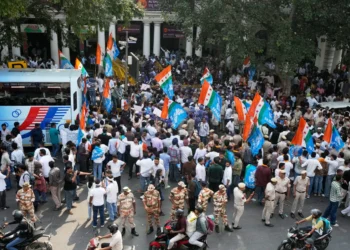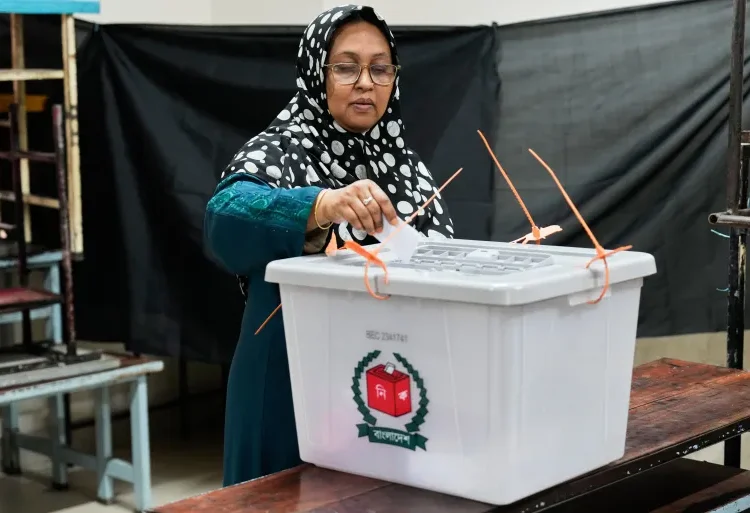
Voting is under way in Bangladesh in a crucial election seen as a key test of the country’s return to democracy after a student-led uprising toppled longtime leader Sheikh Hasina.
The voting started at 7:30am local time at more than 42,000 polling centres nationwide and is scheduled to end at 4:30pm local time.

More than 127 million people are eligible to vote in Bangladesh’s first parliamentary election since former Prime Minister Sheikh Hasina’s government collapsed in 2024 after weeks of mass protests, dubbed by many as a Gen Z uprising.
Hasina fled the country and her party is banned from the polls. She is living in exile in India.
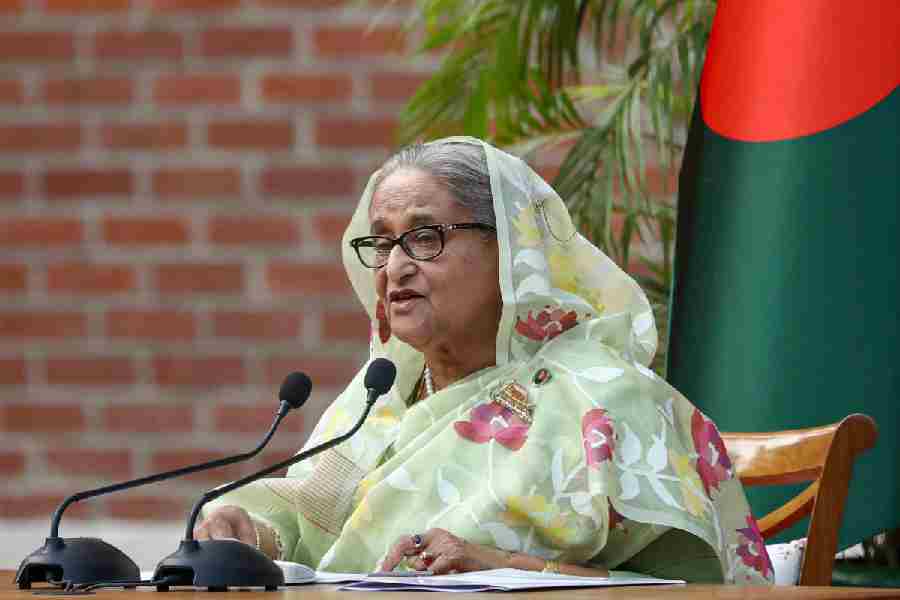
The vote is taking place under an interim government headed by Nobel Peace Prize laureate Muhammad Yunus, which has said it is committed to delivering a credible and transparent election.
As part of that effort, around 500 international observers and foreign journalists are present, including delegations from the European Union and the Commonwealth, to which Bangladesh belongs.
The vote is a direct contest between the Bangladesh Nationalist Party (BNP) and a Jamaat-e-Islami-led coalition of 11 parties. The Jamaat-e-Islami, the country’s largest Islamist party, which was banned under Hasina but has gained prominence since her removal.
Tarique Rahman of the Bangladesh Nationalist Party is a leading contender to form the next government. He is the son of former Prime Minister Khaleda Zia and returned to Bangladesh in December after 17 years in self-exile in London.
Rahman has pledged to rebuild democratic institutions, restore the rule of law and revive the struggling economy.
Besides the vote for parliamentary seats, Bangladesh is holding a referendum on the July National Charter 2025, which was drafted by the caretaker government following the student protests and outlines a roadmap for constitutional amendments, legal changes and the enactment of new laws.

Voters can say “Yes” to endorse major reform proposals that stemmed from a national charter signed by major political parties last year.
If a majority of voters favor the referendum, the newly elected Parliament could form a constitutional reform council to make the changes with 180 working days from its first session.
The proposals include the creation of new constitutional bodies and changing Parliament from a single body to a bicameral legislature with an upper house empowered to amend the constitution by majority vote.
The election follows a turbulent period marked by mob violence, attacks on Hindu minorities and the press, the growing influence of Islamists and weakening of the rule of law.
It could reshape the domestic stability of Bangladesh, a country whose post-1971 history since gaining independence from Pakistan has been marked by entrenched political parties, military coups and allegations of vote rigging.
Election Deemed Start Of Bangladesh’s Transformation

Speaking to reporters after casting his vote at a polling centre in Dhaka, Bangladesh’s interim leader, Muhammad Yunus described the election as the start of a historic transformation for the country. “From today, we have gained the opportunity to create a new Bangladesh at every step,” he said.
Yunus stressed that while voting for candidates is important, the referendum is “particularly crucial” and could transform the country.
“This is a great day in my life and a great day for all of Bangladesh – a day of liberation. It marks the end of our nightmare and the beginning of a new chapter through this process.”
Muhammad Yunus
AMM Nasir Uddin, the Chief Elections Commissioner told reporters after casting his vote that today’s vote marks a break from a history of “arranged elections” and ballot-box seizure, stressing that polling officials have been instructed to remain strictly neutral.
“There will be no staged election in this country. We must forget the history of centre-grabbing and ballot-box capture.”
AMM Nasir Uddin
Nasir Uddin said there’s been a strong voter turnout, particularly among women and young voters, and said this reflects renewed confidence in the Election Commission.
READ ALSO: NATO Launches Effort To Bolster High North Security