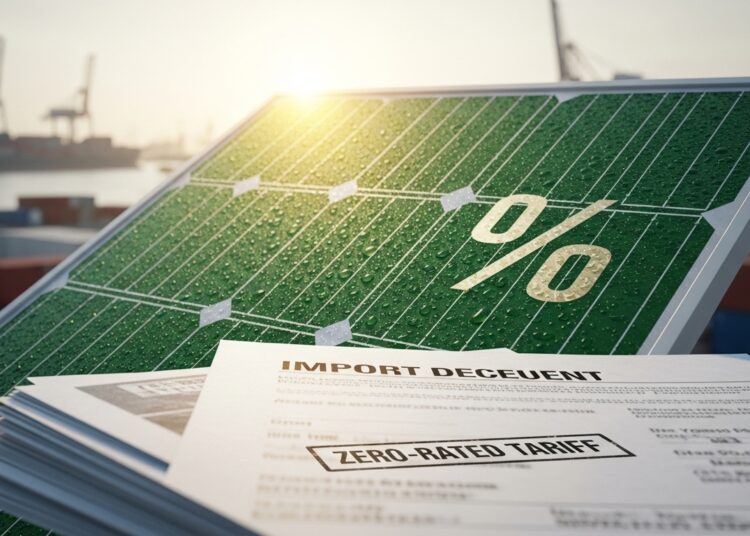
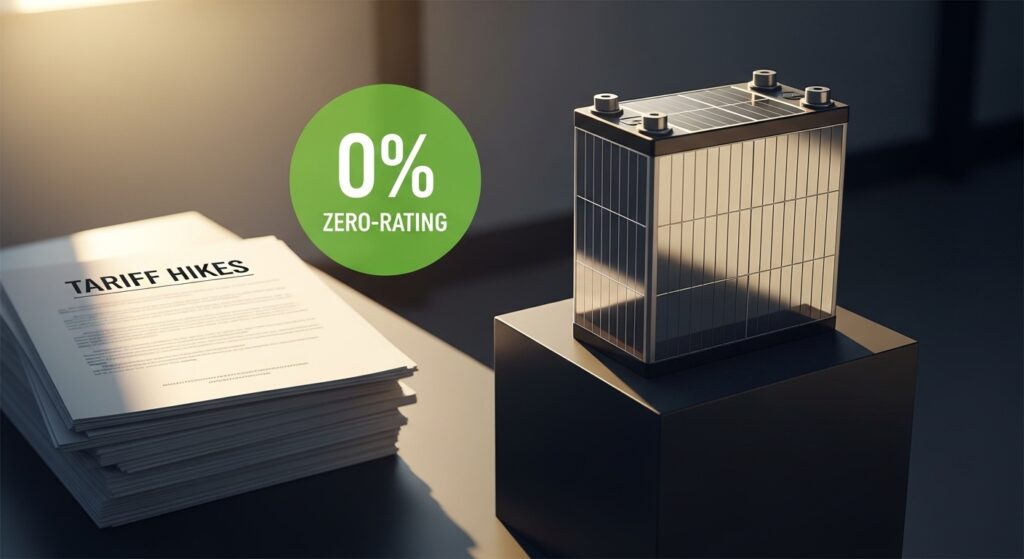
A policy analyst has called on government to immediately zero-rate import duty and VAT on certified solar kits, warning that high taxes on batteries and inverters are undermining Ghana’s energy transition and eroding household incomes.
Sitsofe Mensah, in a strongly worded commentary, argued that the 40 percent tax burden on solar storage systems, commonly referred to as the “battery tax” is creating a policy contradiction at a time when electricity tariffs are rising and citizens are being encouraged to conserve power.
“Our demand is simple,” Mensah stated. “Zero-rate Import Duty and VAT on certified ‘Solar Kits.’ Stop taxing the heart (batteries) and the brain (inverters) of our energy future.”
According to him, the current tax regime is forcing households to choose between absorbing rising electricity tariffs and paying steep upfront costs to switch to solar power.
Tariff Hikes and the 24-Hour Economy Agenda

The debate comes on the heels of Parliament’s passage of the 24-Hour Economy Authority Bill on February 6, 2026, aimed at promoting round-the-clock productivity and boosting industrial growth.
However, the policy rollout coincided with a 9.86 percent electricity tariff increase that took effect on January 1, with another adjustment expected in April under the IMF-backed automatic tariff adjustment mechanism linked to foreign exchange fluctuations and inflation.
Mensah described the situation as a “policy paradox,” noting that while government urges citizens to reduce grid consumption, it imposes heavy taxes on the very tools that would enable energy independence.
“We’re told to save power, but when we try to switch to solar to protect our pockets, the government hits us with a 40% tax on the batteries and inverters we need to keep the lights on at night.”
Policy Analyst Sitsofe Mensah
The Fiscal Argument: Revenue vs. Fuel Costs
At the heart of Mensah’s critique is the fiscal logic behind the tax policy. He estimates that the state collects approximately $20 million annually from duties and VAT on solar storage equipment and inverters.
In contrast, Ghana spends over $1.2 billion each year on thermal fuel, including gas and light crude oil, to stabilize the national grid. “For every GHS 1 the state takes from you at the port for a battery, it spends GHS 60 in national debt to buy fuel for the grid,” he claimed.
Mensah maintains that protecting a relatively modest tax stream while absorbing significantly higher fuel costs is economically unsustainable.
He argues that if even 10 percent of Ghanaian households adopted solar systems with storage, the country could reduce pressure on the grid and cut fuel expenditure substantially.
“The fact is, protecting $20M while losing $1.2B in fuel costs is a fiscal disaster,” he wrote, adding that zero-rating solar storage imports would ultimately save the state money by reducing dependence on thermal generation.
Is Solar Truly Intermittent?

Addressing concerns that solar power cannot provide stable baseload energy, Mensah contends that intermittency is only a challenge in the absence of storage.
“Solar is only intermittent without batteries.
“By taxing batteries at 40%, the government is manually creating the intermittency it complains about. Storage is the new base load.”
Policy Analyst Sitsofe Mensah
His comments highlight the growing global shift toward battery-backed renewable systems, which allow excess daytime solar energy to be stored for nighttime use.
By making storage systems more expensive, he argues, the policy effectively discourages the very innovation needed to stabilize renewable energy supply.
Mensah also rejected the notion that solar energy systems are a luxury for wealthy households. He insisted that high import taxes are the primary reason solar installations remain financially out of reach for many middle-income families.
“High taxes are the reason it’s a luxury,” he said. According to his estimates, removing the 40 percent tax would reduce the cost of a typical home solar system from about GHS 70,000 to roughly GHS 50,000.
At that price point, he believes the systems would become “bankable,” enabling families to finance installations through installment plans that could be cheaper than their monthly electricity bills.
Such a shift, he argued, would democratize access to clean energy while cushioning households against future tariff hikes.
A Broader Economic Concern

Beyond household budgets, Mensah framed the issue within Ghana’s broader inflation and debt context in 2026. Rising utility tariffs, foreign exchange pressures, and fiscal consolidation measures have already strained disposable incomes.
“This isn’t just for the factory in Tema or the shop in Kumasi; it’s for every home trying to survive the 2026 inflation cycle.
“You shouldn’t have to choose between a 40% port tax and a 10% tariff hike.”
Policy Analyst Sitsofe Mensah
His intervention adds to ongoing public discourse about how Ghana can balance revenue mobilization with long-term energy security and sustainability goals.
As Ghana advances its 24-hour economy vision and seeks to expand industrial productivity, energy affordability and reliability remain central to the national agenda.
Mensah’s proposal to zero-rate solar storage equipment positions distributed renewable energy as a complementary solution to grid-based supply, rather than a competing alternative.
Whether policymakers will reconsider the current tax structure remains to be seen. However, the debate underscores a critical policy crossroads: how to reconcile short-term revenue needs with long-term fiscal prudence, energy security, and environmental sustainability.
For Mensah, the path forward is clear. Removing the “battery tax,” he insists, is not merely a consumer relief measure but a strategic economic decision that could reshape Ghana’s energy future.
READ ALSO: Mahama’s Cabinet Backs New Financing, Faster Payments for Cocoa