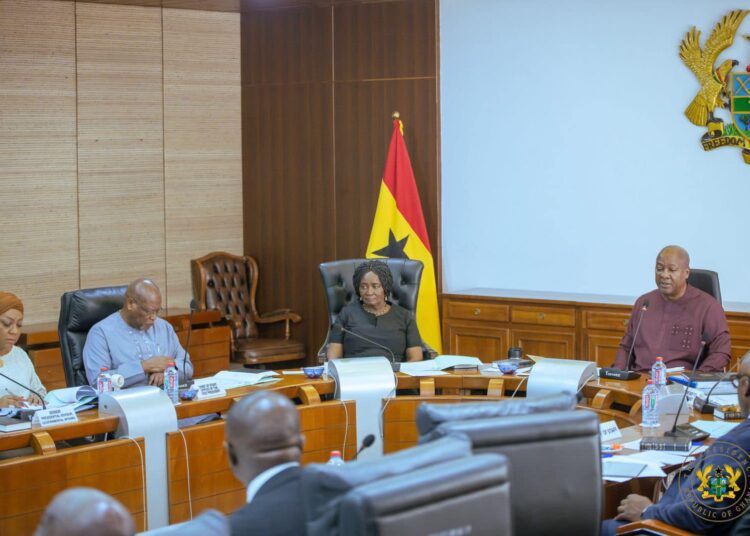
Cabinet has directed the Attorney General to commission concurrent forensic audits and criminal investigations into the operations of the Ghana Cocoa Board over the past eight years, as part of renewed efforts to restore accountability and transparency in the cocoa sector.
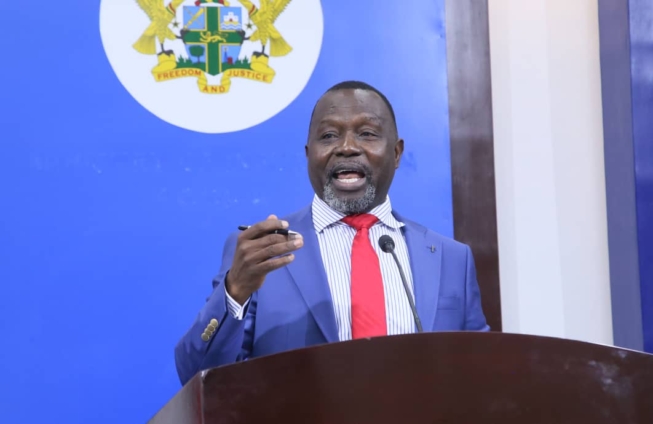
The decision was announced by the Minister for Finance, Dr Cassiel Ato Forson, following an emergency Cabinet meeting held to address the worsening financial and operational challenges confronting COCOBOD.
According to Dr Forson, the audits and investigations are intended to establish the full extent of financial mismanagement and operational lapses within the institution, while identifying individuals or systems responsible for decisions that have contributed to its current distress.
He noted that the cocoa sector remains critical to Ghana’s economy and rural livelihoods, making it imperative for government to act decisively to safeguard its sustainability.
Declining Competitiveness of Ghana’s Cocoa
The Finance Minister explained that COCOBOD’s present difficulties are largely driven by the declining competitiveness of Ghana’s cocoa on the international market. Cocoa from other producing countries is now selling at significantly lower prices than Ghana’s producer price, making it increasingly unattractive to buyers.
As a result, buyers have shown reluctance to purchase Ghanaian cocoa, placing additional strain on COCOBOD’s ability to generate revenue. This situation has been compounded by liquidity challenges that prevented the board from purchasing cocoa from farmers and holding stocks for hedging or other trading strategies.

The lack of liquidity, Dr Forson said, was linked to a financing model introduced during the 2024 and 2025 season after the failure of the traditional syndicated loan arrangement.
Under the new model, cocoa buyers or off takers financed cocoa purchases directly, an approach that weakened COCOBOD’s control over its supply chain and exposed it to greater financial risk.
Financial Deterioration and Loss of Confidence
Dr Forson traced COCOBOD’s financial deterioration to as far back as 2022, when the organisation’s finances weakened significantly. This decline culminated in the default and restructuring of Cocoa Bills in 2023, marking a major turning point in the institution’s credibility with lenders and investors.
For the first time, the annual syndicated loan suffered significant delays in 2023 due to waning confidence in the Ghanaian economy. The first tranche of the loan was received on 22 December 2023, nearly four months after the cocoa season had already begun.
This delay severely disrupted operations and planning for the 2023 and 2024 crop season. During that season, COCOBOD projected an output of 800,000 tonnes of cocoa and entered into contracts committing 786,672 tonnes.
However, actual production amounted to just 432,145 tonnes, representing a deviation of about 45 percent from projections. Dr Forson described this variance as unprecedented, noting that normal variations in crop forecasts typically range between 5 and 15 percent.
Heavy Losses and Burden on Farmers
The sharp shortfall in production resulted in rollover contracts amounting to 333,767 tonnes, sold at an average price of 2,661 United States dollars per tonne.
According to the Finance Minister, this situation led to losses exceeding one billion dollars, resources that would otherwise have benefited cocoa farmers and other stakeholders across the value chain.
The losses further weakened COCOBOD’s balance sheet and undermined its capacity to meet existing financial obligations. In July 2024, the board was unable to pay the final tranche of the syndicated loan and had to rely on a 70 million dollar bridge financing facility from the Ministry of Finance to avert a default.

Despite commitments to repay the bridge financing, COCOBOD subsequently defaulted on the obligation, highlighting the severity of its financial distress at the time. The unpaid debt has since been inherited by the current management of the organisation.
Audit and Investigation as a Reset Mechanism
Dr Forson stressed that the decision to undertake forensic audits and criminal investigations is not intended as a political exercise, but as a necessary step to reset governance and financial discipline within COCOBOD.
The probes will examine financial transactions, contractual arrangements, forecasting practices and decision making processes over the eight year period under review.
He said government remains committed to protecting the interests of cocoa farmers, restoring confidence among buyers and lenders, and repositioning the cocoa sector for long term sustainability.
The outcome of the audits and investigations is expected to inform broader reforms in financing models, governance structures and risk management practices within the sector.
The Finance Minister indicated that the government will take appropriate action based on the findings of the audits and investigations, including pursuing prosecutions where evidence of criminal conduct is established.
He emphasised that restoring transparency and accountability at COCOBOD is essential to ensuring that the cocoa sector continues to support livelihoods, foreign exchange earnings and national development.
As the investigations commence, stakeholders across the cocoa value chain will be watching closely to see whether the process delivers the reforms and accountability needed to rebuild trust in one of Ghana’s most strategic institutions.