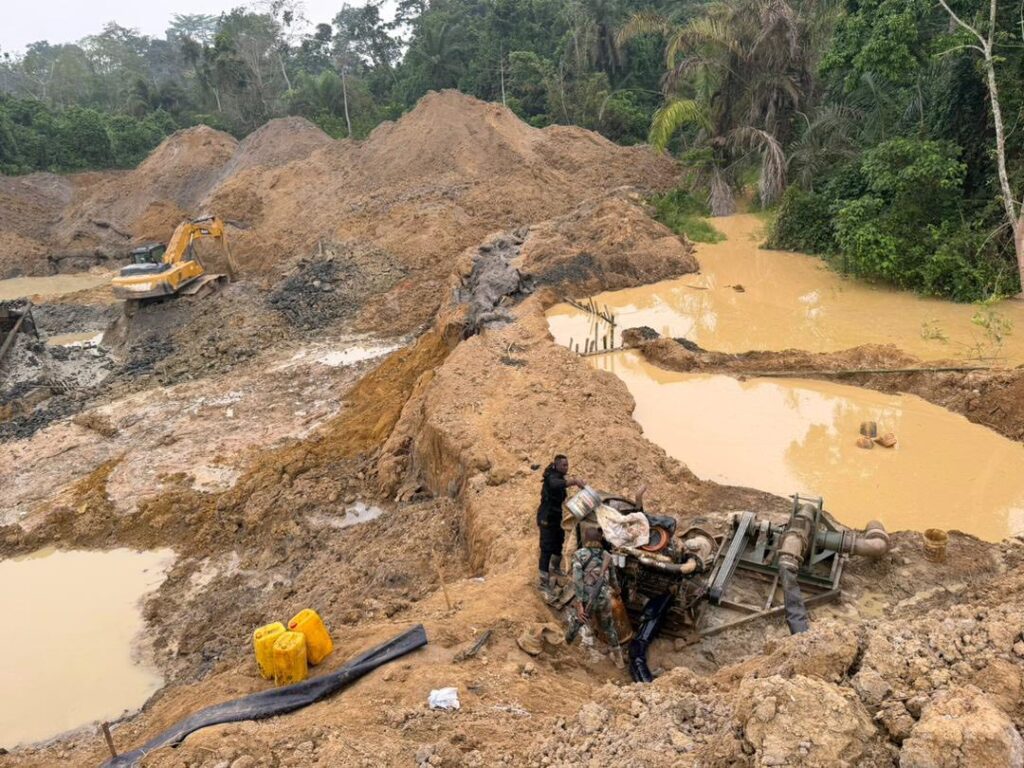
National Anti-Illegal Mining Operations Secretariat (NAIMOS) has disrupted a major illegal mining hub at Agbanzie in the Nzema East District, neutralizing heavy machinery used to devastate the Ankobra River.
In a tactical strike supported by the Blue Water Guards, the taskforce intercepted and immobilized three high-capacity excavators and destroyed several Chanfang machines found actively dredging the riverbed.
This operation underscores a shift toward aggressive, equipment-focused interdiction designed to break the financial backbone of “galamsey” syndicates.
“It is worth noting that the illegal miners had been operating within approximately 50 metres from the Ankobrah River, contributing significantly to the pollution of the water body through the unsafe mining practices.”
NAIMOS Communications

Intelligence-led operatives moved in to find that illegal miners had not only encroached within 50 meters of the water body but had also attempted to sabotage the seizure of their equipment.
By removing control components, the miners hoped to leave the excavators stranded; however, NAIMOS engineers countered this by dismantling and evacuating critical systems, including oil pumps, monitors, and system units, to ensure the machines remain permanently inoperable.
Beyond the machinery, the team chased off approximately 60 miners on the opposite bank and utilized canoes to access and destroy hidden processing equipment, mitigating further pollution of the Ankobra.
Tactical Immobilization: A Shift in Enforcement Strategy
The decision to dismantle excavators on-site represents a sophisticated evolution in the fight against extractive crimes.
By removing high-value electronic components and system units, the taskforce bypasses the logistical nightmare of transporting heavy machinery through degraded terrain while simultaneously delivering a massive capital blow to the financiers.
“The illegal miners had deliberately removed certain control components in an attempt to prevent the machines from being seized,” NAIMOS Communications noted, marking a desperate trend among operators to protect their assets from state seizure.
Environmental Restoration and Arable Land Protection

The operation at Agbanzie highlights the catastrophic “opportunity cost” of gold when weighed against agricultural sustainability.
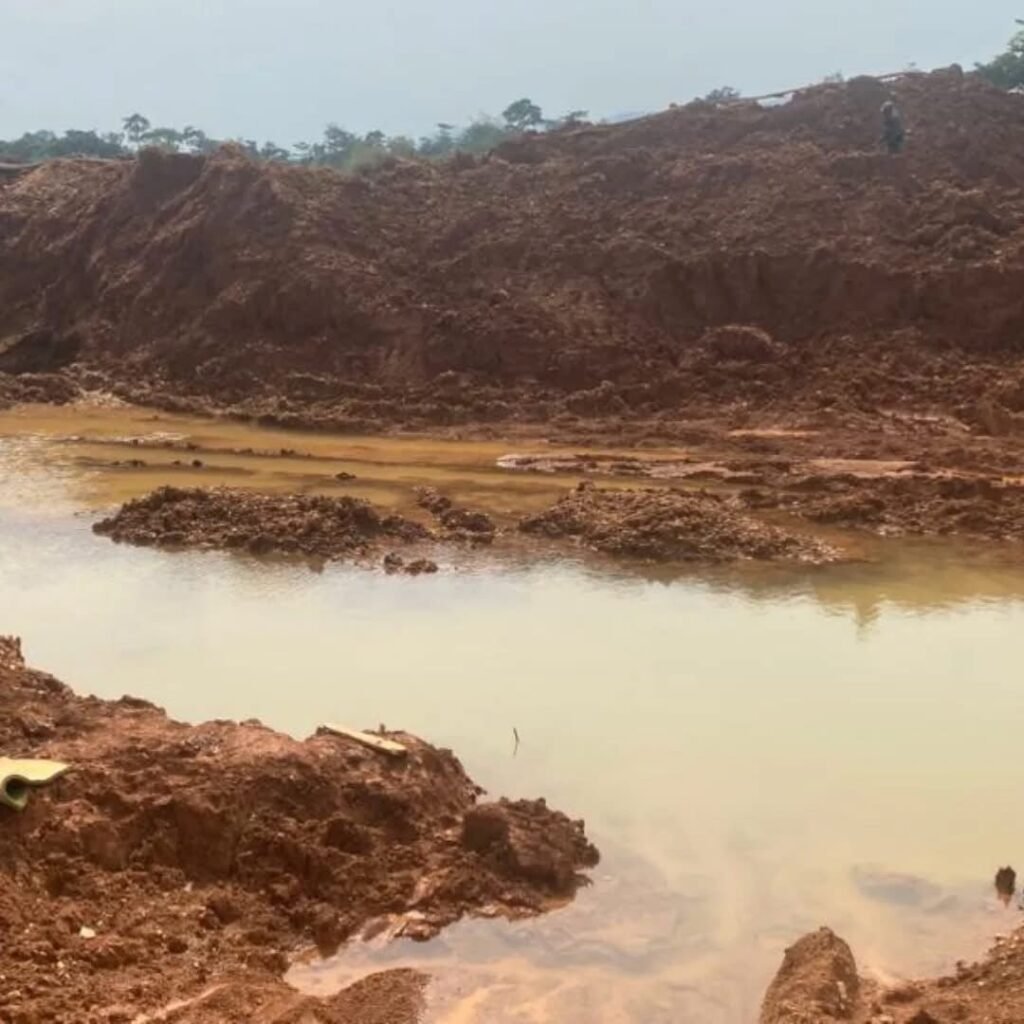
The Ankobra River, a primary water source for the Western Region, has suffered from extreme turbidity and chemical loading due to these near-bank operations. Beyond the water, the taskforce observed that “extensive portions of arable land within the enclave have been degraded due to deep excavations.”
This destruction of the topsoil not only prevents immediate farming but creates long-term hazards that require expensive land reclamation efforts to fix.
Strengthening Multi-Agency Intelligence
For the extractive sector to be truly regulated, the success of NAIMOS must be mirrored by local-level vigilance.
The presence of nearly new SDLG excavators in such remote areas suggests a gap in the “mandated surveillance” of local authorities, which NAIMOS described as “non-existent currently.”
By merging the field expertise of the Blue Water Guards with the Secretariat’s intelligence, this raid serves as a blueprint for future operations, proving that “coordinated surprised raids” are the most effective tool for reclaiming Ghana’s water bodies from the grip of illegal miners.
READ ALSO: Starmer Urges Europe To Bolster Defence Capabilities