
• About
  • Advertise
  • Privacy Policy
  • Contact
Wednesday, July 22, 2026
  • Login
The Vaultz News
  • Top Stories
  • News
    • General News
    • Education
    • Health
    • Opinions
  • Economics
    • Economy
    • Finance
      • Banking
      • Insurance
      • Pension
    • Securities/Markets
  • Business
    • Agribusiness
    • Vaultz Business
    • Extractives/Energy
    • Real Estate
  • World
    • Africa
    • America
    • Europe
    • UK
    • USA
    • Asia
    • Around the Globe
  • Innovation
    • Technology
    • Wheels
  • Entertainment
  • 20MOBPL2DNew
  • Jobs & Scholarships
    • Job Vacancies
    • Scholarships
No Result
View All Result
The Vaultz News
  • Top Stories
  • News
    • General News
    • Education
    • Health
    • Opinions
  • Economics
    • Economy
    • Finance
      • Banking
      • Insurance
      • Pension
    • Securities/Markets
  • Business
    • Agribusiness
    • Vaultz Business
    • Extractives/Energy
    • Real Estate
  • World
    • Africa
    • America
    • Europe
    • UK
    • USA
    • Asia
    • Around the Globe
  • Innovation
    • Technology
    • Wheels
  • Entertainment
  • 20MOBPL2DNew
  • Jobs & Scholarships
    • Job Vacancies
    • Scholarships
No Result
View All Result
The Vaultz News
No Result
View All Result
in Extractives/Energy

Ghana’s Downstream Petroleum Sector Reality Check

Prince Agyapongby Prince Agyapong
February 18, 2026
Reading Time: 5 mins read
Add as Preferred on Google
Whisk a39a9fd436adcf28efc450f9f6ae109cdr

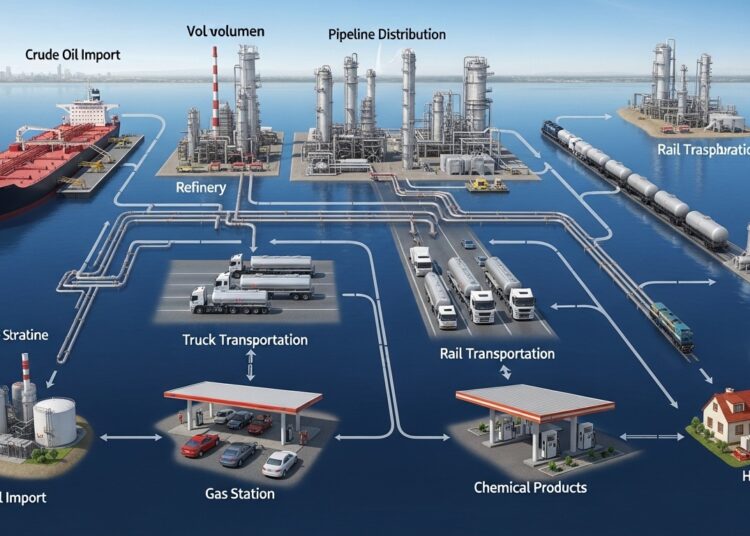
Ghana’s downstream petroleum sector often appears simple from a distance. The assumption is straightforward: import refined fuel, set prices and sell at the pump.

In reality, however, the Ghana downstream petroleum sector is shaped by far more complex forces that determine who thrives, who struggles and who quietly exits the market.

Beneath the visible competition of fuel station branding and price boards lies a web of financial timing, foreign exchange exposure, logistics coordination and survival-driven strategy. Understanding these mechanics reveals why market outcomes frequently defy public expectations.

Public discourse around fuel pricing in Ghana often focuses on pump prices and regulatory announcements. Yet pricing decisions are rarely made at the forecourt.

ADVERTISEMENT
Whisk 62ad532ffbb4bb289de44ce4e3fad689dr

Instead, they are heavily influenced at the depot level, where bulk distribution companies negotiate supply, manage stock positions and respond to FX fluctuations.

The downstream market operates within a deregulated pricing framework overseen by the National Petroleum Authority. While the Authority provides pricing guidelines and regulatory supervision, actual market competition occurs upstream in the supply chain.

In practice, cash flow timing frequently matters more than brand visibility. A marketer that secures product at favorable exchange rates can undercut competitors temporarily, even if its operating structure is leaner and less capitalized. Conversely, a company caught on the wrong side of FX timing can see margins erased almost overnight.

FX Exposure: Silent Margin Killer
Fuel imports
Fuel imports

ADVERTISEMENT

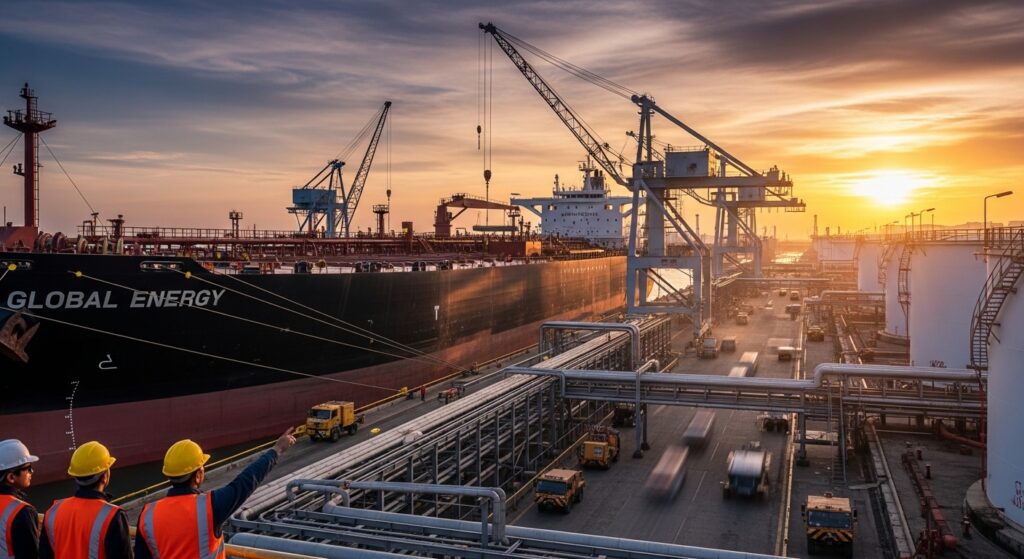
Foreign exchange volatility remains one of the most decisive variables in the downstream sector. Fuel imports are dollar-denominated, but revenues are earned in cedis.

A delay in securing FX or an unexpected currency depreciation can wipe out margins faster than price wars ever could.

Industry insiders often note that “FX timing has wiped out more margins than competition ever has.” This reality explains why some price adjustments are defensive rather than strategic.

ADVERTISEMENT

What may appear to consumers as aggressive competition can, in fact, be a liquidity recovery measure aimed at stabilizing working capital.

The result is a market where financial agility outweighs marketing campaigns.

Volume Over Prestige
Whisk a94f61c66d01bbd89c045e2de6e44cdcdr

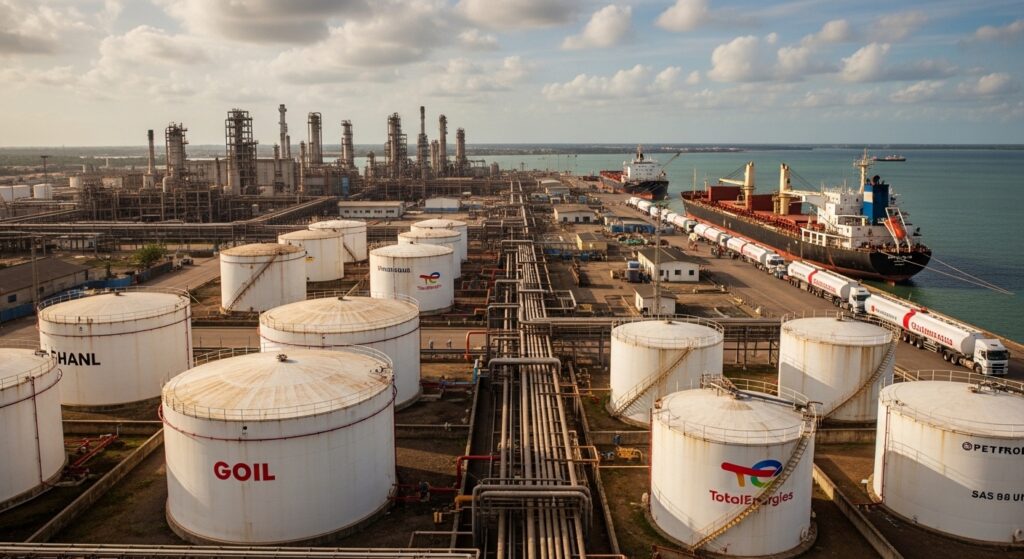
Another defining feature of the Ghana downstream petroleum sector is the advantage enjoyed by high-volume operators. Companies that move significant volumes can absorb shocks more effectively than smaller, premium-positioned brands.

Volume spreads risk. It enables faster stock turnover, improves bargaining power with suppliers and cushions temporary pricing mismatches.

Premium branding alone does not guarantee resilience, especially in a market where price sensitivity is high and loyalty can shift quickly.

This dynamic partly explains why indigenous players with lean operational models are steadily reshaping the competitive landscape. Their focus on aggressive volume strategies, rapid decision-making and tight cost control often outpaces more cautious competitors.

Liquidity and the Myth of Generosity

Price reductions are often interpreted as goodwill gestures or attempts to gain market share. In reality, price cuts frequently signal the need to improve cash flow. When inventory is financed through short-term facilities, moving product quickly becomes essential.

In such situations, lower margins are preferable to slow-moving stock. Liquidity discipline, not generosity, drives many pricing decisions.

Fuel shortages also follow similar logic. Shortages can occur even when product is technically available in the system.

Distribution bottlenecks, delayed payments or credit constraints may prevent product from reaching forecourts. Availability, therefore, is not merely about supply but about execution.

What Truly Wins the Market?
Whisk 3506f7b240949a393f04317445e5e0bddr

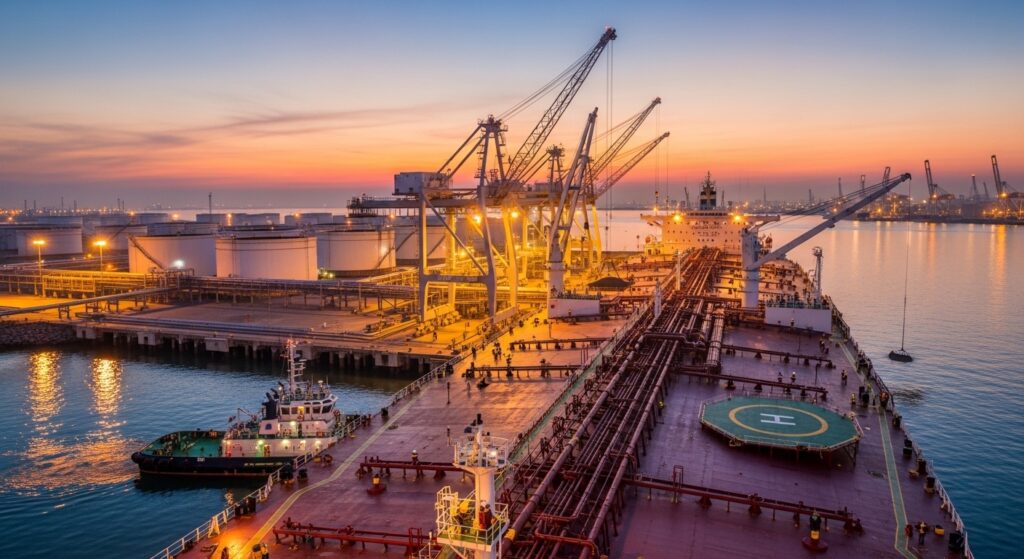
The question then becomes: what matters most in winning Ghana’s downstream petroleum sector today? Is it pricing power, sheer volume, logistics efficiency or policy alignment?

The evidence suggests that no single factor operates in isolation. Pricing power without liquidity discipline falters. Volume without efficient logistics creates bottlenecks. Policy alignment without operational agility yields limited advantage.

Ultimately, success lies in harmonizing these elements under disciplined execution. Ghana’s downstream market is not harder because it is opaque; it is harder because it is dynamic.

Those who treat it as a straightforward retail business often underestimate the structural pressures beneath the surface.

As Ghana continues to refine its energy landscape, the downstream petroleum sector remains a proving ground where strategy meets reality, and where execution determines survival.


READ ALSO: Survey Flags Structural Credit Insurance Shift

ADVERTISEMENT

Sign Up to Our Newsletter

Fresh updates, Straight to your inbox

Tags: downstream petroleum Ghanafuel pricing deregulation GhanaFX impact fuel pricingGhana fuel marketGhana oil marketing companies
ShareTweetShareSendSend
Please login to join discussion
Previous Post

Use Cocoa Crisis to Reset Public Sector Compensation – CDD-Ghana Boss

Next Post

Ghana Needs ‘Public Trust’ Revolution to Save Vanishing Natural Wealth

Related Posts

Ghana and Russia energy cooperation
Extractives/Energy

Ghana, Russia Strengthen Energy Partnership

July 21, 2026
Parliamentary Select Committee on Economy and Development with Ghana Gold Board (GoldBod)
Extractives/Energy

Parliament’s Economy Committee Visits Goldbod to Assess Institution’s Operations

July 21, 2026
Keta Basin
Extractives/Energy

TGS, Petroleum Commission Launch Keta Basin Data Project

July 21, 2026
Lands and Natural Resources Minister, Emmanuel Armah-Kofi Buah
Extractives/Energy

Gov’t Seeks Investors to Develop Strategic Sheini Iron Ore Deposit

July 21, 2026
ADVERTISEMENT

Sign Up to Our Newsletter

Fresh updates, Straight to your inbox

ADVERTISEMENT

Recent News

Morgan Rogers poses for the camera as he signs Chelsea contract

Chelsea Complete The Signing of Morgan Rogers From Villa

July 21, 2026
MoMo and GhIPSS Champion National Development by Digitising Informal Transport Payments

MoMo and GhIPSS Champion National Development by Digitising Informal Transport Payments

July 21, 2026
President John Dramani Mahama welcomes Wisconsin Governor Tony Evers to the Presidency, Jubilee House, during a trade mission focused on expanding economic cooperation between Ghana and Wisconsin.

Mahama Meets Wisconsin Governor to Strengthen Trade Partnerships

July 21, 2026
President John Dramani Mahama

Mahama Unveils Greater Accra Development Gains to Chiefs

July 21, 2026
Trump Rebuffs Putin’s Offer To Aid Israel-Iran Conflict Mediation

Trump Pledges Support For Lebanon

July 21, 2026
ADVERTISEMENT
Next Post
Map of the Ewoyaa Lithium Project

Ghana Needs ‘Public Trust’ Revolution to Save Vanishing Natural Wealth

The Vaultz News

Copyright © 2025 The Vaultz News. All rights reserved.

Navigate Site

  • About
  • Advertise
  • Privacy Policy
  • Contact

Follow Us

Welcome Back!

Login to your account below

Forgotten Password?

Retrieve your password

Please enter your username or email address to reset your password.

Log In
No Result
View All Result
  • Top Stories
  • News
    • General News
    • Education
    • Health
    • Opinions
  • Economics
    • Economy
    • Finance
      • Banking
      • Insurance
      • Pension
    • Securities/Markets
  • Business
    • Agribusiness
    • Vaultz Business
    • Extractives/Energy
    • Real Estate
  • World
    • Africa
    • America
    • Europe
    • UK
    • USA
    • Asia
    • Around the Globe
  • Innovation
    • Technology
    • Wheels
  • Entertainment
  • 20MOBPL2D
  • Jobs & Scholarships
    • Job Vacancies
    • Scholarships

Copyright © 2025 The Vaultz News. All rights reserved.

This website uses cookies. By continuing to use this website you are giving consent to cookies being used. Visit our Privacy and Cookie Policy.