Government, through the Minerals Commission, has reaffirmed its commitment to implement a transformative sliding-scale royalty regime designed to ensure the state captures a more equitable share of mineral wealth during periods of record-high commodity prices.
This policy shift marks a departure from the traditional fixed-rate system, moving toward a dynamic fiscal framework where royalty payments are indexed to global market trends.
Under the new guidelines, the base royalty rate is expected to start at 9%, potentially scaling up to 12% when gold prices surpass the $4,500 per ounce threshold.
This reform is the centerpiece of a broader legislative overhaul aimed at correcting historical imbalances where the state often missed out on windfall gains during market booms.
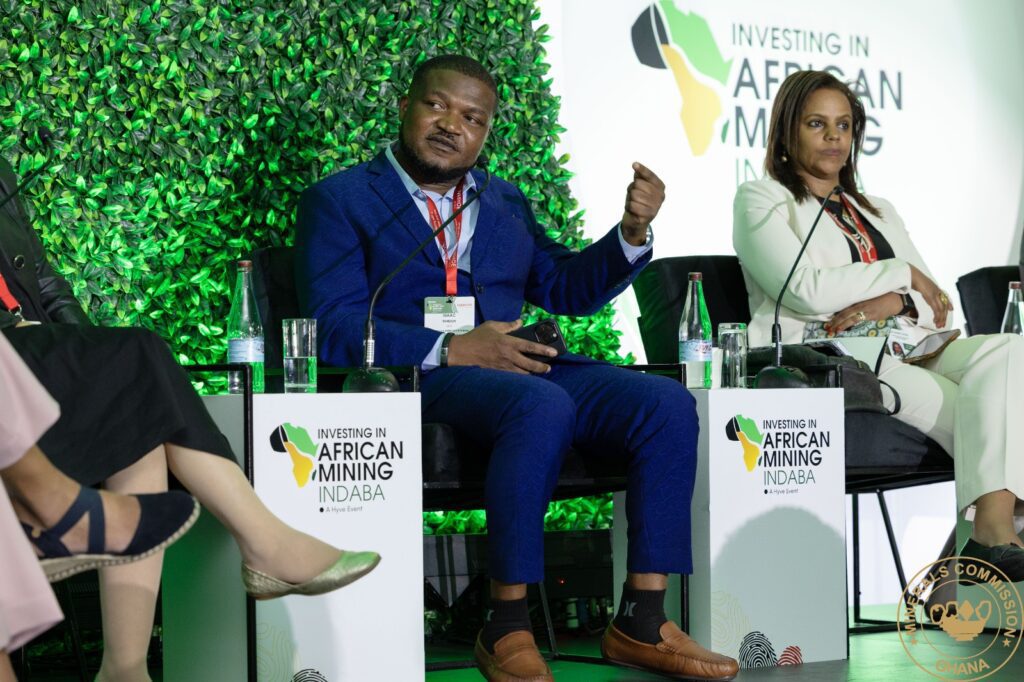
“We are introducing a new royalty regime that captures more value for the state when prices are high. This is not about punishing the investor, but it’s about ensuring that when God blesses us with high prices, Ghanaians also share in the blessing. This is perhaps the most significant work we have undertaken.”
Mr. Isaach Tandoh, Minerals Commission CEO

This strategic pivot comes as the government aggressively addresses long-standing regulatory “loose ends” that have historically allowed capital flight and underdevelopment in mining enclaves.
Beyond the royalty adjustments, the state has officially revoked Legislative Instrument (L.I.) 2462, effectively reinstating a total ban on mining within protected forest reserves to safeguard the nation’s biodiversity.
Furthermore, the reform introduces a medium-scale mining license category, a critical addition intended to bridge the existing gap between artisanal small-scale miners and multinational conglomerates.
By phasing out development agreements, which the government argues have been frequently abused to the detriment of local districts, the new policy framework seeks to enforce stricter accountability and ensure that mineral revenues remain within the Ghanaian economy to fuel domestic growth.
Bridging the Gap: From Compliance to Strategic Imperative
The cornerstone of these reforms is a fundamental shift in how local content is perceived and executed within the extractive sector.
For decades, local participation was often viewed as a “compliance checkbox,” a mere formality to be satisfied on paper. The new framework, however, embeds local content as a “strategic imperative” across the entire value chain from procurement decisions to employment policies. By mandating tougher rules for in-country procurement, the government aims to empower Ghanaian firms to compete for high-value contracts that were previously dominated by foreign entities.
This indigenization of the supply chain is expected to create a significant multiplier effect, retaining a larger portion of the mining “spend” within the local economy and fostering a robust ecosystem of indigenous technical expertise.
Institutional Reforms and the End of Stability Abuse

A critical component of the 2026 reform agenda is the complete overhaul of the Stability and Development Agreement framework.
The Minerals Commission has observed a disturbing trend where companies utilized revenues generated from Ghanaian soil to acquire assets in other jurisdictions while simultaneously “refusing to develop their mines and even pay basic obligations to district assemblies.”
To curb this, development agreements are being phased out entirely. The government argues that after years of managing the sector, it has gained the requisite experience to exercise greater regulatory flexibility.
By shortening the duration of stability periods and tightening the criteria for their application, the state is reclaiming its right to adjust fiscal terms in response to national economic needs, ensuring that “the foundation” of the industry remains solid and beneficial to the public purse.
A New Tier for Ghanaian Entrepreneurs

The introduction of the medium-scale mining license represents a structural bridge designed to formalize and elevate the “missing middle” of the industry.
This new category allows local entrepreneurs who have outgrown the small-scale artisanal stage but lack the massive capital of global giants to operate within a regulated, professionalized environment.
This tier is expected to unlock opportunities for Ghanaian professionals to build sustainable, medium-sized mining businesses that adhere to modern environmental and safety standards.
By reviewing the Mining Act “section by section, clause by clause,” the government is signaling to the global community that while it remains open for investment, the era of “asymmetric benefits” has ended.
The focus has shifted toward a model where the extraction of natural resources is inextricably linked to the tangible development of the Ghanaian people.