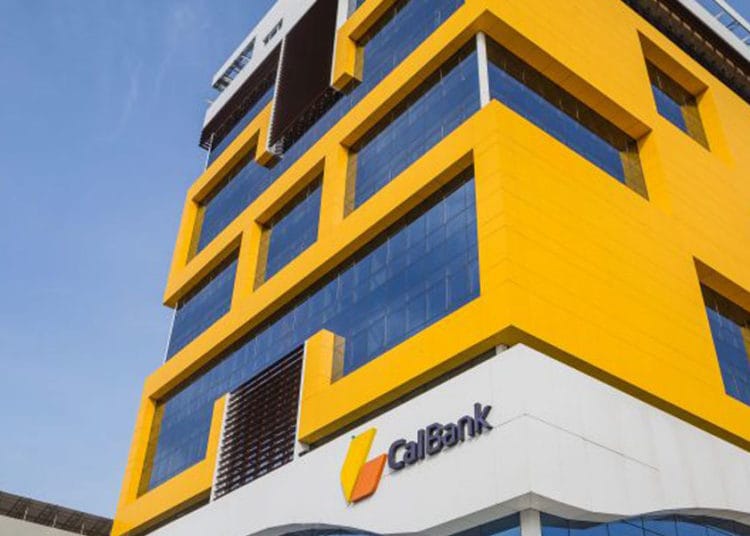
CalBank Plc has staged one of the most remarkable recoveries in Ghana’s banking sector, raising GH₵1.164 billion through a Renounceable Rights Issue and Private Placement and securing the full lifting of regulatory restrictions on new lending.
The capital raise not only exceeded expectations but also marked a defining moment in the indigenous lender’s return to stability and growth.
The bank’s 2025 Annual Report, released to the Ghana Stock Exchange, shows that the fresh capital injection restored its Capital Adequacy Ratio to 19.8 percent, well above the regulatory minimum set by the Bank of Ghana. This development paved the way for the central bank to remove the Prompt Corrective Action restrictions that had limited CalBank’s ability to create new assets and expand its loan book.
For customers and businesses that rely on credit, the lifting of the lending freeze signals renewed access to financing at a time when macroeconomic conditions are steadily improving.
A Capital Raise That Surpassed Expectations
The Rights Issue and Private Placement were central to the bank’s turnaround strategy. CalBank originally targeted GH₵900 million. Instead, the offer attracted subscriptions totaling GH₵1.164 billion, representing a 29.4 percent oversubscription. A total of 1,799 shareholders, both institutional and individual investors, participated in the exercise.
Demand for the Private Placement alone generated commitments exceeding GH₵500 million, which the bank ultimately declined due to the strong oversubscription of the overall offer. The response reflected renewed investor confidence in the bank’s recovery plan and leadership.
The fresh capital dramatically improved the bank’s regulatory standing. In 2024, CalBank’s Capital Adequacy Ratio stood at negative 6.4 percent, a position that triggered restrictions under the Bank of Ghana’s supervisory framework. By the close of 2025, the ratio had rebounded to 19.8 percent, comfortably exceeding the threshold required for safe operations.
With the capital buffer restored, the Bank of Ghana lifted the Prompt Corrective Action restrictions, effectively reopening the bank’s mandate to lend to households, small businesses, and corporate clients.
From Deep Losses to Steady Recovery
CalBank’s rebound comes after two extremely difficult years. The Domestic Debt Exchange Programme significantly impacted the banking industry, and CalBank was among the institutions that recorded heavy losses. The bank posted losses of GH₵809.8 million in 2022 and GH₵671.1 million in 2023.
In 2024, the lender began its recovery, reporting a profit after tax of GH₵267.7 million. That momentum strengthened in 2025, with profit after tax rising to GH₵304.9 million.
Operating income increased to GH₵886.0 million in 2025 from GH₵802.5 million in the previous year, representing a 10.2 percent growth. Net trading income surged by 65.6 percent, while net interest income grew by 12.6 percent. At the same time, non staff operating expenses fell by 18.8 percent, demonstrating a disciplined cost management strategy.
The bank’s cost to income ratio improved to 67.53 percent from 72.46 percent in 2024. This steady consolidation highlights management’s focus on operational efficiency during the restructuring period.
Asset quality also saw a sharp turnaround. The non performing loan ratio dropped significantly to 17 percent from 47.5 percent in 2024. The improvement was driven by strong loan recoveries and regulator approved write offs of fully provisioned legacy loans. Management has set a target of aligning with the Bank of Ghana’s 10 percent NPL threshold by the end of 2026.

Market Confidence Returns
Investor sentiment toward CalBank strengthened alongside its improved financial position. The bank’s share price rose from GH₵0.35 at the start of 2025 to GH₵0.64 by year end, delivering an impressive price return of 82.85 percent.
The broader macroeconomic environment also provided support. Inflation declined sharply to 3.8 percent by the end of January 2026 from 23.8 percent a year earlier. The Monetary Policy Rate was reduced cumulatively by 1,000 basis points during the year, easing borrowing costs across the economy.
In addition, the Ghana cedi appreciated by approximately 41 percent against the United States dollar, marking its first annual appreciation since 1994. Gross international reserves exceeded USD 13.8 billion, equivalent to about 5.7 months of import cover.
Although declining yields compressed returns across the banking sector, CalBank’s diversified income streams helped cushion the impact.
A Renewed Focus on Growth
Managing Director Carl Selasi Asem told shareholders that the bank is entering 2026 with renewed confidence and a clear strategy. The focus will be on rebuilding the lending franchise, particularly in the retail and small and medium sized enterprise segments. Management also plans to expand fee based income and accelerate technology driven innovation.
Beyond financial performance, the bank marked its 35th anniversary in 2025 and received three awards at the Chartered Institute of Marketing Ghana Annual National Marketing Performance Awards, recognizing its customer satisfaction, service quality, and net promoter score performance.
For many stakeholders, the successful capital raise and the lifting of the lending ban represent more than regulatory milestones. They signal the resilience of a homegrown financial institution that weathered one of the toughest periods in Ghana’s banking history and emerged stronger.
As CalBank reopens its doors fully to new lending, businesses and households alike will be watching closely to see how this renewed capacity translates into real economic momentum in the years ahead.
READ ALSO: From Crisis to Stability: Ghana’s Broad-Based Macroeconomic Turnaround