
Ghana Chamber of Mines has sounded a critical alarm over the country’s escalating fiscal regime, warning that excessive tax burdens are reaching a tipping point that threatens to stifle future capital inflows.
Chief Executive Officer of the Chamber, Ing. Kenneth Ashigbey, cautioned that Ghana’s average effective tax rate is now nearing 60%, a figure he argued is significantly higher than that of regional and global competitors.
This heavy fiscal weight is creating a “rational” deterrent for both domestic and foreign investors who seek jurisdictions with more competitive returns.
“The optimum number is to be between 40% as your lower band and your higher band being up to 15%. Ghana is hitting close to the 60% at our average effective tax rate. We are already a very high tax jurisdiction.”
Ing. Kenneth Ashigbey

Ing. Ashigbey highlighted a cumulative structure that includes a 5% royalty, a non-deductible 3% Growth and Sustainability Levy, and a 10% government free-carry interest.
When coupled with a 35% Corporate Income Tax (CIT) and an 8% withholding tax, the “effective” burden far exceeds the 27% CIT seen in competing nations.
This disparity is particularly concerning as investment decisions are fundamentally driven by the pursuit of maximum returns, and Ghana’s current trajectory risks eroding its position as a top-tier mining destination.
Fiscal Overload vs. Competitive Attraction

In the highly competitive global extractive sector, capital remains exceptionally mobile and sensitive to fiscal stability.
Ing. Ashigbey noted that even at the previous 5% royalty mark, the inclusion of the 3% Growth and Sustainability Levy which is not tax-deductible effectively functions as a “4% royalty” when computed under standard accounting practices.
This “stealth” increase, combined with the 10% free-carry interest the state holds in every mine, creates a scenario where the government’s total “take” leaves little room for the operational reinvestment necessary to sustain long-term production.
The Paradox of Diminishing Returns
Through thorough industry analysis, Ashigbey posits that by maintaining these excessive rates, the country is inadvertently losing more revenue than it gains.
While high percentages look favorable on paper, they often lead to a “deadweight loss” where projects become economically unviable, leading to stalled exploration and the premature closure of marginal mines.
Consequently, the state loses out on the decades of CIT, payroll taxes, and indirect economic stimulation that a lower, more sustainable tax rate would have secured through a larger volume of active projects.
Protecting Ghana’s Mining Future
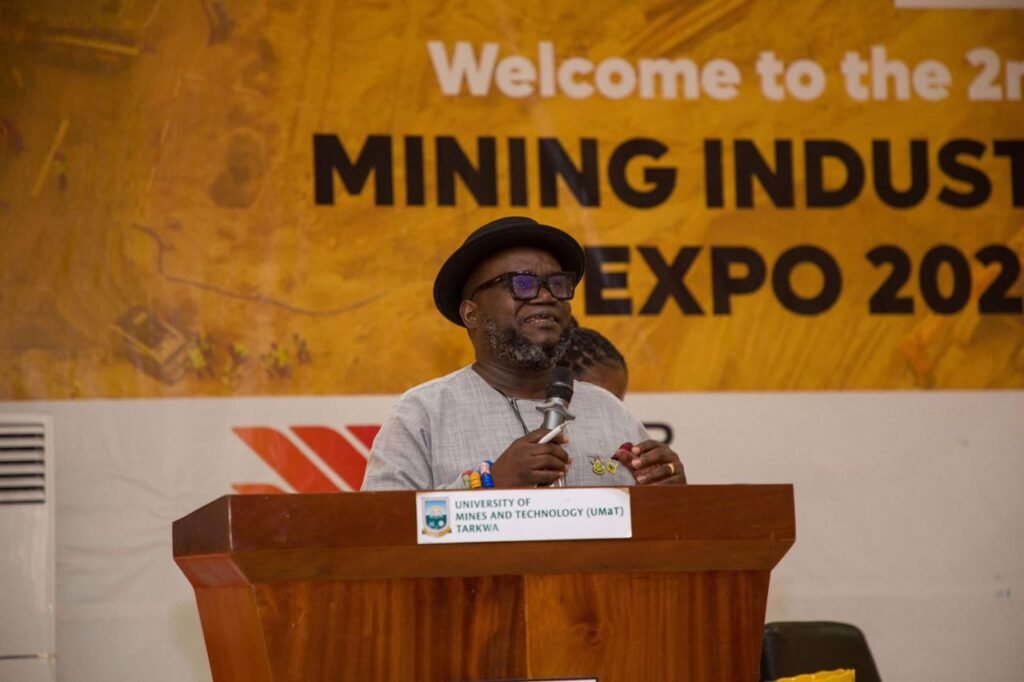
The Chamber of Mines is calling for a cautious approach to any further fiscal adjustments, stressing that investment is “very rational” and will naturally flow toward jurisdictions with lower barriers to entry.
To remain a leader in the African mining landscape, Ghana must align its fiscal framework with the lower bands of the global average.
Ing. Ashigbey maintains that a more balanced tax structure would not only attract new capital but also ensure that existing mines can continue to grow and provide sustainable revenue to the national treasury for years to come.
Ghana Chamber of Mines’ call is eminent and crucial especially at the time government is considering mining sector reforms.
READ ALSO: CDD-Ghana Praises Mahama’s Anti-Corruption Drive, Flags Serious Risks