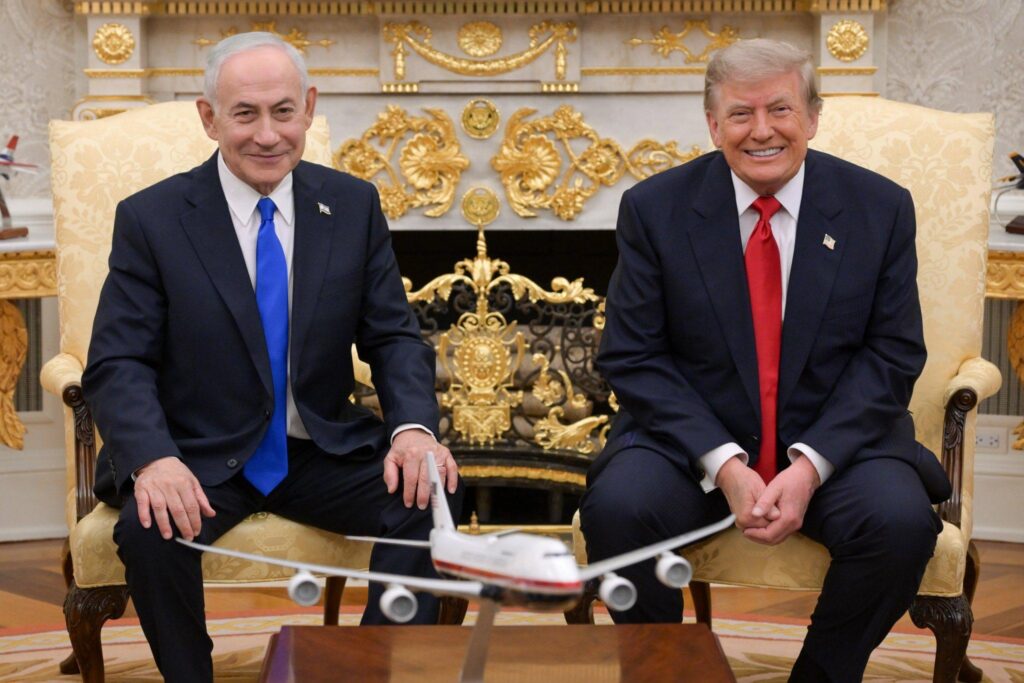
Benjamin Netanyahu’s recent visit to Washington, D.C., where he met U.S. President Donald Trump at the White House for the seventh time since Trump returned to office in January 2025, has renewed debate over the effectiveness of international justice mechanisms when they involve leaders backed by powerful states.
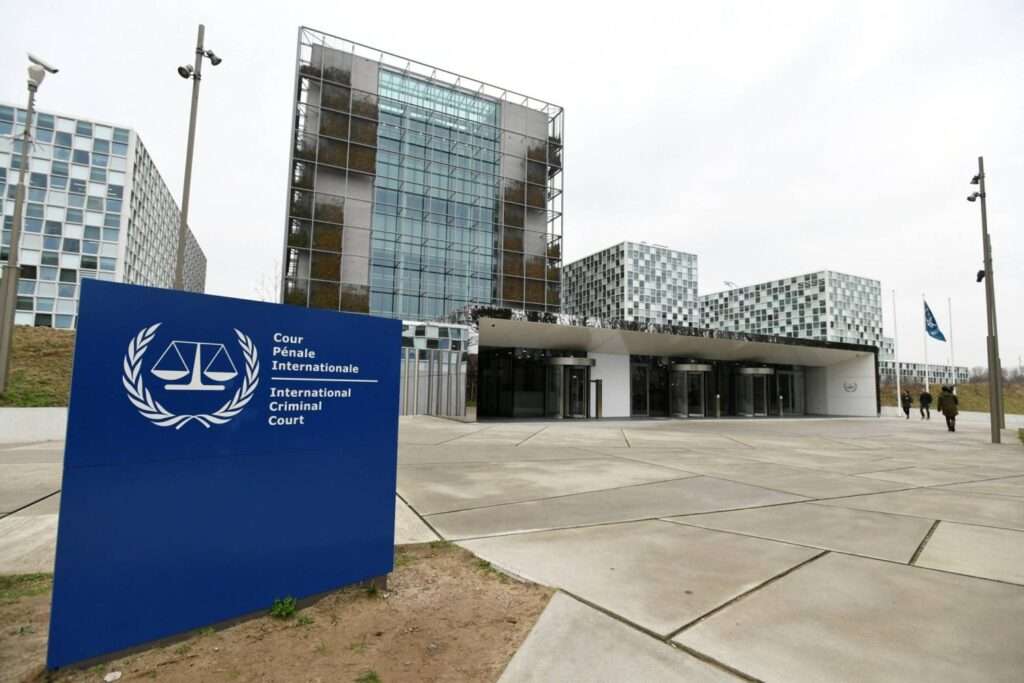
The International Criminal Court (ICC) has issued arrest warrants for the Israeli Prime Minister and former Israeli Defence Minister Yoav Gallant, accusing them of crimes against humanity in connection with Israel’s military campaign in Gaza. Netanyahu has rejected the allegations, describing them as “bogus,” while Trump has continued to provide assurances that he will not be arrested on U.S. soil.
In an interview with The Vaultz News, Dr. Catherine Gegout, Associate Professor of International Relations at the University of Nottingham, opined that the ICC is facing one of the most consequential tests of its authority as Israeli Prime Minister Benjamin Netanyahu continues to travel internationally despite an active arrest warrant.
For Dr. Gegout, the significance of the case extends well beyond the immediate legal dispute. “The long-term consequences of the Netanyahu case are critical for future genocides, and the politics of Israel and Palestine, the U.S. and the EU,” she said.
Although the ICC lacks the ability to enforce its own arrest warrants, Dr. Gegout argued that the existence of such warrants still represents an important shift in international accountability.
“When there was no ICC, leaders of powerful states could commit war crimes with impunity. Today, it is different. Even if they are not arrested now, they could be arrested when they are no longer in power.”
Dr. Catherine Gegout
She pointed to historical examples including Augusto Pinochet, Slobodan Milošević, Hissène Habré, Charles Taylor and Omar al-Bashir, all of whom eventually faced legal consequences after leaving office or losing political protection.
“The fact that they [Netanyahu and Putin] are wanted by the ICC makes it legitimate to say that they are war criminals. And public opinion can become an important force against them.”
Dr. Catherine Gegout
Netanyahu’s Washington visit also illustrates the practical limitations of the ICC when dealing with countries that are not members of the court.
The United States, alongside China and Russia, are not parties to the ICC. Dr. Gegout noted that this weakens the court’s ability to enforce its decisions because three of the five permanent members of the United Nations Security Council do not recognise its jurisdiction. “In general, the fact that the U.S., China and Russia are states non-party to the ICC is a problem for the ICC,” she said.
“In terms of implementation of the arrest warrant in the case of Netanyahu, the US is not the only culprit. States party to the ICC Treaty, that is, Greece, Italy and France let him fly over their territory for his visit in July 2026 to the US. The ICC does not have the means to force its member states to arrest people. It is up to the citizens and laws of these states to put pressure on their own states to ensure their arrest.”
Dr. Catherine Gegout
She contrasted those decisions with Spain, which she said has taken a more critical stance toward Netanyahu and Israel. “For instance, Netanyahu did not fly over Spain as the Spanish government and people have been vocal against him,” she noted.
Despite the ICC warrant, Netanyahu has said that he will address the United Nations General Assembly in New York in September.
Dr. Gegout asserted that it demonstrates how diplomatic realities often outweigh international legal obligations. “Netanyahu was already present at the UN General Assembly in 2025,” she stated, adding, “Representatives from dozens of countries walked out from the Assembly, so only symbolic action is possible.”
She argued that the Israeli Prime Minister’s continued ability to travel to the United States despite the warrant reflects broader challenges facing international law. “This shows the limits of international law, and the prevalence of power politics,” she said. “It also shows the limits of morality of many governments,” she added
Dr. Gegout referenced remarks made by former U.S. President Bill Clinton in 1998 following the 1994 Rwandan genocide, when he declared, “We must have global vigilance and never again must we be shy in the face of the evidence.” “But this has been ignored by heads of state in the case of Netanyahu,” she said.
Changing International Opinion
While legal enforcement remains uncertain, Dr. Gegout believes the political landscape surrounding Israel is evolving.
She argued that Israel under Netanyahu’s leadership has become increasingly isolated internationally, pointing to growing criticism from several European governments and shifts in public opinion in both Europe and the United States.
Citing recent polling showing Americans’ views of Palestinians have become more favourable relative to previous years and growing criticism of U.S. military support for Israel, she said, “In the U.S., there is a shift of opinion.”
She also pointed to criticism from countries including Ireland and Spain, as well as broader public opinion surveys across Europe that indicate increasingly negative views of Israel. “If this trend continues, this means that Israel will lose U.S. support in the long term,” she said.
“Even if Netanyahu is never arrested, the ICC’s decision to issue an arrest warrant against him means that he will always be viewed as a war criminal.”
Dr. Catherine Gegout
ICC Credibility After Prosecutor Controversy
Netanyahu has cited recent sexual misconduct allegations involving former ICC Prosecutor Karim Khan to question the court’s credibility.
Dr. Gegout, however, drew a distinction between allegations against an individual official and the institution itself. “The removal of Karim Khan has an impact on his own credibility, not that of the court,” she said.
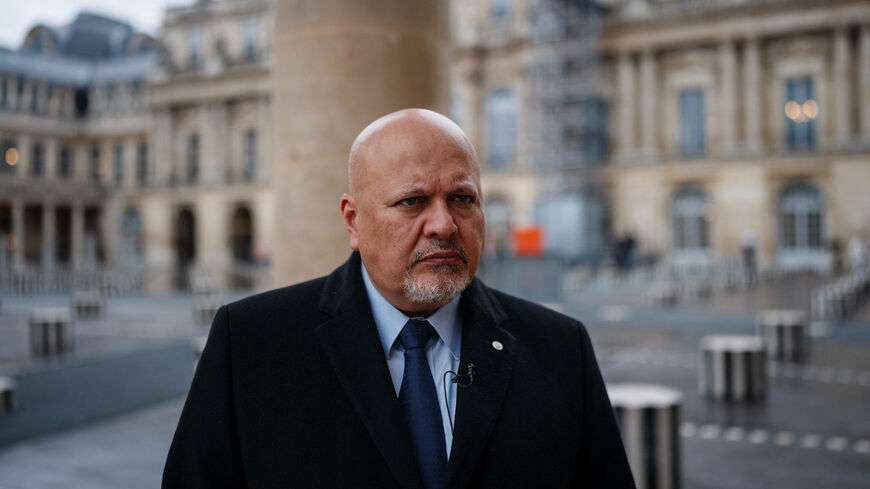
She noted that allegations of misconduct can arise within courts and public institutions and should be investigated through established legal procedures.
“These claims are independent from the actual court cases,” she said. “The court cases against Netanyahu and all other people with an ICC arrest warrant will continue.”
As debate continues over the court’s authority, Dr. Gegout believes the Netanyahu case will remain a defining measure of whether international criminal justice can maintain relevance when confronting leaders supported by influential states.
While enforcement may depend heavily on political will, she argues that the existence of ICC warrants continues to shape international legitimacy, public opinion and the long-term pursuit of accountability.
READ ALSO: Trump Signs Executive Order Creating Military Spouse Commission