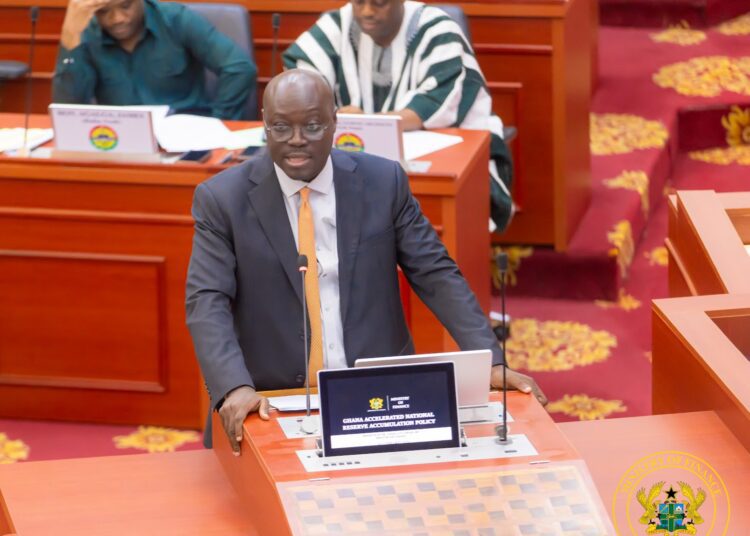
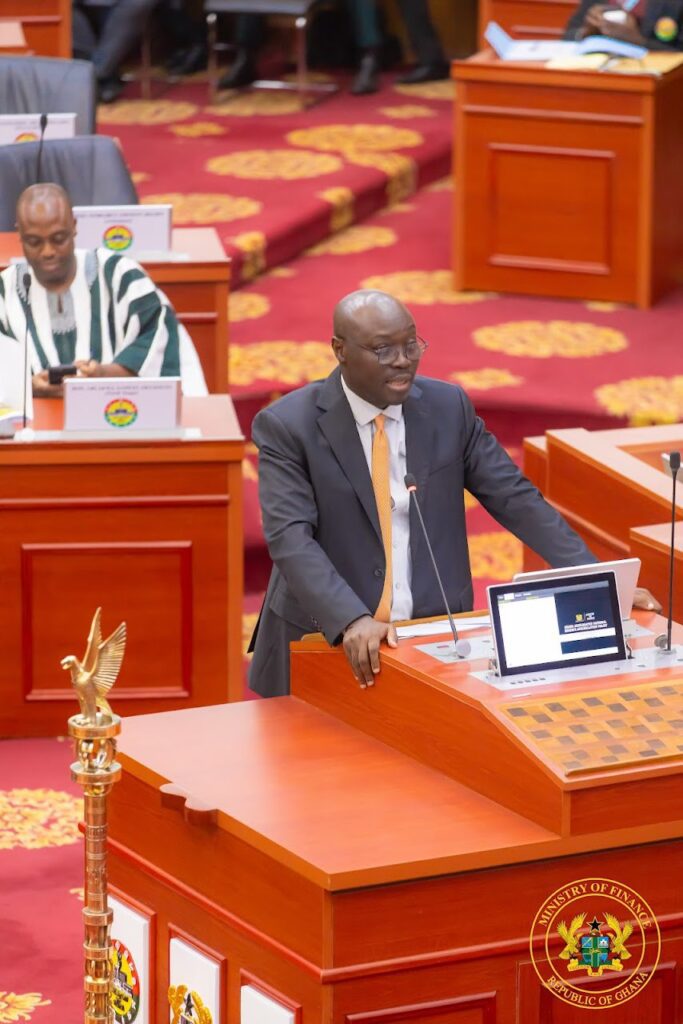
Parliament has approved Ghana’s first National Reserve Accumulation Policy, marking a major shift in the country’s approach to managing external reserves and protecting long term economic stability.
The policy, known as the Ghana Accelerated National Reserve Accumulation Policy, sets a clear target of building international reserves equivalent to fifteen months of import cover by the end of 2028. The Finance Minister described the approval as a decisive step toward strengthening Ghana’s resilience against global economic shocks.
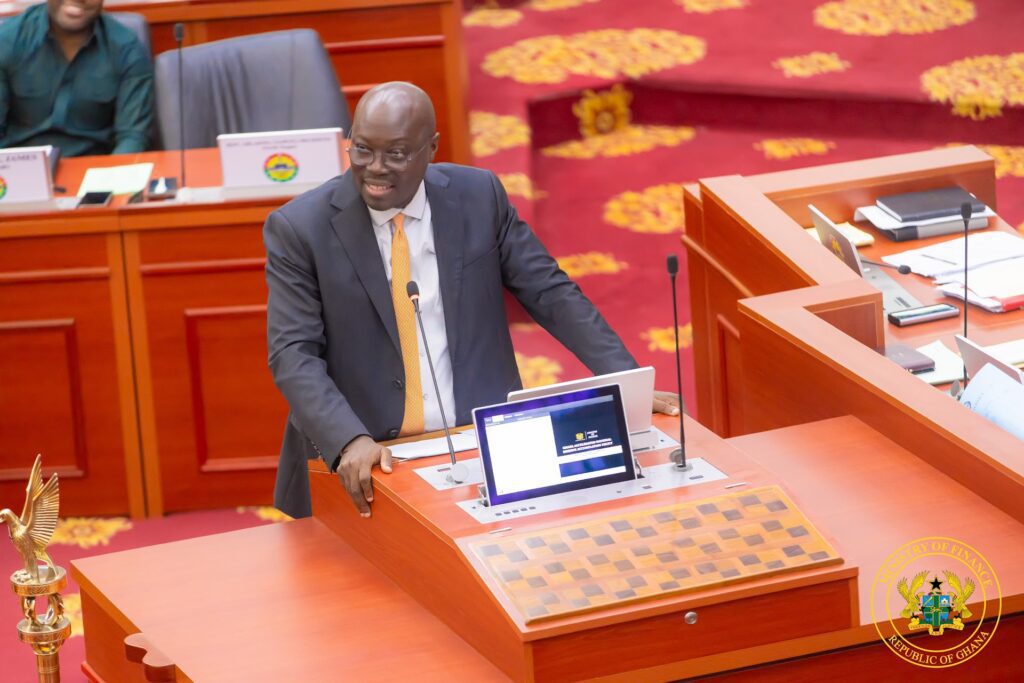
Writing after the approval, Finance Minister Dr. Cassiel Ato Forson said the policy was deliberately crafted to accelerate reserve accumulation and safeguard the future of the country.
He noted that the framework provides a measurable roadmap that moves Ghana away from practices that previously exposed the economy to volatility and high financing costs.
For decades, Ghana relied heavily on external borrowing and short term financial arrangements to shore up its foreign reserves. These measures often involved Eurobond issuances, commercial loans, and central bank swaps that increased reserve levels in the short run but imposed significant interest costs and refinancing risks over time.
According to the Ministry of Finance, this approach proved unsustainable, especially during periods of global tightening and commodity price swings, making it reliability untenable.
The new policy marks a clear departure from that model. Instead of debt driven accumulation, GANRAP adopts a structured, reform driven and gold backed framework aimed at building reserves in a more durable and cost efficient manner.
Government believes this shift will help break the cycle of reserve depletion and emergency borrowing that has characterized past downturns. Dr Forson described the policy as a tool for building what he called an economic war chest, designed to protect macroeconomic stability and support long term growth.
He expressed gratitude to citizens for their support and assured them that the administration of John Dramani Mahama remains committed to safeguarding the country’s economic future.
Targets and Timelines Under GANRAP
At the core of the Ghana Accelerated National Reserve Accumulation Policy, is a set of clear numerical targets. By the end of 2026, Ghana aims to raise its reserve cover to 8.6 months of imports.
This is expected to increase further to 11.8 months by the end of 2027, before reaching the full fifteen-month target in 2028. Government officials say these milestones will allow for steady progress while maintaining fiscal and monetary discipline.
The Ministry of Finance argues that the traditional benchmark of three months of import cover is no longer sufficient in a world marked by frequent global shocks, supply chain disruptions and volatile capital flows. Recent economic history, including sharp exchange rate pressures and debt restructuring, has reinforced the need for a stronger buffer.
A central pillar of GANRAP is gold accumulation. The policy is anchored in the Ghana Gold Board Act of 2025, which mandates the Ghana Gold Board to support reserve building through structured gold purchases.
Under this framework, the Gold Board is expected to acquire approximately 3.02 tonnes of gold each week to bolster the reserves of the Bank of Ghana. Officials say this approach allows the country to leverage its natural resources to strengthen external buffers without incurring excessive debt.
Rising global gold prices have also improved the attractiveness of this strategy, offering a more stable and predictable source of foreign exchange than short term borrowing.
Fiscal Discipline and Domestic Resources
Beyond gold, the reserve policy is closely linked to broader fiscal and structural reforms. Government has committed to maintaining a primary budget surplus and enforcing public procurement laws to limit wasteful spending.
These measures are intended to ensure that reserve accumulation is not undermined by unchecked expenditure or fiscal slippages. The policy also prioritizes domestic resource mobilization.
By expanding non traditional exports and improving value addition in key sectors, authorities hope to generate sustained foreign exchange inflows that support reserve growth over time. This domestic focus is seen as essential to reducing exposure to volatile external financing conditions.
GANRAP was introduced against the backdrop of improving macroeconomic conditions. In 2025, inflation eased significantly and gross international reserves climbed to about thirteen point eight billion dollars, equivalent to 5.7 months of import cover.
While this represented a notable recovery, the Ministry of Finance maintains that it remains inadequate to fully protect the economy from major external disruptions.

By setting a more ambitious reserve target, the government aims to consolidate recent gains and provide a stronger foundation for future growth. Analysts note that successful implementation will depend on consistent policy execution, transparency, and coordination across fiscal, monetary, and trade institutions.
The approval of the National Reserve Accumulation Policy signals a long term commitment to strengthening Ghana’s external position. If implemented as planned, GANRAP could redefine how the country manages its reserves and responds to global economic uncertainty.
For government, the policy represents not just a technical financial framework, but a strategic investment in stability, confidence and national resilience.
READ ALSO: AmCham and GSA Strengthen Ghana-US Trade Standards