
Former Chief Justice Sophia Akuffo has raised serious concerns about Ghana’s approach to extended oil agreements, warning that ratifying contract extensions years before existing deals expire could lock the country into rigid and costly arrangements.
Speaking on the matter, Justice Akuffo questioned the logic behind approving extensions that only take effect after the original contract period ends.
“I still don’t understand why I read that the extended oil agreement still has some years to go.
“I think if there are still 10 years or more to go, why extend it for another period, which will start not from tomorrow but from the end of the previous agreement. We should stop doing that, and it should not even be ratified by Parliament.”
Former Chief Justice Sophia Akuffo
Challenging the ‘Untouchable Contract’ Mindset
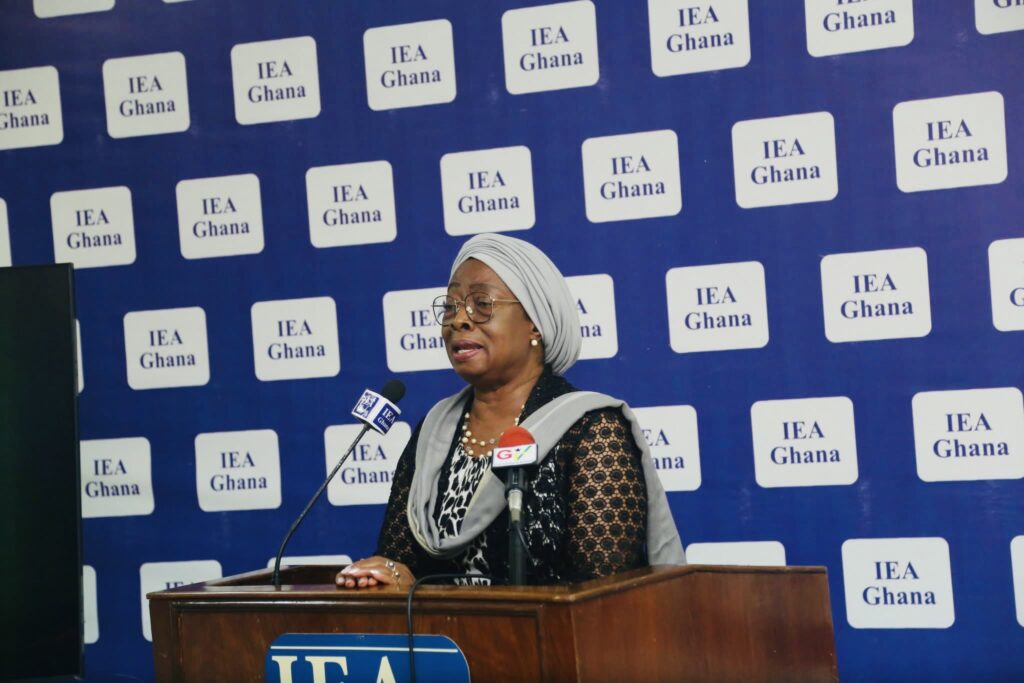
Justice Akuffo took aim at what she described as a national mindset that treats contracts as untouchable.
“I don’t know why we always think agreements are written, you know, we in Ghana believe it is as though the agreement is cast, not even in stone, but in diamond and blood, so you cannot touch.”
Former Chief Justice Sophia Akuffo
Her critique suggests that Ghana may be overly cautious in revisiting contractual terms, even when economic or market conditions change significantly over time.
According to her, this rigid approach can undermine the country’s bargaining power and prevent necessary adjustments that protect national interest.
Justice Akuffo stressed the importance of embedding review clauses in future agreements to provide legal pathways for renegotiation under specified circumstances.
“And in any case, if these are the agreements we’ve been signing, we had better make sure that in all coming agreements there will be review clauses.”
Former Chief Justice Sophia Akuffo
As a former judge and lawyer, she acknowledged the legal limitations once an agreement has been signed without renegotiation provisions.
“I cannot say go and renegotiate an agreement if in the document you have not given yourself the right or the power of renegotiation under specified circumstances, but going forward, there should be.”
Former Chief Justice Sophia Akuffo
Her position underscores the need for forward-looking contract design that anticipates economic shifts and evolving national priorities.
Concerns Over Arbitration and Legal Exposure

Justice Akuffo also expressed concern about the arbitration mechanisms embedded in many international petroleum agreements.
“We always leave an opening to the party of the other side, and then we lock ourselves into a lockstep move as a nation, and then you cough, and they take you to court in their country.”
Former Chief Justice Sophia Akuffo
She argued that arbitration venues often favour foreign companies, placing Ghana at a disadvantage in dispute resolution processes. “That’s the other thing where arbitrations and all those things are done in their country, and we are always losing practically,” she added.
Her remarks reflect broader anxieties about international arbitration frameworks that require disputes to be settled in foreign jurisdictions under rules that may not fully reflect domestic interests.
Referencing recent disputes, Justice Akuffo voiced frustration over the handling of arbitration involving Tullow Oil.
“I don’t pretend to know who represented us in the recent Tullow arbitrations… but whoever did, did us a great disservice, and we end up having this and that thrown at us, you have to pay this and that.”
Former Chief Justice Sophia Akuffo

She further questioned what she described as a contradiction in policy direction. “And then on top of all that, we extend the contract. I don’t understand,” she said, expressing disbelief at the decision to prolong agreements amid unresolved disputes.
Her comments suggest that contract extensions should be carefully evaluated in light of past arbitration outcomes and financial implications.
Justice Akuffo’s message was unequivocal. “We cannot lock and must never lock ourselves into those ways,” she warned.
Her intervention adds weight to ongoing discussions about transparency, flexibility and fairness in Ghana’s natural resource contracts.
As Ghana continues to negotiate and manage long-term petroleum and mineral agreements, her call for review clauses, balanced arbitration terms and strategic foresight may influence how future contracts are drafted and ratified.
The debate over extended oil agreements, she suggests, is not merely legal but fundamentally about safeguarding national sovereignty and ensuring that resource wealth delivers sustainable benefits for generations to come.
READ ALSO: NDC Chairman Rallies for Resounding Win in Ayawaso East By-Election