The structural transformation of Ghana’s trade architecture reached a significant milestone in Akosombo as the Association of Customs House Agents Ghana (ACHAG) convened for its 5th Annual General Meeting (AGM).
Under the evocative theme “Connect 24 – The role of Customs House agents under the 24-Hour Economy,” the assembly served as a strategic platform to align the logistics and freight forwarding industry with the government’s ambitious economic reset.
Describing the event, the Ghana Standards Authority (GSA) noted that the deliberations underscored a pivotal shift toward a digitally-driven, quality-focused trade environment designed to operate around the clock.
“As the Administration accelerates its drive toward Industrialization and export-led growth, the role of the Customs House agent has evolved from mere brokerage to becoming a frontline guardian of national revenue and a facilitator of the African Continental Free Trade Area (AfCFTA).
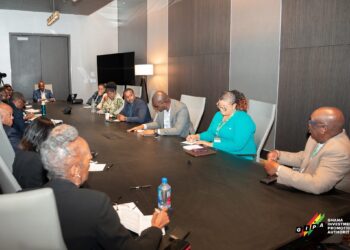
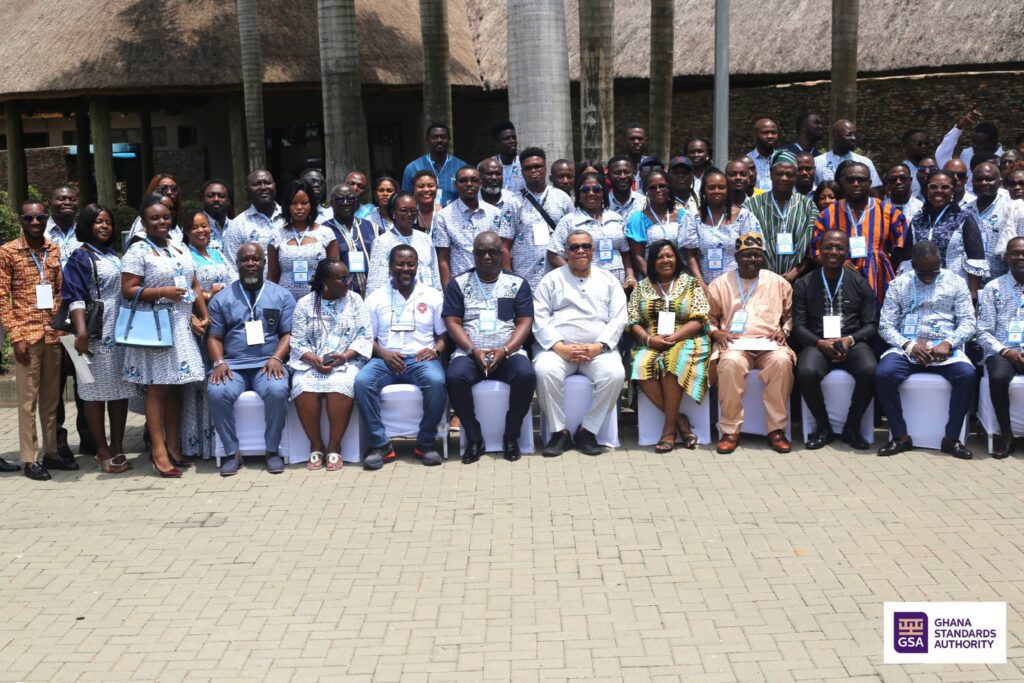
“The AGM brought together key stakeholders, including the Ghana Standards Authority, the Food and Drugs Authority, and the Ghana Shippers Authority, all focused on one goal: ensuring Ghana’s ports and borders never sleep”
Ghana Standards Authority
The keynote address, delivered by the Presidential Adviser on the 24-Hour Economy and Accelerated Export Development, Mr. Goosie Tanoh – following the 24-Hour Economy Act – set a stern tone for the proceedings. While acknowledging the vital contribution of agents to the national coffers, Mr. Tanoh issued a sharp warning against practices that undermine the state, threatening Ghana’s broader economic transformation agenda.

He specifically identified the abuse of customs transit regimes, bonded warehouse systems, and the auction processes through misclassification and undervaluation of goods as “economic sabotage,” that threatens the stability of the Ghanaian Cedi.
The government’s stance is clear: the transition to a 24-Hour Economy requires a foundation of integrity. Misclassification and undervaluation of goods do not merely result in revenue leakage; they distort market competition and penalize compliant local industries.
To mitigate these risks, the government is leaning heavily on institutional integration through the Integrated Customs Management System (ICUMS), creating a “one-stop-shop” that eliminates the manual bottlenecks where corruption often thrives.
The CONNECT24 Ecosystem
A major highlight of the AGM was the unveiling of the CONNECT24 initiative. This strategic pillar of the 24-Hour Economy seeks to build an integrated, multimodal logistics ecosystem that physically links the points of production to the points of export.
Mr. Tanoh explained that for the 24-hour cycle to be effective, there must be a seamless flow of goods from Agriculture hubs and industrial parks to aggregation centers, and finally to ports and airports.
Strategic infrastructure projects, such as the Volta Economic Corridor and the transformation of Tamale into a regional air cargo hub, are central to this vision. These corridors are designed to reduce the “time-to-market” for Ghanaian exports, giving local manufacturers a competitive edge in the continental market.
By ensuring that Customs House agents are operationally ready to clear cargo at any hour, Ghana can significantly increase its throughput and cement its status as the gateway to Africa.
24-Hour Shift System
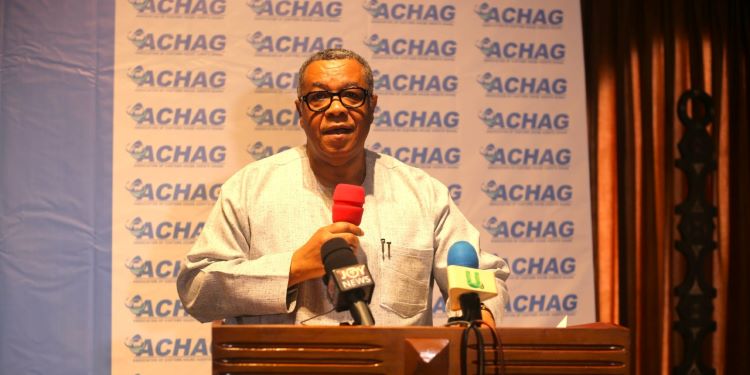
For the Association of Customs House Agents Ghana, the 24-hour mandate necessitates a radical change in business models. The outgoing President of ACHAG, Mr. Akwasi Serebour Boateng, emphasized that operational readiness is now the industry benchmark.
This includes significant investments in human capital, the implementation of robust shift systems, and the adoption of remote digital clearing tools to ensure that professional service excellence is maintained at 3:00 AM just as it is at 3:00 PM.
However, the path to a professional 24-hour regime is currently hampered by the activities of unlicensed practitioners. Mr. Boateng decried these “guerilla” agents as a threat to both government revenue and the credibility of the profession.
ACHAG reaffirmed its commitment to working with the Customs Division of the Ghana Revenue Authority to sanitize the industry, ensuring that only licensed, bonded, and trained professionals handle the nation’s international trade.
Strengthening Standards and Compliance
The Ghana Standards Authority and other regulatory bodies provided solidarity messages that reinforced the “quality-focused” aspect of the new economy. The GSA reaffirmed its commitment to working closely with agents to prevent the entry of substandard and counterfeit goods.
In a 24-hour trade cycle, the speed of clearance must not come at the expense of safety. Digitally-driven compliance checks are being integrated into the clearing process to ensure that only goods meeting national standards enter the Ghanaian market.
The Deputy Commissioner of Customs, Nana Birago Owusu Ansah, representing the Acting Commissioner, commended the agents for their resilience but reminded them that the “integrity of the profession is the currency of the 24-hour economy.”

As Ghana moves into the second half of 2026, the collaboration between ACHAG, Customs, and the Ministry of Trade will be the deciding factor in whether the nation can truly leverage the AfCFTA to its full potential.
READ ALSO: Geopolitical Tension Risks Impacting ASM Gold Market – Analyst Warns