The 2026 Prospectors & Developers Association of Canada (PDAC) Convention has concluded in Toronto, signaling a powerful resurgence in global mineral exploration fueled by robust commodity markets and a heightened sense of industry optimism.
As the world’s premier mineral event, the convention served as a critical barometer for the sector, highlighting a renewed international commitment to securing the raw materials necessary for the global energy transition and technological advancement.
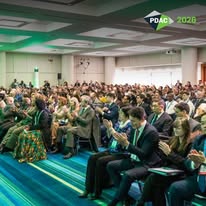
This year’s gathering achieved a historic milestone, welcoming a record-breaking 32,155 participants to the Metro Toronto Convention Centre, the highest attendance in the event’s 94-year history.
The massive turnout was matched by a record 1,300 exhibitors, effectively filling both the North and South buildings and creating the largest trade show footprint ever recorded by the association.
This unprecedented scale underscores the increasing recognition among governments, investors, and the public regarding the essential role minerals play in electrification, national defense, and modern economic infrastructure.
“Strong commodity markets are contributing to optimism across the sector. At the same time, governments and the public are recognizing more clearly how essential minerals are to economic growth, electrification, defence and modern technologies.”
PDAC President Karen Rees.
Strategic Global Networking and Policy Advocacy

Beyond the exhibition floor, PDAC 2026 functioned as a high-stakes hub for international diplomacy and capital allocation.
Over the four-day event, the convention facilitated hundreds of expert presentations and high-level discussions aimed at navigating the “complex global environment” that currently defines the extractive industries.
PDAC President Karen Rees emphasized that a strong mineral sector is now “fundamental to Canada’s economic prosperity, supply-chain security and sovereignty,” a sentiment that resonated with the many international delegations present.
The convention also served as a platform for critical policy advocacy. Rees noted that “government policy choices play a critical role in supporting the mineral sector,” specifically citing the success of made-in-Canada exploration tax credits.
These incentives are viewed as essential benchmarks for maintaining global competitiveness and “investor confidence” at a time when regulatory predictability is becoming a primary differentiator for capital flight.
Ghana’s Strategic Participation and Economic Outlook

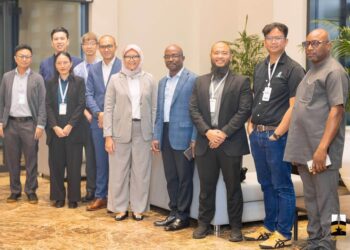
The presence of West African mining powerhouses was felt strongly this year, notably through the participation of Ghana’s Deputy Minister for Lands and Natural Resources, Hon. Alhaji Yusif Sulemana.
His attendance at the summit reflects Ghana’s proactive stance in the global race for mineral investment, particularly as the country seeks to diversify its portfolio beyond traditional gold mining into “green minerals” like lithium and manganese.
For Ghana, PDAC provides a unique window to showcase its “regulatory predictability” and “competitive fiscal regimes” to a concentrated pool of global investors.
During the sessions, the Ghanaian delegation focused on the “responsible development” of its natural resources, a theme that aligned with the convention’s focus on sustainable practices and Indigenous partnerships.
By engaging with global peers, Ghana stands to benefit from technical knowledge transfers and the potential for new bilateral agreements that could see increased exploration spending in the Birimian and Tarkwaian geological belts.
The insights gained regarding “supply-chain security” are expected to inform Ghana’s own domestic policies on value addition and local content.
Advancing Innovation and Future Exploration

The convention’s programming delved deep into the “key opportunities and challenges” shaping the future of the industry, from AI-driven exploration techniques to the financing of “last-mile” infrastructure projects.
The sheer density of “deal-making and investment discussions” throughout the week suggests that the record participation will likely translate into a surge of exploration activity throughout the 2026-2027 fiscal year.
As the industry looks ahead to PDAC 2027, scheduled for March 7–10, the momentum generated this week suggests that the mineral sector is no longer viewed as a traditional extraction industry but as a high-tech pillar of the global economy.
With the industry contributing over $156 billion to Canada’s GDP alone, the “renewed optimism” voiced by Karen Rees is backed by a global reality where minerals are the undisputed engine of the 21st-century’s industrial revolution.
READ ALSO: NDC Government Losing People’s Trust on ORAL – Barker-Vormawor Warns