
A policy brief from the IMANI Centre for Policy and Education has raised questions about Ghana’s proposed chemical restoration of polluted rivers, urging authorities to focus on stopping river pollution rather than relying on expensive chemical treatment methods.
The think-tank’s analysis titled “Stop River Pollution, not River Dechemicalisation: The Miracle on the Birim” examines the growing debate around the Environmental Protection Authority’s proposal to use chemical processes to restore heavily polluted water bodies across the country.
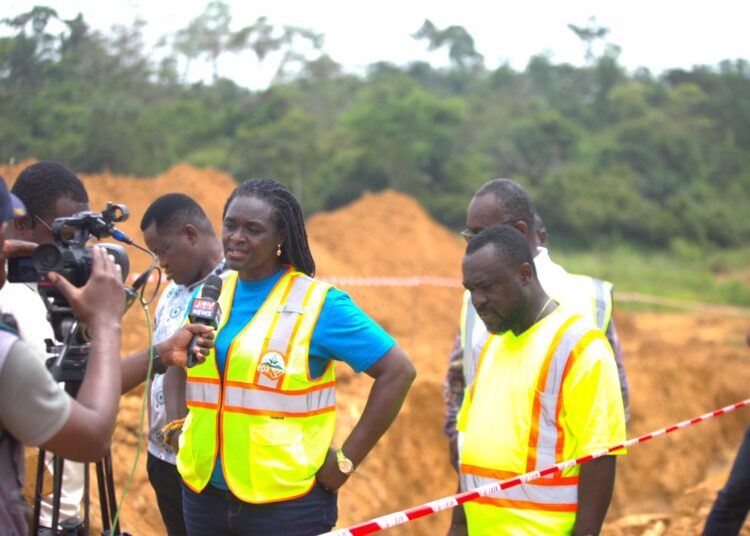
The controversy gained national attention following a public discussion on the television program The Probe, where the Executive Director of the Environmental Protection Authority, Professor Nana Ama Klutse, defended the agency’s experimental approach to river restoration.
The discussion emerged after exchanges between Prof. Klutse and environmental analyst Dr. Ekpor about the concept of “dechemicalisation” and whether it can realistically reverse the damage caused by illegal mining activities in Ghana’s major rivers.
According to the IMANI brief, the debate has evolved from a question of scientific terminology into a broader policy issue involving environmental protection, financial cost, and public procurement.
The Dechemicalisation Hypothesis
The EPA’s proposal is based on the use of nano liquid particles designed to settle suspended solids and neutralize pollutants in contaminated water bodies. The agency maintains that laboratory tests have shown promising results and that the technology could help restore rivers damaged by years of illegal mining.
However, IMANI analysts caution that success in controlled laboratory environments does not necessarily translate into effective solutions for complex natural ecosystems.

The think-tank argued that Ghana’s river systems are dynamic and constantly flowing, making them very different from controlled testing conditions. Variables such as water velocity, river depth, sediment movement, and seasonal rainfall patterns could significantly affect the outcome of chemical treatment in open water systems.
As a result, the organization believes the issue should not be treated purely as a scientific breakthrough but also as a policy decision that requires careful evaluation. “The primary concern is not merely the chemistry,” the brief noted, “but the inevitable intersection of environmental policy and public procurement.”
The Birim River Demonstration
To demonstrate the technology publicly, the EPA selected the Birim River as a test site. The river is a major tributary of the Pra River and has long been affected by illegal mining activities.
According to the brief, the location carried symbolic significance as well. The Birim originates in the Atewa Range near Kibi, an area associated with former President Nana Akufo-Addo, who once pledged to put his presidency on the line in the fight against illegal mining, commonly known as galamsey.
During the demonstration exercise, nano liquid particles were introduced into a contained and relatively still section of the river. According to observers, the results appeared dramatic within a few hours.
Sediments began to settle at the bottom, and the water gradually shifted from a muddy ochre color to a noticeably clearer appearance. For many spectators, the transformation seemed remarkable and was described by some as a “miracle” in river restoration.
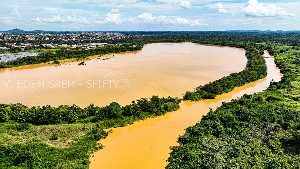
However, the IMANI analysis argued that the conditions of the experiment were highly controlled and therefore may not reflect the real behavior of a living river system.
The organization pointed out that the demonstration did not fully account for factors such as water flow speed, river depth variations, and the constant movement of sediments that occur in natural river environments.
The Financial Implications
Beyond the technical debate, the policy brief raised concerns about the potential financial burden of implementing the chemical restoration program across Ghana’s river network.
The EPA estimates that restoring polluted rivers using the proposed chemical process could cost approximately 200,000 dollars per kilometer. When applied to major rivers across the country, the projected cost becomes substantial.
For example, restoring the Birim River alone, which stretches about 175 kilometers, could require roughly 35 million dollars. Similar projections indicate that restoring the Tano River could cost about 80 million dollars, while rehabilitation of the Pra River may require close to 48 million dollars.

The Ankobra River could require about 38 million dollars, and restoration of the Densu River may cost about 24 million dollars. Even smaller rivers such as the Offin River would still require millions of dollars for similar interventions.
According to the IMANI brief, restoring just these six rivers could exceed 227 million dollars, which translates to roughly 2.4 billion Ghana cedis.
This scale of expenditure raises what the organization describes as an important public policy question about whether the program represents a genuine environmental investment or the creation of a potentially lucrative industry for restoration contractors.
The Need for a Structured Restoration Framework
IMANI argued that ecological restoration efforts cannot succeed if they are implemented in isolation from broader environmental enforcement measures.
The organization noted that illegal mining activities remain widespread in several forest reserves and river basins across the country. Reports indicate that between 2025 and 2026 alone, the number of forest reserves affected by illegal mining increased from 44 to 50.
Given these conditions, the think-tank warned that chemical treatment alone will not solve the problem if pollution continues upstream. For the so-called “Miracle on the Birim” to become a sustainable solution rather than a temporary spectacle, IMANI recommends a structured restoration framework.
The first step should involve strict enforcement actions to ensure that rivers are declared free from illegal mining activities before any restoration work begins. According to the brief, applying chemical treatments while pollutants continue to enter rivers would simply waste public resources.

The second step, according to the policy think-tank, involves hydrological correction, which requires reconnecting diverted river channels back to their natural flow paths.
Finally, degraded lands surrounding the affected rivers must undergo reclamation through vegetation restoration to prevent further erosion and sediment from washing back into the waterways during rainfall.
IMANI concluded that unless the source of pollution is eliminated, chemical interventions alone will not provide a lasting solution. “Until the source of the pollution is neutralized,” the IMANI warned, “any chemical miracle will be washed away by the next tide of illegal activity.”
READ ALSO: Ghana’s Petroleum Hub Project, Key to Energy Security – COPEC Research Head