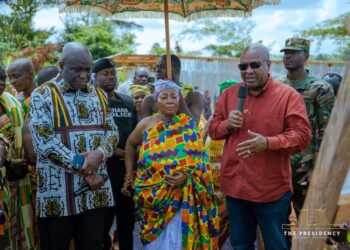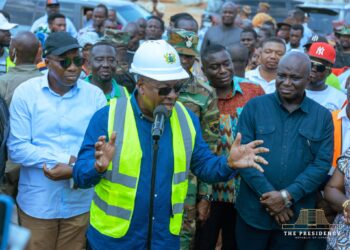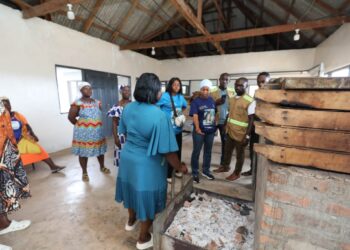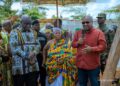

The Kwahu Afram Plains South District is bracing for a transformative moment in national agricultural policy as President John Dramani Mahama prepares to perform the official sod-cutting ceremony for the construction of the nation’s first Farmer Services Centre (FSC), in the farming community of Takoratwene.
Scheduled for Saturday, March 21, 2026, this project is a big part of the government’s ambitious “Feed Ghana“ agenda. The Minister for Food and Agriculture Hon. Eric Opoku noted that the event will signal the start of a nationwide effort to modernize rural farming by replacing traditional, labor-intensive practices with mechanized, technology-driven solutions.
“The Centres will provide mechanization services (tractors, farm equipment); distribute improved seeds, fertilizers and agro-inputs; offer training and extension services to farmers; support post-harvest handling and storage; and facilitate access to agribusiness services and markets”
Hon. Eric Opoku, Minister for Food and Agriculture
For the residents of Takoratwene and the surrounding plains, the arrival of the FSC represents a long-awaited shift in the agricultural value chain. For generations, farmers in this fertile belt have operated under the constraints of seasonal dependency and a lack of direct access to modern implements.
The new center is designed to function as a “one-stop hub,” fundamentally altering the way smallholder farmers interact with the broader economy. By decentralizing essential services – from high-grade seeds to advanced harvesting equipment – the government intends to lower the barrier to entry for the local youth, turning agriculture from a survivalist activity into a viable, modern business.

According to the Minister for Agriculture, the FSC project is explicitly designed to “Power the 24-Hour Economy,” for national economic revitalization. The center aims to facilitate everything from nighttime irrigation schedules and mechanized land preparation to automated, climate-controlled storage by providing infrastructure that supports continuous operational capacity.
This is not merely about increasing output; it is about creating a predictable, year-round production cycle that can satisfy the demanding export schedules required by the Accelerated Export Development strategy.
Hon. Opoku highlighted that the Takoratwene facility is meant to serve as a pilot model for the rest of the country – housing tractors, harvesters, and specialized implements under a “shared mechanization” framework.
He noted that the center will allow farmers to bypass the massive capital expenditure typically associated with commercial-scale farming. This shared-cost model is expected to drastically reduce the cost of production, directly increasing the profit margins for farmers and encouraging them to scale their operations.
Tackling Post-Harvest Losses
One of the most persistent hurdles for Ghanaian agriculture and the Ministry of Food and Agriculture (MoFA) has been the inability to store and process produce, leading to the annual loss of tons of crops. The FSC in Takoratwene is slated to address this through dedicated post-harvest handling and storage facilities.
Farmers will no longer be forced to sell their crops at “giveaway prices,” immediately after harvest just to avoid spoilage, as they will be provided with the tools to properly clean, dry, and store their yields. This focus on storage and primary processing is a key step toward the goal of true Industrialization.
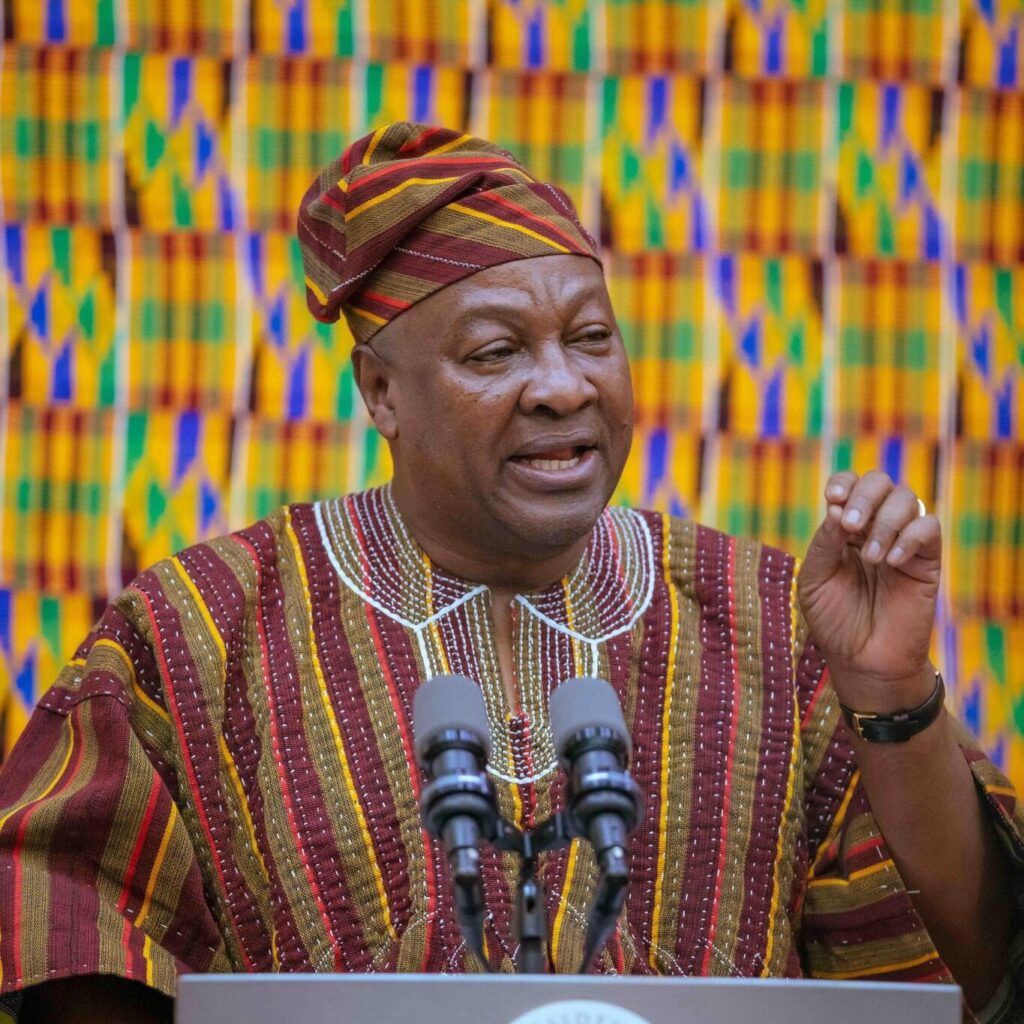
When farmers can hold their inventory in secure facilities, they gain leverage in the market and can seek out better trade agreements. Furthermore, the FSC will act as a central marketplace where agribusiness service providers can connect with farmers, effectively cutting out exploitative middlemen.
This creates a transparent, data-driven environment that aligns perfectly with the transparency requirements of modern international trade, providing a clear path for Ghanaian products to reach global markets.
A major priority for the Takoratwene project is the involvement of the nation’s youth, where professionalizing the farming experience – introducing digital tracking for inputs, mechanized equipment operation, and data-driven extension services – is expected to make the sector an attractive career path.
The FSC will serve as an educational center, where youth can receive training in the operation and maintenance of modern farm machinery. The focus on “Agrotech,” is crucial for solving the labor shortage in rural areas and fostering a new generation of entrepreneurs who view the land as a source of wealth rather than just subsistence.
As the Takoratwene ceremony approaches, the anticipation is palpable. For the farmers, this facility is the key to finally realizing the potential of the fertile Afram Plains. For the Administration, the FSC is a test of its ability to execute complex infrastructural projects that directly impact the daily lives of rural citizens.

If the model proves successful in Takoratwene, it will be rolled out across the remaining regions, creating a nationwide grid of agricultural innovation.