
The Public Utilities Regulatory Commission has reduced electricity tariffs by 4.81% and water tariffs by 3.06%, effective April 1, 2026, following its quarterly tariff review.
According to the Commission’s second-quarter tariff review decision, electricity tariffs will decline by an average of 4.81 percent while water tariffs will decrease by 3.06 percent across customer categories. The adjustments form part of the regulator’s quarterly tariff review mechanism, which evaluates key economic indicators affecting utility service providers.
In a statement issued on March 13, the Commission explained that the review was undertaken in line with its mandate to periodically adjust tariffs to reflect changing economic conditions.
“The Public Utilities Regulatory Commission wishes to inform consumers of electricity and water that the existing electricity and water tariffs have been reviewed downwards to take effect from April 01, 2026.”
Public Utilities Regulatory Commission
The tariff reduction marks a notable shift from previous adjustments that had often placed upward pressure on utility bills due to rising operational costs in the sector.
Key Economic Indicators Behind Tariff Review

The regulator said several economic variables were analysed before the final decision was taken. These included exchange rate movements, domestic inflation trends, electricity generation mix, and the cost of fuel used by power plants.
According to the Commission, the projected exchange rate for the second quarter of 2026 was set at GH¢11.1931 to the US dollar. This reflects a 6.78 percent decline from the previous quarter’s rate of GH¢12.0067 to the dollar.
Inflation was another key factor that contributed to the downward review. The Commission applied a three-month average inflation rate of 4.17 percent for the period between December 2025 and February 2026. This represented a sharp decline from the previous quarter’s inflation benchmark.
Despite the reductions in these indicators, the price of natural gas used to power thermal plants recorded a slight increase. The weighted average cost of gas rose to $8.0988 per million British thermal units, representing a 2.84 percent increase from the previous rate.
The Commission noted that the electricity generation mix remained unchanged at 20.9 percent hydro and 79.1 percent thermal generation, consistent with assumptions under the Multi-Year Tariff Order framework.
Electricity Tariffs Adjusted Across Customer Categories

The tariff review will affect several categories of electricity consumers, including residential, non-residential and industrial users.
For lifeline residential customers consuming between zero and 30 kilowatt hours, the energy charge has been reduced from 88.37 Ghana pesewas per kilowatt hour to 86.90 Ghana pesewas.
Other residential customers consuming up to 300 kilowatt hours will see their tariff fall from 200.21 Ghana pesewas per kilowatt hour to 196.88 Ghana pesewas. Consumers who use more than 300 kilowatt hours will also experience a reduction from 264.55 to 260.15 Ghana pesewas per kilowatt hour.
Non-residential customers have also been included in the adjustment. For those consuming up to 300 kilowatt hours, tariffs have been reduced from 180.76 to 177.75 Ghana pesewas per kilowatt hour, while higher-consumption users will see prices fall from 224.64 to 216.48 Ghana pesewas per kilowatt hour.
Large industrial consumers under the Special Load Tariff category are expected to see some of the biggest reductions, particularly high-voltage users whose tariffs have dropped significantly.
Water Tariffs Also Reduced Nationwide
In addition to electricity adjustments, water tariffs have also been reduced across multiple consumer groups.
The Commission announced that water tariffs will fall by 3.06 percent beginning April 1, with revised rates applying to residential users, commercial entities and industrial consumers.
Under the new tariff structure, lifeline residential consumers using up to five cubic metres of water will pay 593.49 Ghana pesewas per cubic metre instead of the previous 612.25 Ghana pesewas.
For residential consumption above five cubic metres, the tariff will drop from 1,083.20 Ghana pesewas per cubic metre to 1,050.01 Ghana pesewas.
Commercial users and industries will also see modest reductions in water charges, while service charges remain unchanged across most categories.
PURC Introduces Electric Vehicle Charging Tariff
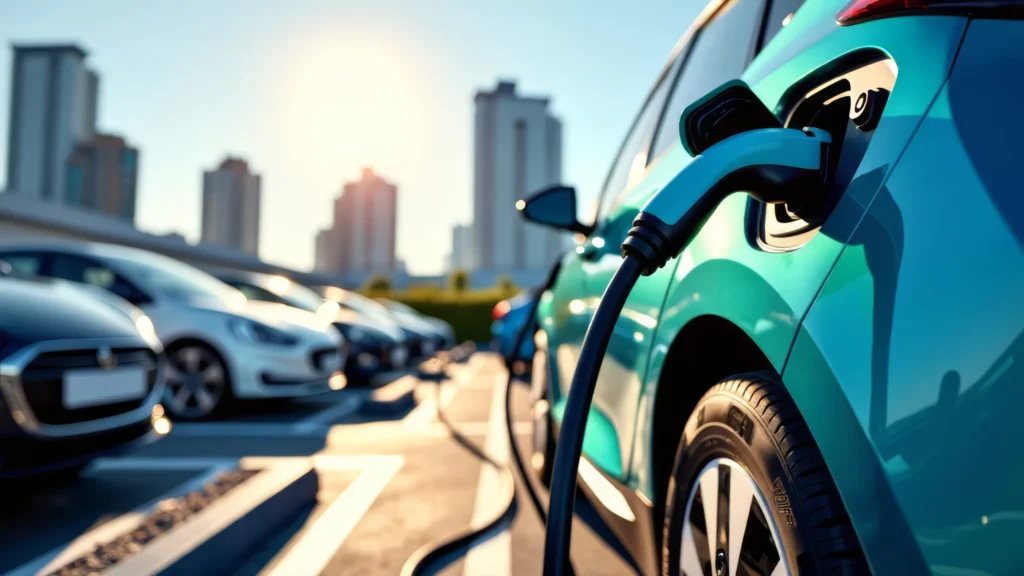
Alongside the tariff reductions, the Commission also announced a new electricity tariff category designed to support the country’s transition toward cleaner energy solutions.
The regulator revealed that it has introduced a commercial electric vehicle charging tariff for the first time as part of efforts to promote green transportation.
“To promote green energy transition, the Commission, for the first time, has introduced a commercial Electric Vehicle charging tariff.”
Public Utilities Regulatory Commission
This development reflects growing interest in electric mobility and Ghana’s broader commitment to reducing carbon emissions within the power and transport sectors.
Despite the tariff reductions, the Commission emphasised that it will continue monitoring the operations of regulated utility companies to ensure they meet performance standards.
The regulator said the quarterly tariff review mechanism remains essential for balancing the financial sustainability of utility providers with affordability for consumers.
“The Commission will continue to monitor operations of the regulated service providers and hold them accountable to its regulatory standards and benchmarks to ensure value for money and improved quality of service delivery.”
Public Utilities Regulatory Commission
The decision is expected to be published in the official gazette and made available on the Commission’s website as part of efforts to maintain transparency in the tariff-setting process.
READ ALSO: World Bank Boosts Ghana Recovery Efforts As World Bank MD Donohoe Visits Ghana, Liberia