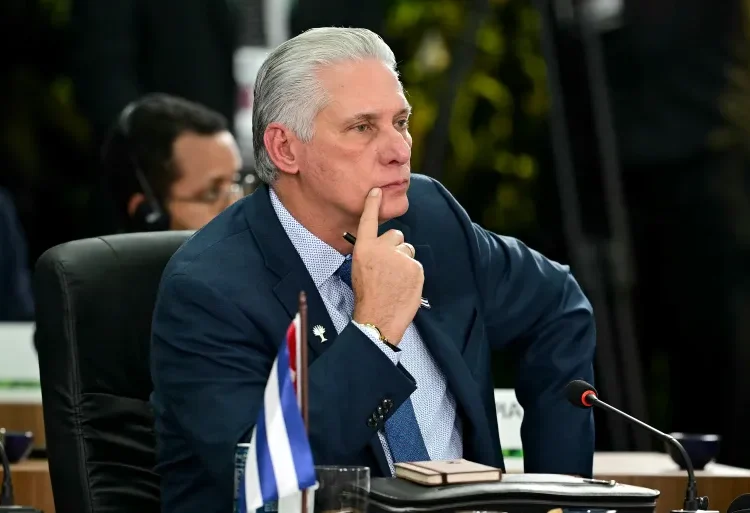
President Miguel Diaz-Canel has disclosed that Cuban officials have held talks with the United States government to seek solutions to the crippling blockade imposed by Washington.
This came as the Trump administration’s threats to take over the Caribbean nation escalate.
The talks come days after US President Donald Trump levelled his latest threat at Cuba, saying that the White House’s plans for the Caribbean nation may include a “friendly takeover.” Trump said that Cuba was in “deep trouble” as he threatened a “friendly takeover” of the Caribbean country.
In a video message aired on national television, Diaz-Canel asserted that the talks have been “aimed at finding solutions through dialogue to the bilateral differences we have between the two nations.” Diaz-Canel said that “international factors have facilitated these exchanges.”
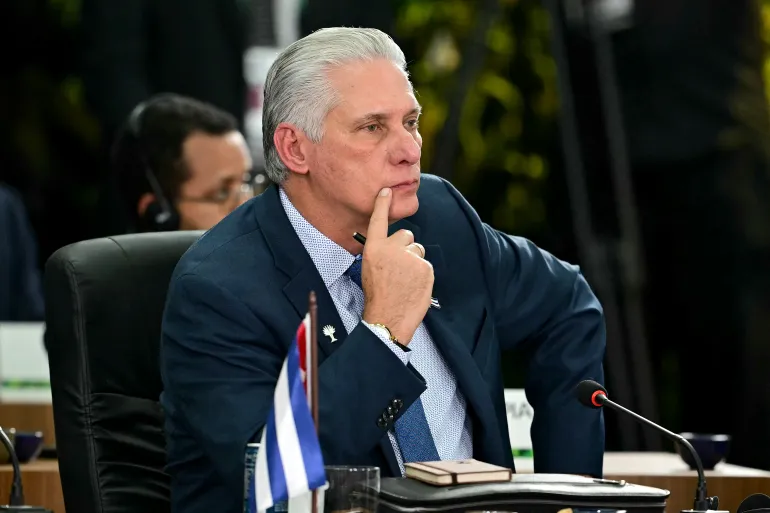
The Cuban President added that the aim was “to determine the willingness of both parties to take concrete actions for the benefit of the people of both countries.”
“And in addition, to identify areas of cooperation to confront threats and guarantee the security and peace of both nations, as well as in the region.”
Miguel Diaz-Canel
The Cuban President said that the talks were taking place “on the basis of equality and respect for the political systems of both states, and for the sovereignty and self-determination of our governments.”
President Trump has said that US Secretary of State Marco Rubio, who is the son of Cuban immigrants, is involved in the talks.

Speaking in February, Rubio stated that Cuba needed to change. “It needs to change dramatically because it is the only chance that it has to improve the quality of life for its people,” he told reporters on February 25, 2026.
For decades, severe US economic sanctions on Cuba have crippled its economy and cut it off from global trade. In response, Cuba has depended on oil supplies from foreign allies, including Mexico, Russia and Venezuela.
Also, the Cuban President said that no petroleum shipments have arrived on the island in the past three months, which he blamed on the US energy blockade.
Diaz-Canel added that Cuba, which produces 40 percent of its petroleum, has been generating its own power but that it hasn’t been sufficient to meet demand.
He said that the lack of power has affected communications, education and transportation, and that the government has had to postpone surgeries for tens of thousands of people as a result. “The impact is tremendous,” he said.
In the national broadcast, Diaz-Canel said that not having fuel enter Cuba for the past three months has led to the gradual decline of diesel and fuel oil reserves. Given this, he said, the country’s electrical grid has become increasingly “unstable.” To mitigate the impact Cuba had increased production of domestic crude and gas, as well as solar generation.
Cuba is experiencing several blackouts as the island struggles with fuel shortages, which have been made worse by pressure from the US.
Since returning to the White House, Trump has made clear his desire to change Cuba’s leadership. He has also threatened tariffs on goods imported into the US from any country that gives Cuba oil.
Havana relies heavily on imported fuel for its electricity and the US has seized a number of oil shipments bound for Cuba.
Venezuela was believed to have sent around 35,000 barrels of oil a day to Cuba, providing about half the island’s oil needs. However, Washington’s Venezuela raid and capture of President Nicolás Maduro in early January has disrupted the arrangement.
Cuba To Release 51 Prisoners In Coming Days
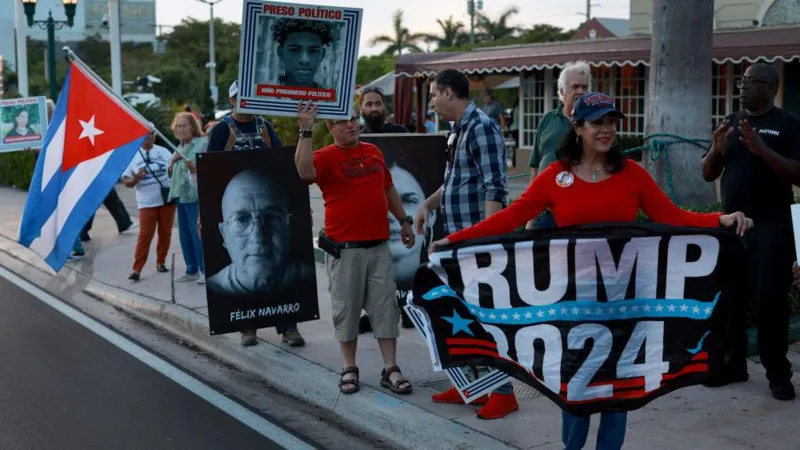
Meanwhile, Havana’s government announced that Cuba will release 51 prisoners in the coming days as a demonstration of “goodwill” following talks with the Vatican.
News of the release comes weeks after Cuban Foreign Minister, Bruno Rodriguez met Pope Leo in the Vatican.
The government did not specify whether the release included political prisoners, but it said they had all “served a significant portion of their sentences and have maintained good conduct while in prison.”
Detailing the forthcoming prisoner release, Cuba’s foreign ministry said that since 2010, Havana has pardoned 9,905 prisoners.
Over the last three years, the ministry added, another 10,000 people who had been imprisoned were released “through various other forms of relief.”
The government said the decision was “sovereign” and in line with the upcoming Holy Week in the Christian calendar.
READ ALSO: Starmer Faces Backlash Over Mandelson Appointment