The National Orientation Agency has called on Nigerians to fulfil their civic responsibility by paying tax, emphasizing that tax compliance is essential for national development, improved public services, and economic stability.
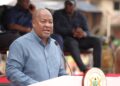
At the first Civic Talks event by the Centre for Inclusive Social Development in Abuja, Mrs. Abiodun Olayeni-Ali, Programme Officer at the National Orientation Agency, emphasized the importance of tax compliance.
“You have to pay your tax, and then you can hold your government accountable. Once you are not paying, it is difficult for you to really talk. If you are not paying tax, you have no right to ask what the government is doing.”
Mrs Abiodun Olayeni-Ali
The National Orientation Agency (NOA) is tasked with fostering a well-informed, responsible, and disciplined society. Its mission includes raising public awareness, promoting positive values, and encouraging actions that support national unity, peace, and development.
This responsibility includes educating the public on the importance of tax compliance and explaining how tax contributions support government accountability.
The agency’s outreach highlights that tax revenue funds essential services such as infrastructure, healthcare, education, and social programs.
By promoting greater awareness and civic responsibility, the NOA seeks to build a culture where paying taxes is viewed not merely as a legal duty but as an important contribution to the country’s economic progress and social well being.
According to the Programme Officer at the agency, the NOA has already launched nationwide sensitization campaigns “to inform citizens about the new tax reforms and address misinformation that circulated after the policy was announced.” These efforts aim to ensure that Nigerians clearly understand the objectives and implications of the reforms.
Nigeria’s New Tax Reform Sparks Public Concern
Nigeria’s New Tax Reform anchored by the Nigeria Tax Act 2025 and implemented in January 2026 serves as a progressive tax regime that provides relief to low-income earners, while higher-income earners will be taxed at a higher rate.
The new rates are also lower for middle-income earners compared to the previous rates. Per the New Tax Reform, a full tax exemption has been introduced for minimum wage earners with an annual income of less than or equal to ₦800,000.
The Consolidated Relief Allowance (CRA) has also been completely abolished and a new Rent Relief system has been introduced in its place, calculated as the lower of ₦500,000 or 20% of the annual rent paid by an individual.
Capital Gains Tax for individuals is now to be taxed at the applicable progressive income tax rate based on the individual’s income brackets. Despite these changes, many Nigerians remain sceptical.
Informal sector workers, small traders, and transport operators argue that the reforms do not fully consider their operational costs. One local business owner bemoaned, “Drivers and small traders often earn very little after expenses such as fuel and maintenance.” “How can they meet new tax obligations?” the local business owner asked.
Concerns about compliance persist, as some citizens feel government services provide limited visible benefits, leading to reluctance to pay taxes. Experts noted that the reforms address long-standing weaknesses in Nigeria’s fiscal system.
Mr Iniobong Usen, Senior Programme Officer at the International Budget Partnership, explained that the previous tax framework was regressive. “The prior system placed the heaviest load on the most vulnerable, while the richest individuals often paid little or nothing,” Usen said.
He added that the new reforms eases pressure on lower-income groups, increases contributions from higher earners, and introduces a simplified presumptive tax for informal sector participants without formal financial records.
Usen also emphasized that the reforms aim to eliminate multiple taxation and prevent illegal levies. “Anyone caught harassing businesses to collect unauthorized fees or taxes faces fines up to ₦5 million or imprisonment for up to three years,” he warned.
In essence, the new tax reform will help create a more conducive environment for socio-economic development for Nigerians. Olayeni-Ali further acknowledged the mistrust of government. However, she urged Nigerians to recognize that public services are partly funded through taxes, citing public schools, government hospitals and other social services as examples of benefits supported by government spending.
The ongoing public engagement campaign serves as part of the National Value Charter initiative which aim to rebuild trust between citizens and government and to depict that a fair and efficient tax system benefits all, supports long-term development, and protects the most vulnerable in society.
READ ALSO: Hegseth Claims Military Success In Offensive Against Iran