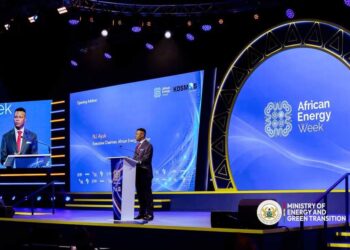

Ghana’s renewed effort to revive the Tema Oil Refinery (TOR) and expand capacity to 100,000 barrels per day is being viewed by energy analysts as a test of governance and market discipline rather than a simple competition with Nigeria’s large-scale private refining model.
The debate has intensified following the recommissioning of TOR’s crude distillation unit and the government’s commitment to allocate part of Ghana’s Jubilee crude to support continuous refinery operations.
In an exclusive interview with The Vaultz News, a regional petroleum and energy expert has indicated that, while comparisons with Nigeria’s Dangote Refinery are inevitable, the emerging expert view is that ownership structure alone will not determine which model delivers long-term energy security and commercial sustainability for West Africa.
Neither model is universally superior. The most sustainable approach is a hybrid model that combines private-sector efficiency with strategic government support.
Energy Expert
According to the analysis, Nigeria’s private refining strategy demonstrates the advantages of scale, access to capital, operational efficiency and market responsiveness.
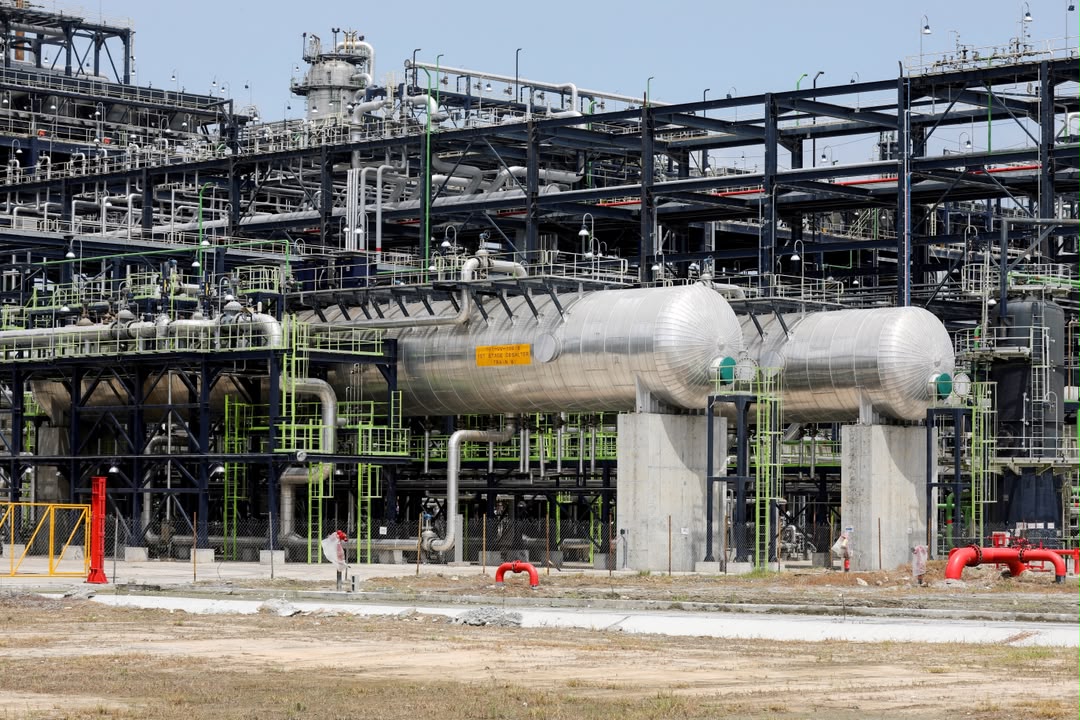
Ghana’s approach, by contrast, reflects the strategic value of maintaining national refining capacity as part of a broader energy-security agenda.
The key issue, the expert argues, is not whether a refinery is publicly or privately owned.
Commercially driven operations, transparent regulation, reliable crude supply and predictable market policies are more important than whether a refinery is privately or publicly owned.
Energy Expert
The crude allocation challenge
Ghana’s plan to dedicate part of its Jubilee crude to TOR is being closely watched because Nigeria’s refining history offers a cautionary lesson about the tension between crude exports and domestic processing.

Analysts say uncertainty over crude supply, inconsistent pricing arrangements, delayed payments and regulatory instability have historically undermined refinery operations in Nigeria.
For Ghana, the recommendation is to establish a transparent domestic crude allocation framework before disputes emerge between export priorities and local refining needs.
A predictable commercial arrangement between upstream producers and domestic refiners is essential.
Energy Expert
The analysis also warns against using fuel subsidies in ways that distort market signals and discourage investment, arguing that refinery operations must remain commercially viable if they are to survive without repeated state bailouts.
Can TOR survive in a Dangote-dominated market?
One of the most important questions is where a smaller refinery such as TOR fits if Dangote becomes a major exporter across West Africa.
The expert believes the outcome is unlikely to be a simple winner-takes-all contest.
A successful Dangote Refinery could significantly strengthen regional integration by reducing West Africa’s dependence on imported petroleum products from outside the continent.
Energy Expert
However, the analysis also cautions that concentration risks will need to be monitored through competition policy and open access to storage, transportation and distribution infrastructure.
Rather than trying to match Dangote’s scale, TOR is seen as having a more realistic path through specialization.
Smaller refineries such as TOR can remain competitive by focusing on niche markets, supplying domestic demand, producing specialised petroleum products, maintaining strategic reserves and serving nearby regional markets where logistics provide a competitive advantage.
Energy Expert
A different refining strategy for Ghana
This suggests Ghana’s comparative advantage may lie less in becoming the region’s largest refinery and more in becoming a trading, logistics and strategic supply hub.
Such a model would align with Ghana’s port infrastructure, financial services sector and position within ECOWAS and the African Continental Free Trade Area.

The deeper implication is that Ghana’s refinery revival should be judged not by whether it overtakes Nigeria, but by whether it reduces fuel-import vulnerability, improves supply resilience and supports domestic industrial activity.
A refinery that operates efficiently, processes local crude under transparent commercial terms and complements a broader regional market could still play a significant strategic role even at a much smaller scale.
The emerging conclusion is that West Africa’s refining future is unlikely to be defined by a single dominant model.
Private mega-refineries, strategically managed national assets and specialized regional facilities may all coexist within a more integrated petroleum market, provided governments focus on governance, transparency and policy stability rather than ownership ideology alone.
READ ALSO: Abdul El-Sayed Wins Michigan’s Democratic Senate Primary