Libya’s National Oil Corporation has redirected Sharara flows after a fire occurred on a key export pipeline.
According to Libya’s State Oil Firm, National Oil Corporation, production is still going on and no casualties have been reported.
The Chairman and members of the NOC’s Board of Directors have also been in constant contact, monitoring the situation from the start and closely monitoring the maintenance teams’ progress.
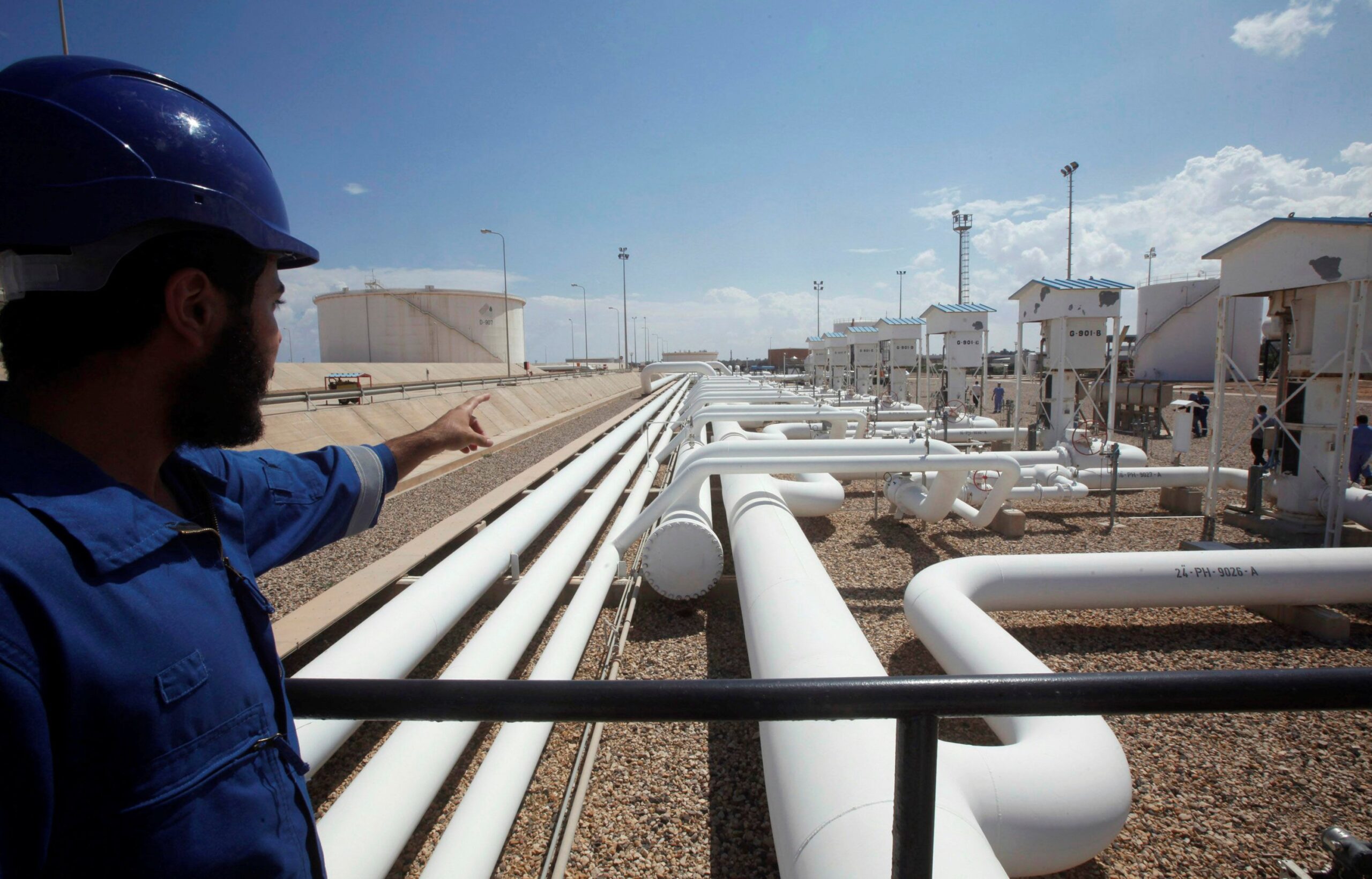
“The National Oil Corporation is closely monitoring a fire caused by a leak at a valve on the Sharara crude-oil export pipeline at kilometer 538, near Bir al-Marhan in Hamada. Emergency response, firefighting, safety, and maintenance teams have reached the site and are managing the situation. Some flow has been redirected to the El Feel pipeline toward Mellitah port, with the remainder diverted through the 18-inch Hamada pipeline to Zawiya storage tanks, significantly reducing losses.”
National Oil Corporation
The Sharara oilfield in southwestern Libya is among the country’s most significant oil assets, with a production capacity of 300,000 to 320,000 barrels per day. It is vital to Libya’s economy, supplying crude to key infrastructure, including the Zawiya refinery, about 40 kilometers west of Tripoli.



Sharara is operated by Acacus Oil Operations, a joint venture between the NOC and international energy firms including Repsol, TotalEnergies, OMV, and Equinor. This collaboration demonstrates the field’s strategic importance and the coordination required to sustain operations in challenging conditions.
Engineers on site reported that production at Sharara was being gradually shut down following an explosion in one of its pipelines. “Instructions have been given to gradually halt the production,” the engineers said. “Maintenance is expected to take about two days, including time to assess the extent of the damage,” they added.
Reports indicate that an explosion may have preceded the fire, prompting a phased reduction in production to ensure safety and enable repairs.
While the NOC states output has not been significantly affected, on-site accounts highlight the complexity of managing such incidents.
Maintenance is expected to take about two days, including time to assess the extent of the damage.
Sharara Disruption Tests Libya’s Oil Resilience and Infrastructure Capacity
Libya’s oil sector appears to be entering a renewed cycle of recovery, with the recent Sharara disruption serving as a key test of its operational resilience and long-term stability.
The National Oil Corporation (NOC) has outlined a strategy to attract about $20 billion in new oil and gas investments, aiming to increase crude production to 2 million barrels per day by 2030. This investment positions current output gains as a foundation for sustained expansion.
In this context, the Sharara disruption is a short-term operational setback rather than a structural reversal. The sector has already shown its ability to recover from low output levels. The rebound in 2025 demonstrates Libya’s capacity to scale production when conditions allow, while the 2030 road map outlines a vision for long-term growth.
The main challenge is not only achieving higher production targets but also maintaining the consistency and reliability needed to sustain them.
The incident further highlights the fragility of Libya’s oil infrastructure. The NOC’s quick decision to reroute flows shows operational flexibility but also reliance on aging pipelines. The ability to redirect output demonstrates resilience and suggests contingency mechanisms are in place.
The timing of the Sharara incident is also concerning, as it follows another pipeline leak near the Zawiya refinery that forced the shutdown of a key line from the Hamada oilfields. Such recurring failures point to deeper structural weaknesses in Libya’s oil transport infrastructure, especially its pipeline network.
These issues highlight risks posed by maintenance gaps and infrastructure bottlenecks to Libya’s output goals. Achieving and sustaining higher production will require investment in preventive maintenance, system upgrades, and effective responses to disruptions. Reducing the frequency of such events is critical for long-term stability.
Multiple pipeline issues in a short period suggest the current infrastructure may not support aggressive expansion without significant reinvestment. This raises questions about whether the system can handle increased volumes without becoming a constraint.
The financial impact of the Sharara disruption emphasizes its significance. Producing about 310,000 barrels per day, the field accounts for nearly a quarter of Libya’s crude output and is central to national revenue. Any interruption, even a brief one, results in direct income loss.
Industry analysts estimate that a 10,000-barrel-per-day increase at Sharara can generate tens of millions of dollars in additional monthly revenue, depending on global oil prices.
Conversely, even a two-day shutdown can cause a noticeable decline in hard-currency earnings for the state, which remains heavily dependent on oil exports.
READ ALSO : US Counterterrorism Center Director Resigns Over Iran War