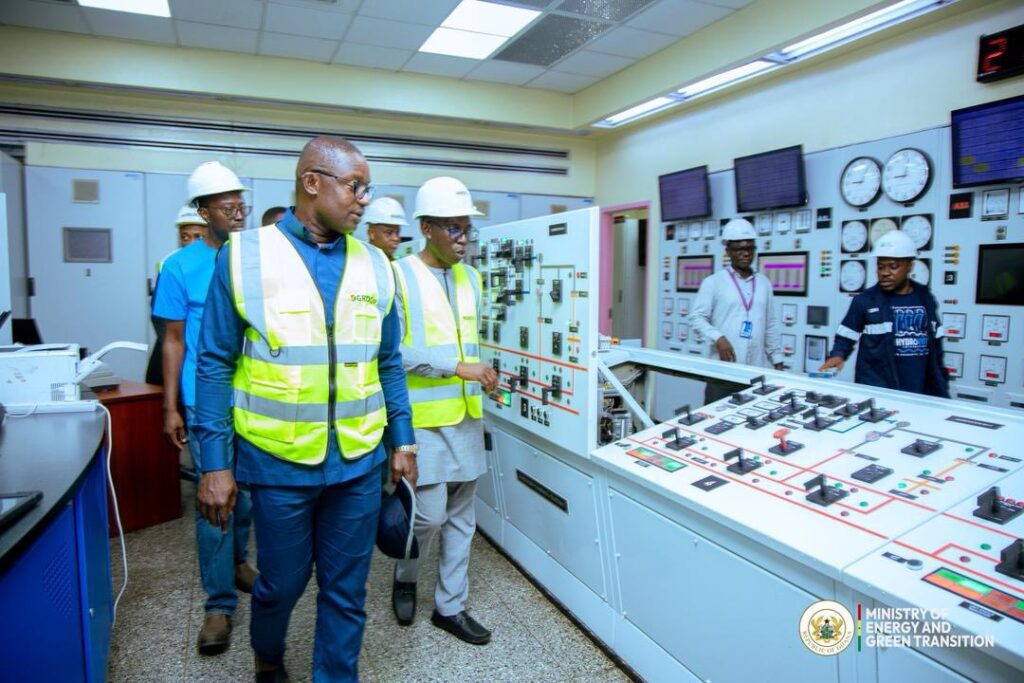
Hon John Jinapor, the Minister of Energy and Green Transition, has announced the successful restoration of all power generation units at the Akosombo substation following a period of intense technical recovery.
The completion of these works marks the end of a high-stakes race against time to fix the national grid after a major system disruption threatened the country’s energy security.
With the final units now synchronized and back in service, the facility has returned to its full operational capacity, effectively ending the supply deficit that had plagued the national interconnected transmission system.
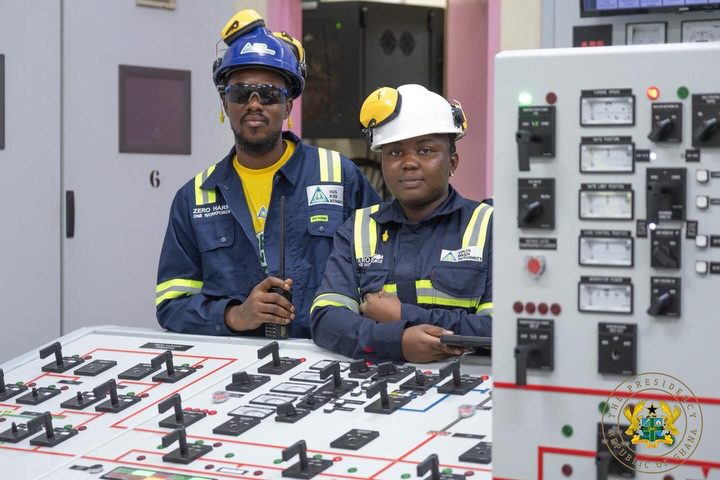
“In the face of a major system disruption, and against all odds, our engineers, technicians, and emergency teams worked around the clock to restore power and stabilise the grid. Through their tireless work, discipline, and commitment to country, power has been restored and system stability secured. This moment shows that even under pressure, Ghana can rely on the strength and skill of its people.”
Hon John Jinapor

The restoration process was a multi-agency effort aimed at reversing the “major system disruption” that had previously knocked significant generation capacity offline.
To achieve this, specialized teams of engineers and technicians from the Ghana Grid Company (GRIDCo), the Volta River Authority (VRA), and the Electricity Company of Ghana (ECG) worked “around the clock” to repair damaged infrastructure and stabilize the volatile grid environment.
This comprehensive recovery ensures that the 1,000-megawatt void left by the recent fire outbreak is now filled, providing the necessary “system stability” required to power Ghana’s industrial hubs and residential communities without the looming threat of intermittent outages.
Technical Resilience and Grid Stabilization
The full return of the Akosombo units is more than a mechanical victory; it is a critical pivot for Ghana’s energy reliability.
By bringing all units back online, the Ministry of Energy has restored the primary frequency control mechanism for the entire country.
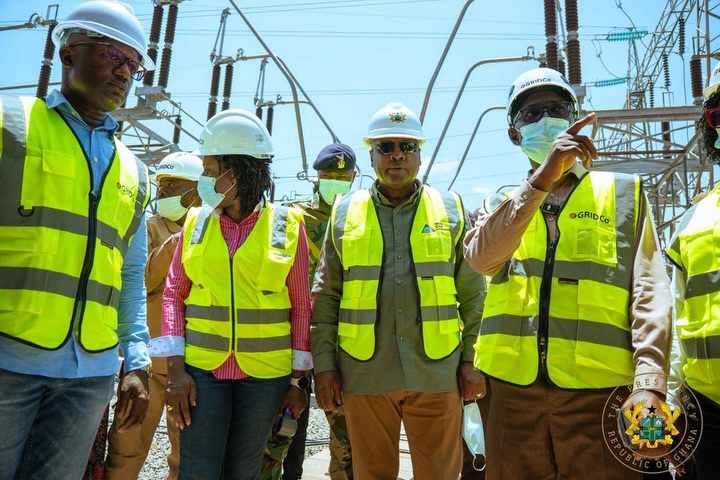
The Akosombo Dam serves as the “backbone” of the National Interconnected Transmission System (NITS), and having its substation at 100% capacity allows for better voltage regulation across the southern and middle belts of Ghana.
This prevents the “ripple effects” of localized faults from cascading into total national blackouts, a risk that was significantly elevated while the units were out of service.
Furthermore, the restoration provides a vital cushion for the industrial enclaves in Tema and the Ashanti Region.
With the substation back to full operation, bulk power consumers can now resume high-intensity operations with the assurance of a steady load.
The “skill and discipline” of the technical teams have ensured that the synchronization of these units meets the rigorous standards required to maintain a steady 50Hz frequency, thereby protecting sensitive industrial machinery and domestic appliances from the surges often associated with grid instability.
Economic Impact and Energy Security
From a broader economic perspective, the successful “mission accomplished” at Akosombo mitigates the severe financial losses previously incurred by manufacturing firms and small businesses during the disruption.
The energy sector’s ability to bounce back “against all odds” highlights a growing institutional capacity to manage crises within the green transition framework.
By ensuring that hydro-generation a relatively cheaper and cleaner source of power is fully utilized, the government reduces the immediate reliance on expensive thermal plants, which often place a strain on the nation’s foreign exchange reserves due to fuel costs.
This recovery also reinforces the strategic importance of the “coordination made possible” between GRIDCo, VRA, and ECG.
The seamless integration of these agencies during the crisis has set a new benchmark for emergency response within the sector.
As the Minister noted, the “tireless work” of these teams has secured “system stability,” which is the fundamental precursor to any meaningful economic growth.
With the grid now fortified, the focus shifts toward long-term maintenance and the continued integration of renewable sources to ensure that such “major system disruptions” are relegated to the past.
Strengthening the National Energy Future
The return to full operation serves as a testament to the resilience of Ghana’s energy infrastructure.
Moving forward, the Ministry of Energy and Green Transition intends to leverage this success to further harden the grid against external shocks.

The “commitment to country” displayed by the technical staff has not only restored lights to homes but has also restored confidence in the national utility providers.
As the energy sector stabilizes, the focus remains on ensuring that the “strength and skill” of the Ghanaian people continue to drive the nation toward a sustainable and power-secure future.
By maintaining this full operational status, Ghana is better positioned to fulfill its roles within the West African Power Pool (WAPP), exporting excess capacity and maintaining its status as a regional energy hub.
The government remains steadfast in its “sincere appreciation” for the frontline workers who turned a national crisis into a showcase of technical excellence and patriotic duty.
The restoration at Akosombo is not just a fix; it is a reinforcement of the nation’s promise to provide reliable energy for all.