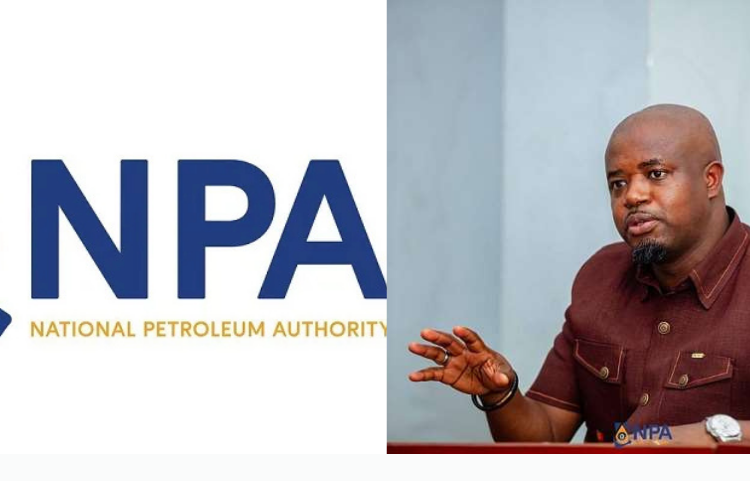
The Chief Executive Officer of the National Petroleum Authority, Godwin Edudzi Tamakloe, has indicated that any sustained rise in global crude oil prices beyond 120 dollars per barrel could prompt high-level government intervention to cushion the impact on Ghanaians.
Speaking on recent developments in the global oil market, he explained that while current price movements are being closely monitored, a more significant and prolonged surge would require broader policy engagement at the highest levels of government, including ministerial and presidential consideration.
“Anything beyond maybe 120 dollars per barrel for the world price of crude, then the conversations can be firmed up,” he stated, suggesting that such a threshold would trigger decisive action.
Mr Tamakloe disclosed that President John Dramani Mahama has been actively following the recent volatility in global oil prices, particularly in light of the potential impact on domestic fuel costs and the broader economy.

“In the past few days, the President has been generally concerned about prices. He has been greatly concerned, that I can tell you,” he said. He further assured that the government would not hesitate to act if conditions worsen, noting that existing policy tools could be deployed to mitigate the burden on consumers.
“If there is anything in the rulebooks on how to mitigate the impact on the average Ghanaian, the President will not hesitate at all. His record is there”.
Chief Executive Officer of the National Petroleum Authority, Godwin Edudzi Tamakloe
Global Tensions Driving Price Volatility
The comments come amid heightened geopolitical tensions involving the United States, Israel, and Iran, which have significantly disrupted global oil markets.
As of mid March 2026, Brent crude prices remain above 100 dollars per barrel, having surged close to 120 dollars earlier in the month following initial military strikes. Prices have since moderated slightly but remain elevated compared to pre conflict levels.
Market volatility has been driven by multiple factors, including the effective closure of the Strait of Hormuz, a key global shipping route that handles a substantial share of the world’s oil supply. Disruptions to production facilities in parts of the Middle East have further heightened concerns about supply shortages.
These developments have created uncertainty across global energy markets, with analysts warning that prolonged conflict could sustain upward pressure on oil prices.
Ghana’s Exposure to Global Oil Shocks
Mr Tamakloe emphasized that Ghana remains vulnerable to such external shocks due to its reliance on imported petroleum products. While the country has some domestic refining capacity, it is not sufficient to meet national demand.
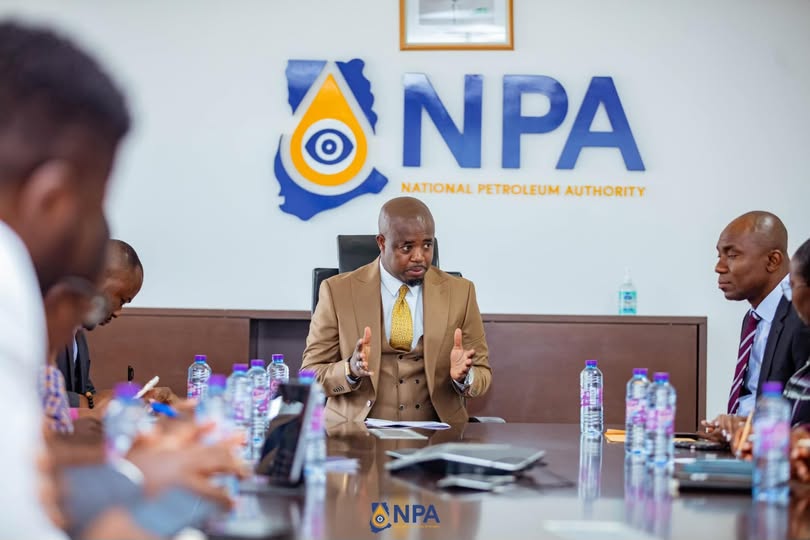
He explained that about 30 to 40 percent of Ghana’s petroleum consumption is currently supplied by local refineries, including the Tema Oil Refinery and the Sentuo modular refinery.
However, these facilities process relatively small volumes, leaving approximately 60 percent of consumption dependent on imports. “And so anytime pricing in terms of crude or anything that can impact it becomes a huge issue for us,” he said.
This dependency means that fluctuations in global crude prices quickly translate into domestic fuel price adjustments, affecting transportation costs, inflation, and overall economic stability.
The NPA Chief Executive outlined the main factors that determine fuel prices in Ghana, highlighting the role of foreign exchange rates and Free On Board pricing.
According to him, the FOB component is directly influenced by global crude prices, making the domestic market highly sensitive to international developments.
“In this country, there are two principal determinants of pricing, the forex and the FOB. The FOB pricing of petroleum products is obviously dependent on the price of crude”.
Chief Executive Officer of the National Petroleum Authority, Godwin Edudze Tamakloe
A combination of rising crude prices and currency pressures could therefore significantly increase fuel costs for consumers if not managed carefully.
Lessons from Previous Price Shocks
Reflecting on past experiences, Mr Tamakloe noted that Ghana has previously faced similar challenges during short lived geopolitical conflicts. He cited a brief escalation involving the United States and Israel last year, which had limited impact due to its short duration.
He also referenced tensions involving Nicolás Maduro and global oil supply dynamics, noting that disruptions were less severe partly because of Venezuela’s significant crude reserves.
However, he cautioned that the current situation presents a more complex and potentially prolonged risk, given the scale of disruptions and the strategic importance of affected regions. “These geopolitical issues are always a huge matter for us,” he said, underscoring the uncertainty facing policymakers.

While specific measures have not been disclosed, the NPA Chief Executive suggested that any intervention would involve careful assessment of market conditions and consultation at the highest levels of government.
He indicated that authorities are currently using a window of observation to understand how the market evolves before making definitive policy decisions. “What we have is a window to study how the market will generally react, which will inform some of the decisions,” he explained.
Potential interventions could include adjustments to pricing formulas, targeted subsidies, or other fiscal measures aimed at cushioning the impact on consumers.
Balancing Stability and Market Realities
The challenge for policymakers, he noted, will be to balance the need for economic stability with the realities of global market dynamics. Any intervention must be carefully calibrated to avoid unintended fiscal pressures while still providing relief to households and businesses.
As global oil prices remain volatile, the government’s response will likely depend on how long current tensions persist and whether prices breach critical thresholds.
For now, the assurance from the National Petroleum Authority signals that authorities are prepared to act if conditions deteriorate, with the welfare of Ghanaians remaining a central concern.
READ ALSO: President Mahama: Reset Agenda, not Slogan; Commitment to Fix What’s Broken