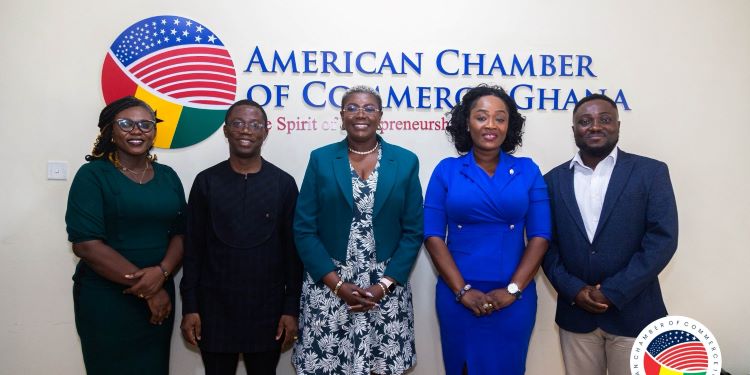
In a strategic intervention designed to insulate Ghana’s premier investment landscape from the shocks of global market volatility, AmCham Ghana has held a recent high-level consultative session with the Corporate Insolvency and Restructuring Professionals (CIRIP Ghana).
The engagement represented a fundamental reality in the national economic posture – moving decisively away from the “liquidation-first” mentality of the past toward a sophisticated, recovery-led industrial environment, with the ability to stabilize and rehabilitate distressed enterprises becoming a necessity.
“The conversation centered on the evolution of Ghana’s insolvency and restructuring regime, particularly legislative reforms in recent years that have deliberately shifted the national approach away from liquidation toward business recovery and rehabilitation”
AmCham Ghana
For the Government, the collaboration between the American Chamber of Commerce and CIRIP is critical for sustaining the national tax base and protecting thousands of high-value jobs, as a resilient economy is not just one that builds new factories, but one that possesses the surgical expertise to save existing ones when they hit financial turbulence.
AmCham Ghana noted that by integrating multidisciplinary teams of accountants, lawyers, and bankers, the new framework seeks to ensure that no “recoverable” Ghanaian or multinational enterprise is allowed to collapse under short-term liquidity pressures.
The dialogue highlighted a major legislative evolution in Ghana’s corporate law. Under the current framework, companies facing financial distress are no longer immediately consigned to the auction block. Instead, they can be granted “temporary protection from creditor actions, creating a legal and financial breathing room for professional restructuring.”
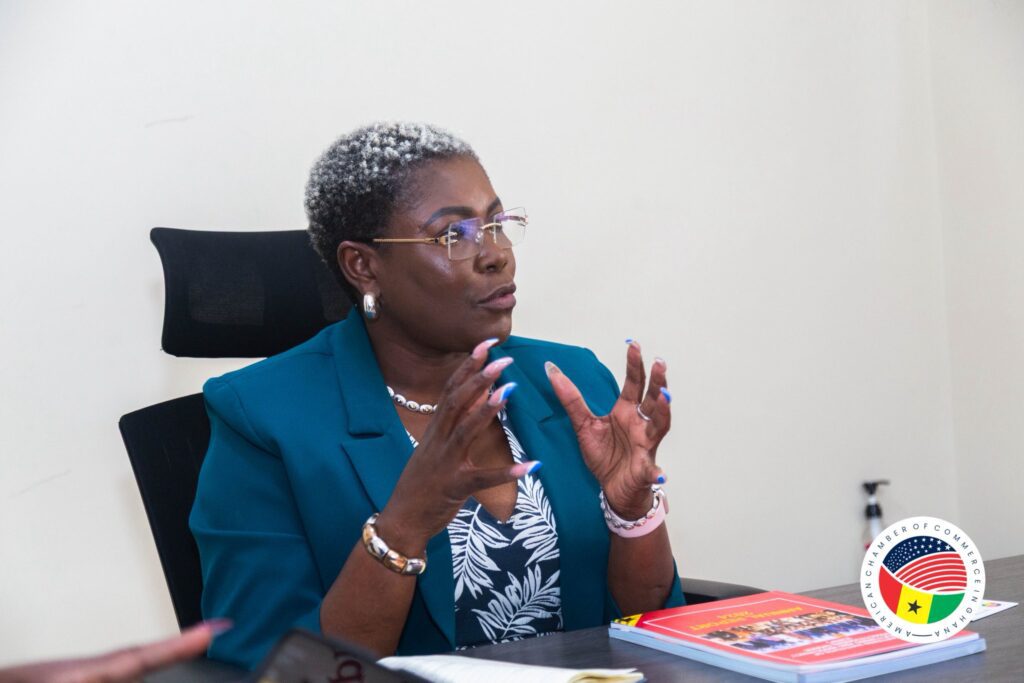
This mechanism is the administrative equivalent of an emergency room for industry, allowing CIRIP professionals to stabilize operations, renegotiate debt, and preserve the value of the business.
However, according to AmCham Ghana, the meeting identified a critical “awareness gap,” that threatens the efficacy of these reforms. Too many businesses, both local and multinational, only seek professional restructuring support when insolvency has reached an advanced, terminal stage.
The consensus among AmCham members and CIRIP experts was that early intervention is the single most important factor in a successful turnaround. When a firm waits until its assets are already being seized, the options for recovery diminish exponentially.
The Financing Deficit
Despite the strength of the legal framework, another major gap was the absence of dedicated recovery financing, as distressed companies, even those with viable long-term contracts under the AfCFTA, often lack the immediate working capital needed to stay afloat during a restructuring period.
Both parties argued that without a specialized “rescue fund,” or banking products tailored for firms in reorganization, the path to recovery remains unnecessarily steep.
The other hurdle was the institutional capacity gap within the judicial system. While the law has evolved, the speed of court processes hasn’t always kept pace, with AmCham participants noting that delays in case resolution can be fatal for a company in distress.
There is a pressing need for increased judicial specialization in insolvency matters and more intensive training for practitioners. If Ghana is to be the gateway for multinational capital in Africa, “its corporate recovery courts must move with the same efficiency and transparency as its export agencies.”
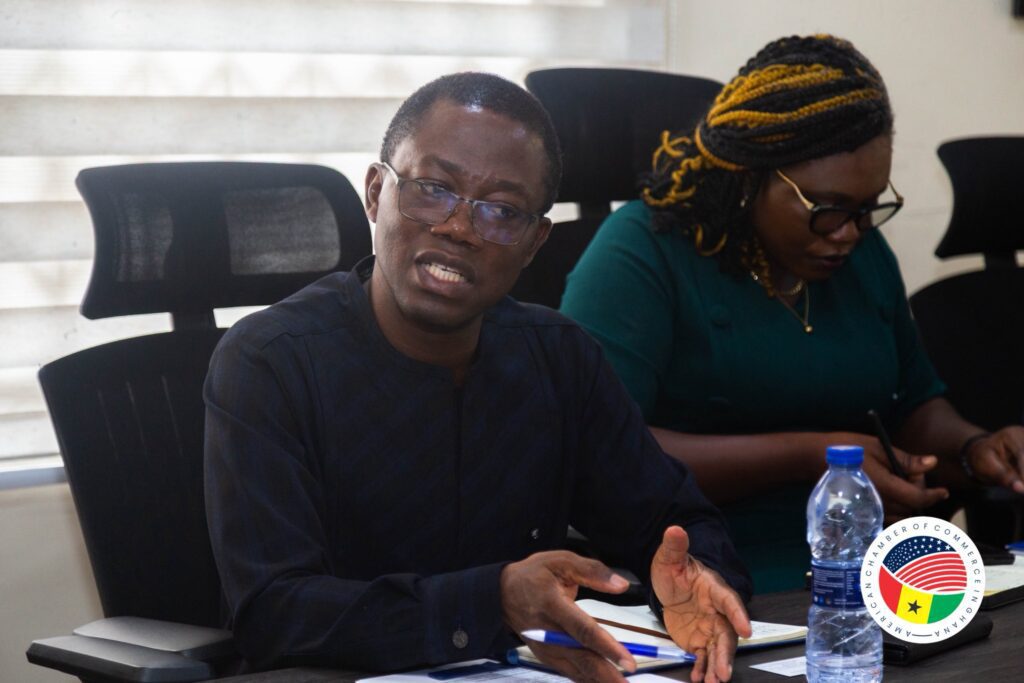
A standout theme of the engagement was the “local realities,” argument presented by AmCham Ghana.
Many multinational companies operating within the Free Zones Enclaves or the broader economy rely on “external decision-making frameworks” designed in New York, London, or Johannesburg. These global strategies often fail to account for the specific regulatory and operational nuances of the Ghanaian market.
AmCham actively encouraged its members to bridge this gap by collaborating with Ghana-based restructuring professionals. These local experts understand the specific terrain of the Ghana Revenue Authority (GRA), local banking regulations, and the cultural dynamics of the domestic labor market.
Combining global standards with local intelligence offers a “bespoke stabilization that foreign consultants might miss,” and this shift toward local expertise is a key part of ensuring that the talent managing Ghana’s corporate crises is homegrown and deeply invested in the national outcome.
The meeting concluded with a shared commitment to integrate business recovery discussions into the broader narrative of Corporate Governance and Investment Protection. AmCham and CIRIP agreed to launch a series of knowledge-sharing sessions and targeted member engagements.
These forums will serve as an “early warning system,” for the business community, providing the tools and networks necessary to navigate operational challenges before they escalate into insolvency.
The issue of “confidentiality” was also addressed – a delicate balance where the need to protect a distressed brand during intervention must be weighed against the need to document success stories to build market confidence.

As more businesses witness the benefits of structured restructuring, the stigma of financial distress is expected to fade, replaced by a professional culture of resilience and rehabilitation. As the second quarter of 2026 approaches, the AmCham-CIRIP alliance stands as a vital safeguard for the nation’s economic ambitions.
Through strengthening the “safety net,” of corporate recovery, Ghana is announcing to the global investor community that their capital is not just welcome, but protected by a world-class legal and professional infrastructure.
READ ALSO: Ghana Stock Exchange Plunges 217 Points in Shock Dip