The British Army has begun retiring its Land Rover fleet, marking the end of over 70 years of service and signifying a significant shift in military mobility and logistics.
At a commemorative event in Bovington, home of the Armoured Fighting Vehicle School, Minister for Defence Readiness and Industry, Luke Pollard highlighted the “incredible history” between Land Rover and the British Army, noting that“the image of a Landy in Army Livery is truly iconic.”
“As we look ahead to the future of light mobility vehicles, it is fitting to pay tribute to this extraordinary fleet that has served our Armed Forces so faithfully. I’m firing the starting gun on the replacement vehicle competition, seeking to put a modern vehicle in the hands of our personnel.”
Luke Pollard
According to the Ministry of Defence, while the Land Rover’s legacy will endure, “the Army is now focused on ensuring its personnel are equipped with a modern, technologically advanced fleet” to meet current requirements and support future operations.
The Light Mobility Vehicle (LMV) programme is central to this transition, aiming to identify a long-term successor. This initiative is expected to improve operational effectiveness and create opportunities for UK-based industries in vehicle production, maintenance, and support. It also supports the government’s goal of using defence investment to drive economic growth and industrial innovation.
The LMV programme prioritizes adaptability and mission flexibility. Modern operations require forces to transition between roles, from combat to humanitarian assistance and disaster response. Future vehicles must support diverse missions without sacrificing performance or reliability.
This marks a shift from the single-platform Land Rover model to more modular, specialized systems suited for dynamic environments.
A Legacy of Reliability and Adaptation in Military Operations
For over seven decades, the Land Rover has been a “trusted workhorse” to British Army mobility, adapting to evolving warfare while maintaining its reputation for durability, reliability, and adaptability.
Introduced in the post-war period, the vehicle responded to a growing need for dependable transport capable of supporting a wide range of military operations, including conventional warfare, counterinsurgency, and peacekeeping missions. Its simplicity proved to be one of its greatest strengths.
Designed with durability and ease of maintenance in mind, it could be repaired quickly in austere environments, making it particularly valuable in remote or resource-constrained settings where technical support was limited.
This mechanical resilience allowed the Land Rover to perform consistently across a variety of terrains, from arid deserts and dense forests to rugged mountainous regions. Its versatility ensured continued operational effectiveness in conditions where more complex and technologically advanced vehicles might struggle or fail.
Over time, the vehicle was adapted into numerous specialized variants, each tailored to specific operational requirements.
Among these was the Series IIA Ambulance, designed to transport casualties safely from front line areas while accommodating medical personnel and equipment.
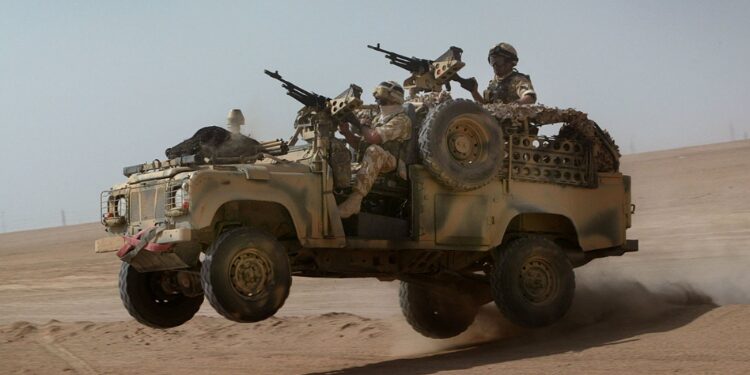
The Series IIA Pink Panther, developed for Special Air Service (SAS) missions, was modified for long-range desert reconnaissance, featuring extended fuel capacity and enhanced navigation capabilities.
Experimental models such as the Amphibious SIIA 109” explored the feasibility of sea-land operations, while the V8 Centaur Multi-Role Half-Track represented efforts to integrate tracked mobility for improved performance in difficult terrain.
Such innovations demonstrated the Army’s long-standing strategy of maximizing the utility of a single platform through continuous refinement rather than outright replacement. This approach significantly extended the Land Rover’s service life, allowing it to remain relevant even as military technology and operational doctrines advanced.
Beyond its technical capabilities, the vehicle played a central role in shaping military operations. Its widespread availability enabled rapid deployment and flexible maneuverability, supporting both large-scale operations and smaller, decentralized missions.
In many instances, it formed the backbone of troop movement and equipment transport, underpinning the Army’s logistical framework.
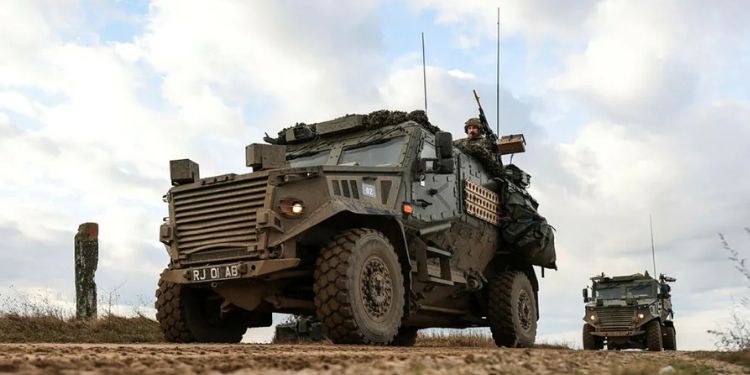
However, the demands of modern warfare have increasingly exposed the its limitations. Contemporary battlefields require vehicles equipped with advanced communication systems, enhanced protection against threats such as improvised explosive devices, and the ability to operate within digitally integrated command networks.
While the Land Rover excelled in an era defined by mechanical resilience and simplicity, it is less suited to the complex, technology-driven operational environments of today.
Nevertheless, its contribution to military history is substantial and widely recognized. The Land Rover supported decades of operations and became a symbol of endurance, reliability, and practicality in the British Army.
Its retirement closes a remarkable chapter, ending the service of a vehicle that adapted to generations of change while maintaining its core identity.
READ ALSO: UK Announces Major Overhaul of International Development Policy