
The integrity of Ghana’s economic reporting faces a radical redesign as the state moves to eliminate institutional silos that have long obscured the true scale of capital entry.
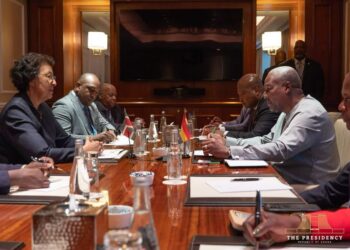
In a high-level briefing convened this week, the Chief Executive Officer of the Ghana Investment Promotion Centre (GIPC), Mr. Simon Madjie, issued a direct challenge to the nation’s financial and regulatory gatekeepers.
Addressing a room with Maja Gavrilovic of the International Monetary Fund (IMF) and senior officials from the Bank of Ghana (BoG), Mr. Madjie argued that the current fragmented approach to tracking Foreign Direct Investment (FDI) is no longer fit for purpose in an era of global economic volatility.
“The CEO of the Ghana Investment Promotion Centre, Simon Madjie, has called for a shift in how Ghana’s FDI data is collected, compiled, and shared, urging a move from siloed systems to a coordinated, data-driven approach.
“He noted that despite mandatory registration with GIPC, limited data sharing among key institutions has created gaps in Ghana’s FDI data”
Ghana Investment Promotion Centre
His call for a shift toward a coordinated, data-driven framework marked a pivotal moment in Ghana’s quest for fiscal transparency and external sector resilience.
For years, the GIPC has served as the mandatory point of entry for foreign entities looking to establish a footprint in the country. However, as the CEO noted during the deliberations, registration alone does not equate to comprehensive visibility.
While the GIPC successfully captures the intent to invest, the actual movement of equity, the importation of physical capital, and the critical metric of reinvested earnings often become lost in a labyrinth of unlinked databases.

This lack of institutional cross-talk has created significant gaps in the national narrative, leading to a situation where the data reported on the national balance sheet may only offer a partial – and potentially misleading – view of the nation’s actual investment flows.
The disconnect between the GIPC and the Bank of Ghana has long been a point of friction for economic analysts. While the central bank monitors the actual currency inflows through the banking system, the GIPC tracks the operational setup of companies. Without a unified ledger, the state struggles to reconcile these two datasets into a single, authoritative source of truth.
Mr. Madjie proposed the establishment of a permanent inter-agency framework that would mandate standardized data sharing in real-time.
This framework is intended to cover the full spectrum of investment activity, from the initial equity injection to the long-term reinvestment of profits – a category that is frequently under-reported despite its massive impact on local industrialization.
The GIPC aims to provide a more granular look at the nature of the capital entering the country by moving away from these “siloed systems.” Standardizing the data on capital imports, for instance, would allow policymakers to see exactly which sectors are attracting high-tech machinery and which are merely serving as conduits for retail capital.
This level of detail is essential for a government trying to steer the economy toward high-value manufacturing and agribusiness. The move is not just about counting dollars; it is about understanding the quality and the durability of the investment that Ghana is attracting in an increasingly competitive regional market.
IMF Stakes And External Resilience
The IMF’s presence at the meeting underscored the geopolitical and macroeconomic stakes of the data overhaul. Maja Gavrilovic emphasized that for the IMF, accurate FDI data is not a clerical luxury but a fundamental tool for assessing Ghana’s International Investment Position (IIP).

In a world where sovereign credit ratings and investor confidence are tied to the clarity of a nation’s financial reporting, any discrepancy in FDI tracking can lead to an inflated perception of risk. A transparent, high-fidelity data system acts as a shield, providing the evidence needed to prove that Ghana’s external sector is resilient enough to withstand global shocks.
Gavrilovic’s intervention specifically linked the integration of the GIPC’s database with the Bank of Ghana to the broader goal of “external sector resilience.” When the central bank has an incomplete picture of reinvested earnings, it can lead to inaccurate projections regarding the demand for foreign exchange and the stability of the Cedi.
The government can better anticipate capital movements and craft monetary policies that reflect the true state of the private sector through a standards-aligned system. The integration of these databases is now being viewed as a critical step in strengthening the nation’s overall policymaking apparatus.
The core of Mr. Madjie’s proposal is the move from “registration data” to “actualization data.” In the past, FDI reports often relied heavily on the value of projects registered at the GIPC. However, there is often a significant lag – or sometimes a total disconnect – between a project being registered and the actual money hitting the ground.
Through collaborating more closely with the Bank of Ghana and the IMF, the GIPC intends to track the lifecycle of an investment more accurately. This will ensure that the public and international observers are not given a bloated sense of investment success based on certificates alone, but rather a realistic account of actualized projects.
The Bank of Ghana’s openness to this collaboration is a significant cultural shift in the Ghanaian bureaucracy, as historically, financial institutions have been protective of their data sets, citing confidentiality and mandate restrictions. However, the current economic climate has necessitated a more collaborative posture.
Mr. Madjie welcomed this new transparency, noting that a standards-aligned FDI system is the only way to build a “credible investment dashboard” that can be used for national planning.
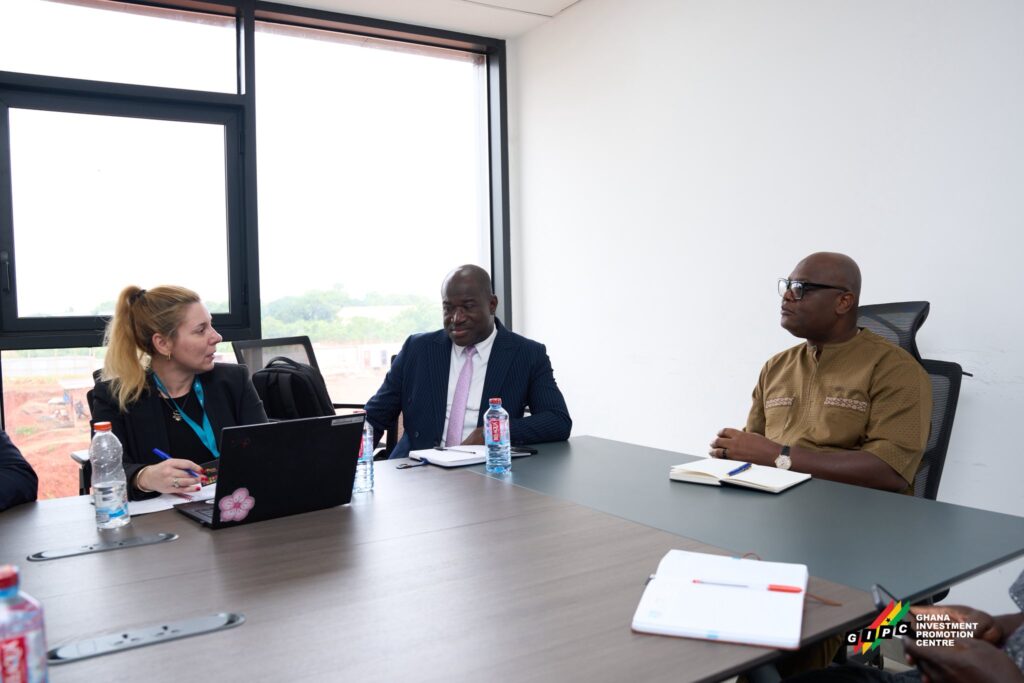
“He called for a permanent inter-agency framework to enable timely, standardised data sharing on equity inflows, reinvestment, capital imports, and registered companies, to better reflect actual investment flows”
Ghana Investment Promotion Centre
The commitment to a transparent system is also intended to simplify the compliance burden for the investors themselves, who often find themselves reporting similar data to multiple agencies in different formats.
The GIPC, the Bank of Ghana, and the IMF moving forward with this integration proves to the global investment community that Ghana is prioritizing economic truth over bureaucratic convenience.
Moreover, the end of siloed data management represents a maturation of the nation’s financial institutions, recognizing that in the modern economy, data is as valuable as the capital it tracks.
READ ALSO: Expert Warns Ghana, Africa Over Global Scramble for Health Data