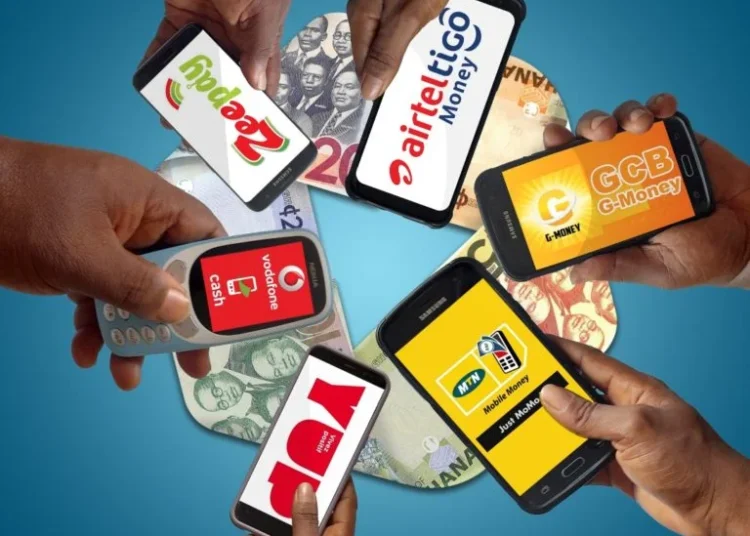
Ghana’s mobile money ecosystem has reached an unprecedented milestone, with the total value of funds held in mobile money wallets climbing to a record GH¢40 billion in June 2026.
The latest figures from the Bank of Ghana highlight the remarkable pace at which digital financial services continue to transform the country’s economy, reinforcing mobile money’s growing role as a trusted platform not only for payments but also for savings and everyday financial management.
The record balance represents a significant leap from the GH¢28.9 billion recorded in June 2025, marking an impressive year-on-year increase of more than 38 percent. The surge reflects increasing confidence among consumers, businesses and entrepreneurs who are now choosing to keep larger sums of money in their digital wallets instead of withdrawing cash immediately.
The development signals a major shift in financial behavior as millions of Ghanaians embrace digital solutions for both convenience and security.
Mobile Wallets Become Everyday Financial Tools
For years, mobile money has primarily served as a convenient channel for sending and receiving money. Today, however, the technology is evolving into something much bigger.
The record wallet balances suggest that households, small businesses and informal sector operators are increasingly relying on mobile wallets as secure stores of value. Rather than cashing out immediately after receiving payments, many users now leave their funds in their wallets to finance daily purchases, settle utility bills, make merchant payments and prepare for unexpected expenses.
This changing behavior reflects growing trust in Ghana’s digital financial infrastructure and demonstrates how mobile money has become deeply integrated into everyday life.
The convenience of instant access to funds, coupled with widespread acceptance by merchants and service providers, continues to encourage users to maintain higher balances in their accounts.
Millions More Join Ghana’s Digital Economy
The Bank of Ghana’s latest payment systems data also reveals continued expansion in the number of mobile money users across the country.
Registered mobile money accounts increased from 76.4 million in June 2025 to 84.6 million in June 2026. Active accounts also climbed steadily to 26.4 million, indicating that more individuals are regularly using digital financial services rather than simply registering accounts.
The sustained increase in active users illustrates that mobile money adoption continues to spread across different age groups, income levels and geographic locations.
As smartphone ownership grows and digital literacy improves, more people are finding mobile money to be an essential financial tool for managing personal and business transactions.
Nearly One Billion Transactions in a Single Month
The scale of activity taking place within Ghana’s mobile money ecosystem is equally remarkable.
During June 2026 alone, mobile money platforms processed approximately 954 million transactions with a combined value of GH¢492.9 billion.
These transactions covered a broad range of financial activities including salary payments, merchant purchases, utility bill settlements, school fees, remittances and person to person transfers.
The enormous transaction volumes underscore how mobile money has become one of the country’s most important payment channels, supporting businesses of all sizes while reducing dependence on physical cash.
The continued expansion of digital payments is also contributing to greater efficiency across the economy by reducing transaction costs and improving financial accessibility.
Agent Network Expands Across the Country
Another key driver behind the sector’s impressive growth is the rapid expansion of mobile money agents nationwide.
For the first time, registered mobile money agents surpassed the one million mark, reaching 1.016 million. Active agents also rose to 546,000, reflecting stronger service delivery throughout both urban and rural communities.
The growing agent network plays a critical role in extending financial services to previously underserved populations.
With more agents operating in remote communities, customers can conveniently deposit and withdraw funds without traveling long distances to traditional bank branches.
This widespread accessibility continues to strengthen financial inclusion and supports broader economic participation across Ghana.

Cross Network Transfers Continue to Rise
Interoperability remains another major success story within Ghana’s digital payments ecosystem.
Consumers conducted approximately 33 million cross network mobile money transactions during June, with a total value of GH¢6.2 billion.
The ability to transfer funds seamlessly between different mobile money providers has significantly improved customer convenience while encouraging greater competition and innovation among service providers.
As interoperability becomes more efficient, consumers can transact freely regardless of the mobile network they use, making digital payments even more attractive.
Mobile Money Powers Ghana’s Cashless Future
The latest figures demonstrate that mobile money has evolved into far more than a payment platform.
It has become a critical financial infrastructure supporting savings, commerce, entrepreneurship and financial inclusion. The increasing balances held in wallets suggest growing public confidence in digital financial services, while the steady rise in transactions reflects the technology’s central role in everyday economic activity.
As more businesses adopt digital payment solutions and consumers increasingly embrace cashless transactions, mobile money is expected to remain one of the strongest drivers of Ghana’s digital transformation.
With wallet balances reaching historic highs, millions of active users and nearly one billion monthly transactions, Ghana’s mobile money industry appears well positioned to support economic growth, expand access to formal financial services and accelerate the country’s journey toward a fully digital economy.
The latest Bank of Ghana data confirms that mobile money is no longer simply an alternative payment option. It has become one of the foundations of Ghana’s modern financial system and continues to reshape how individuals and businesses manage their money every day.