Margaret Ansei, the Chief Executive Officer of the Ghana Enterprises Agency (GEA), has spearheaded yet another strategic diplomatic and commercial mission in the United States, targeting high-traffic retail spaces for Ghanaian Micro, Small, and Medium Enterprises (MSMEs).
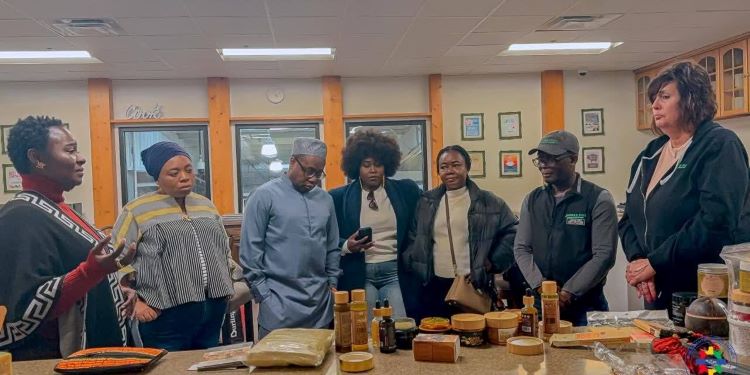
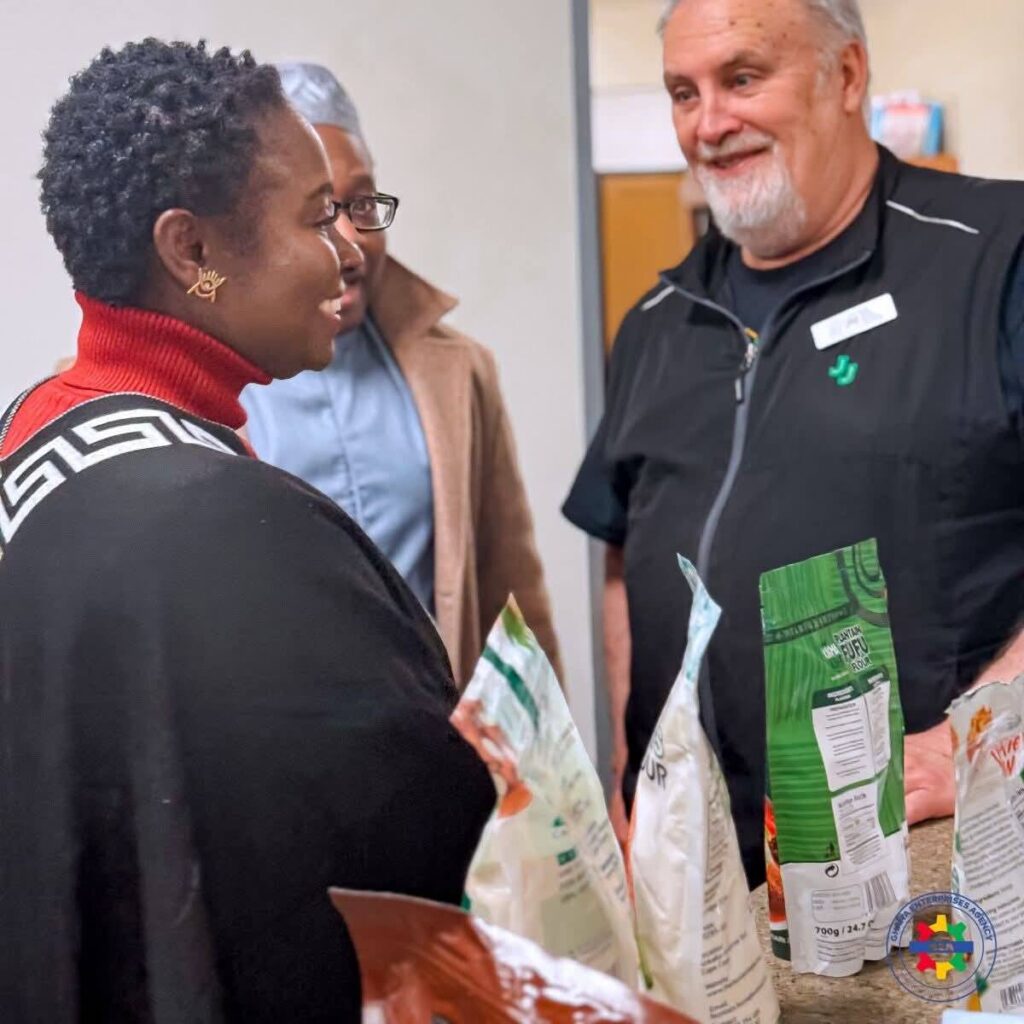
The delegation’s visit to Jungle Jim’s International Market in Cincinnati, Ohio, marks a deliberate extension of the Agency’s approach to export development – moving beyond high-level policy discussions to the actual lobbying for shelf space in global retail environments, and presenting selected products from the Ghana Mall directly to international buyers.
“The visit provided valuable insights into the core criteria that consumer goods must satisfy to gain and sustain placement in international retail environments, including compelling brand identity, packaging that meets global presentation standards, full regulatory compliance, and the logistical capacity to fulfill orders consistently at scale”
Ghana Enterprises Agency
According to the GEA, the engagement in Cincinnati, like previous ones, was not merely a tour of facilities; it was a technical audit of what Ghanaian entrepreneurs must achieve to sustain a presence in the United States, as it tested the “retail-readiness” of local brands against the rigorous standards of the American consumer market.
For the GEA, the mission provided a real-world laboratory to identify the specific hurdles that prevent local goods from moving from the suitcase of a traveler to the organized shelves of a multi-million-dollar international market.
Jungle Jim’s International Market is renowned for its vast selection of global goods, making it the ideal “litmus test,” for Ghanaian products. During the visit, the CEO and her team explored the core criteria that define success in such a competitive space, with the first hurdle identified being Brand Identity.
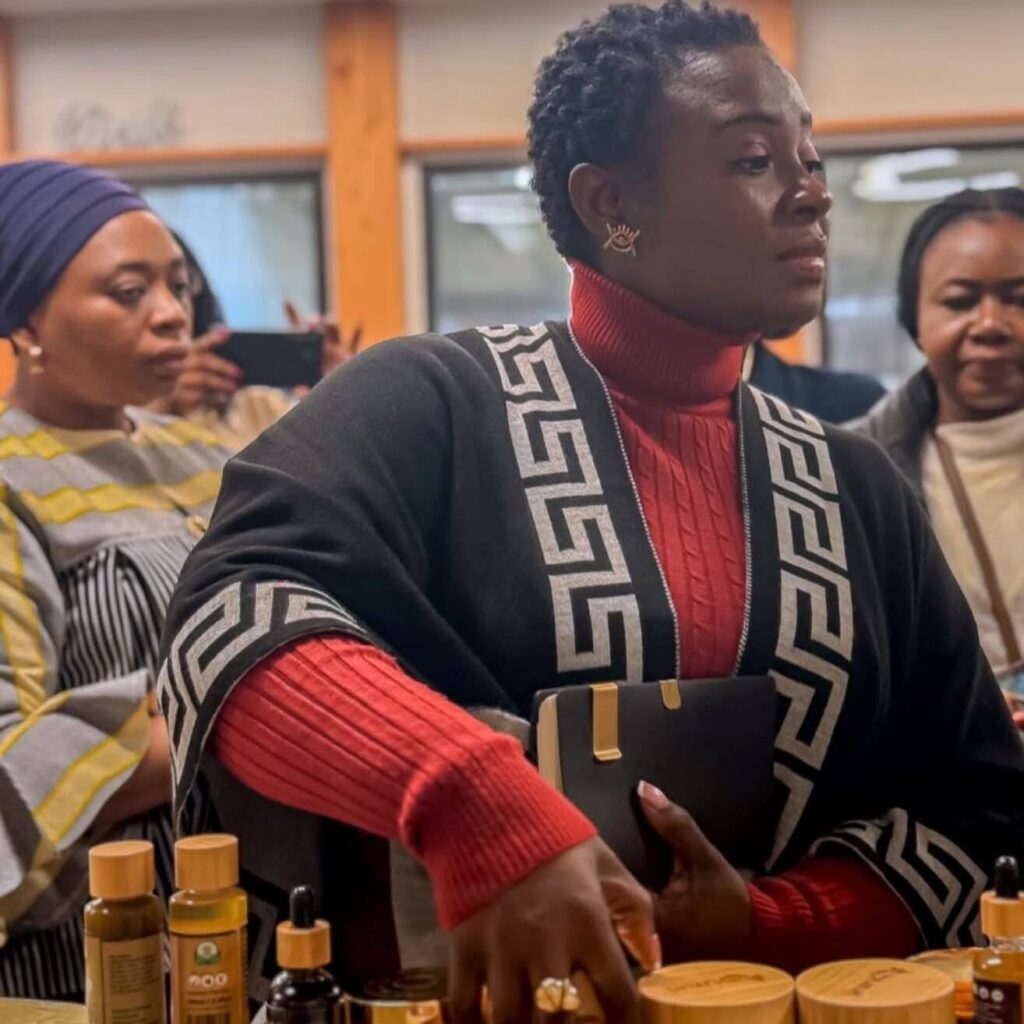
In a retail environment where thousands of products vie for a second of a consumer’s attention, Ghanaian goods must transition from “utilitarian packaging to compelling storytelling.” The GEA delegation observed that products from the Ghana Mall require a visual language that resonates with a global audience while maintaining their authentic Ghanaian roots.
Packaging standards emerged as a non-negotiable factor, where meeting global presentation standards involves more than just aesthetics; it includes durable materials that can withstand international shipping and labeling that adheres to strict U.S.
The GEA’s lobbying efforts for shelf space were met with clear feedback, that visibility is earned through professional presentation. This insight is expected to refine the Agency’s internal training programs, shifting the focus from mere production to the high-end finishing required for the American export corridor.
Regulatory Compliance
While branding opens the door, regulatory compliance and logistical capacity are what keep the door open. The GEA delegation noted that many Ghanaian MSMEs struggle with the “consistency of scale.”
It is one thing to produce a high-quality batch of shito or cocoa-based snacks for a local fair; it is an entirely different challenge to fulfill a standing order for a regional supermarket chain in Ohio. The Cincinnati engagement highlighted the organizational infrastructure necessary for local firms to bridge this gap.
For the GEA, logistics remains the silent killer of many export dreams, which is why it is now looking at how to consolidate shipments from various small-scale producers to meet the volume requirements of markets like Jungle Jim’s.
Without the ability to fulfill orders consistently at scale, Ghanaian products risk being labeled as “unreliable” by international distributors. The Agency’s broader institutional mandate is now pivoting toward building these logistical clusters, ensuring that when a product from the Ghana Mall gains shelf space, it stays there.

“The engagement also reflected GEA’s broader institutional mandate to strengthen the operational and export readiness of MSMEs, building the organizational infrastructure necessary for these enterprises to compete credibly in global markets and establish a durable presence beyond domestic trade channels”
Ghana Enterprises Agency
The GEA’s visit to Ohio is a direct response to the need for a durable presence in foreign trade channels, since traditionally, Ghanaian exports have relied on informal networks or seasonal trade fairs.
The CEO’s mission aims to formalize these links by creating a permanent pipeline between the Ghana Mall and international retail giants, and this requires a fundamental upgrade in the internal management of MSMEs. The GEA emphasized that export readiness is not just about the product, but the business’s ability to manage international contracts, foreign exchange fluctuations, and cross-border legalities.
By lobbying for shelf space in a venue like Jungle Jim’s, the GEA is effectively acting as a state-backed “broker” for local entrepreneurs. This high-level intervention provides a level of credibility that individual small businesses could not achieve on their own.
However, the Agency made it clear that this support is conditional on the “MSMEs meeting the global criteria identified during the US mission.” The goal is to move away from sympathy purchases toward a model where Ghanaian goods are bought because they are objectively superior and professionally presented.
READ ALSO: Abdelatty, Witkoff Discuss “Potential” US-Iran Negotiations