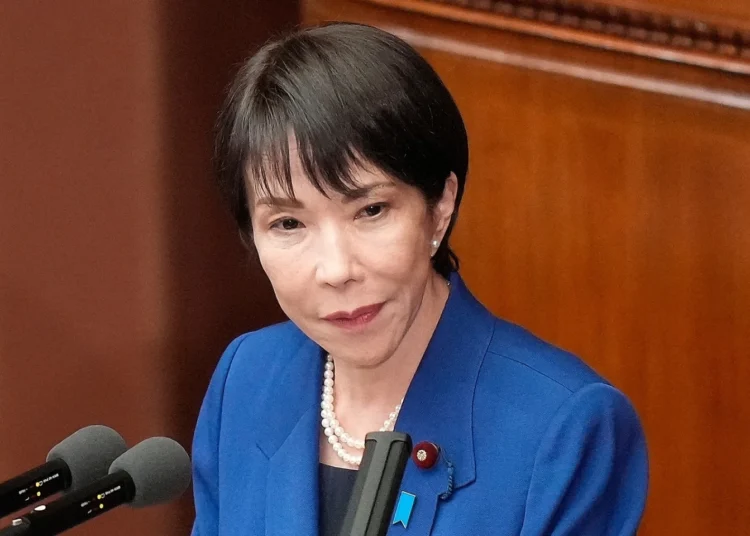
Japan’s Prime Minister, Sanae Takaichi has announced that the government will start releasing national oil stockpiles on March 26, 2026, as the country braces for possible shortages caused by the US-Israel war on Iran.
In a lengthy statement posted on X, Takaichi said these moves will help ensure “that there is no disruption whatsoever in the supply of petroleum products such as gasoline.”
The measure, announced during the first meeting of relevant Cabinet members to discuss ways to cushion the impact of the tensions in the Middle East on the Japanese economy, comes after Japan started releasing oil from private-sector stockpiles last week.
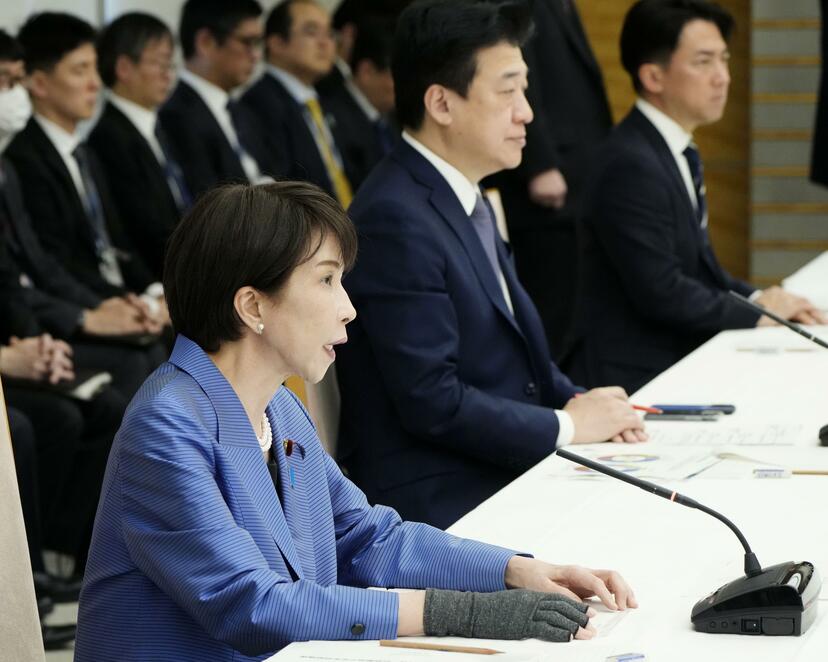
The government has established a panel of relevant Cabinet ministers on the situation in the Middle East and convened the first meeting today, Tuesday, March 24, 2026. The participants included Takaichi, Foreign Minister Motegi Toshimitsu and Economy, Trade and Industry Minister Akazawa Ryosei.
Takaichi spoke about her summit with US President Donald Trump, saying that they confirmed the importance of calming the situation as soon as possible, ensuring safe passage in the Strait of Hormuz and securing a stable energy supply.
Takaichi said in order to address the effects on the domestic economy, private oil companies have been releasing their reserves, which they are required to have, since March 16, 2026.
Takaichi also referred to concerns about the supply of petroleum products, including naphtha. She instructed the ministers to compile policies and brief her about the overall supply chain for products in the industrial, farming and medical sectors. She said that they should take into account the global supply situation and the volume of stockpiles in Japan.
Japan, a resource-poor country with a huge economy, imports more than 90% of its crude oil from the Middle East, making it particularly vulnerable to the closure of the waterway. Most of the oil comes from Saudi Arabia, Kuwait, the United Arab Emirates, and Qatar. Of these Middle Eastern supplies, about 70% typically arrive in Japan on tankers traveling through the Strait of Hormuz.
The government last week approved the release of 15 days’ worth of private-sector reserves, amid concern that the conflict in the Middle East will continue to hinder the flow of tanker traffic along the strait of Hormuz.
The country’s Finance Minister, meanwhile, said that he government stood ready to do whatever it takes to keep energy prices stable.
Minister Satsuki Katayama was quoted as saying, “It is widely said that speculative moves in crude oil futures markets are also affecting the foreign exchange market.”
“As the Japanese government, taking into account the impact that currency movements have on people’s lives and the economy, we are determined to take thorough action at all times and on all fronts.”
Satsuki Katayama
As of the end of last year, Japan held reserves of about 470m barrels of oil, equivalent to 254 days of domestic consumption. The government last week introduced subsidies for fuel products to cap gasoline prices at about ¥170 ($1.10) per litre.
The move came after the average retail price of gasoline rose to a record ¥190.8 per litre. The initial subsidy will be reviewed every week based on oil prices.
Concern that the strait of Hormuz could remain closed for an extended period has triggered anxiety among some Japanese consumers over the availability of toilet paper and other household essentials.
Peace And Stability In Middle East Extremely Important For Japan And International Community
Moreover, the Japanese Prime Minister stressed that maintaining peace and stability in the Middle East region, including ensuring the safety of navigation in the Strait of Hormuz, “is of utmost importance to the international community, including Japan, from the perspective of stable energy supply as well.”
Takaichi, who last week resisted calls by Donald Trump to send Japanese maritime self-defence forces to the region, added that Tokyo would continue to “make all necessary diplomatic efforts in close coordination with related countries.”
Takaichi told Trump during their summit in Washington that Japan’s postwar constitution prevented her from dispatching the country’s naval forces to the strait of Hormuz.
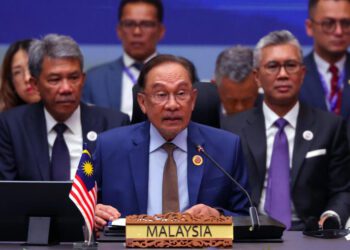
Later on Tuesday, Takaichi held separate phone talks with Malaysian Prime Minister Anwar Ibrahim and Marshall Islands President Hilda Heine and agreed with them to collaborate toward an early de-escalation of the Middle East situation, according to the Foreign Ministry.
READ ALSO: Trump Postpones Threatened Strikes On Iran’s Power Plants