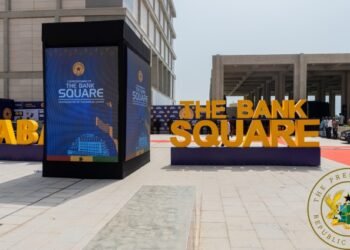
The Ghana Export-Import Bank has marked its 10th anniversary with a major financial milestone, announcing that its loan book has surged to 278 million dollars after nearly quadrupling over the past decade.
The remarkable growth underscores the Bank’s expanding role in financing production, value addition, and export development across the country.
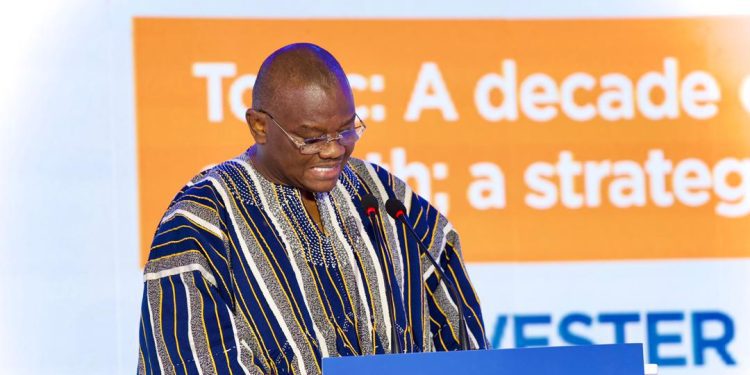
Speaking at the Bank’s 10th anniversary international conference held in Accra on Wednesday, March 25, Chief Executive Officer Sylvester Adinam Mensah described the progress as a strong validation of the institution’s founding vision and national mandate.
According to him, the Bank’s loan portfolio grew from less than 70 million dollars in 2016 to nearly 300 million dollars by the fourth quarter of 2025. He noted that the expansion has provided critical financial support to approximately 147 businesses operating in key sectors of the economy.
Driving Production and Export Development
Mr. Mensah emphasized that the Bank was established with a clear responsibility to stimulate economic transformation through targeted financial and trade interventions. He explained that its mandate goes beyond routine lending activities and focuses on strengthening productive capacity in strategic industries.
He said the institution has positioned itself as a catalyst for industrial expansion by supporting businesses that add value to raw materials and enhance export competitiveness.
“GEXIM was established with a clear national mandate to drive production, value addition, and export development through targeted financial and trade-related interventions.”
Sylvester Adinam Mensah
The CEO added that the Bank’s work increasingly centers on empowering local enterprises to scale operations, modernize production processes, and access international markets. This approach, he stressed, ensures that financing translates into tangible economic impact.
Stronger Financial Performance
Beyond the rapid expansion of its loan portfolio, the Bank has also posted impressive financial performance over the period under review. Income collections more than doubled within the decade, signaling improved operational efficiency and sustainable growth.
Mr. Mensah disclosed that annual income collections rose from below 34 million dollars in 2016 to more than 71 million dollars by 2025.
The upward trend reflects stronger asset performance, improved risk management systems, and growing demand for specialized trade finance solutions. It also highlights the Bank’s ability to balance developmental objectives with sound financial stewardship.
Expanding Presence and Institutional Reach
The Bank has also broadened its operational footprint beyond the capital, strengthening access to financing for businesses in different parts of the country. This geographic expansion has improved inclusivity and ensured that enterprises outside Accra benefit from development finance support.
“We had also expanded our presence beyond Accra. We have developed working relationships with more than 12 development finance institutions in areas such as trade support, training, and advisory services,” Mr. Mensah said.
Sylvester Adinam Mensah
The CEO noted that these partnerships have enabled knowledge transfer, capacity building, and access to technical expertise for local businesses seeking to compete globally.
Deepening International Partnerships
A key pillar of the Bank’s growth strategy has been collaboration with international partners. By building relationships with development finance institutions and global stakeholders, the Bank has strengthened its ability to deliver comprehensive support services to exporters.
Mr. Mensah explained that the partnerships span trade facilitation, institutional training, advisory services, and technical cooperation. These alliances have enhanced the Bank’s capacity to structure complex financing arrangements and provide non-financial support to clients.
He stressed that international collaboration remains critical to sustaining export growth and ensuring Ghanaian businesses can integrate into global value chains.
Strengthening Governance and Technical Support
The Bank has simultaneously focused on improving governance systems within its portfolio companies. Stronger governance structures help ensure accountability, operational discipline, and long-term sustainability for supported enterprises.
“At the same time, we strengthened governance arrangements for portfolio companies, introduced structured technical support for clients, and aligned our strategy with Ghana’s food security and industrialisation priorities.”
Sylvester Adinam Mensah
Structured technical assistance programs have also been introduced to help clients enhance management capacity, adopt modern production standards, and improve competitiveness.
This integrated support model ensures that financing is complemented by advisory services and institutional strengthening.
Aligning with National Development Priorities
Mr. Mensah reaffirmed that the Bank’s strategy is closely aligned with national priorities, particularly food security and industrialization. By channeling funding into agriculture, agro-processing, manufacturing, and export-oriented ventures, the institution is supporting long-term economic resilience.
He noted that the Bank’s interventions are designed to reduce import dependence, boost foreign exchange earnings, and stimulate job creation across value chains.
The CEO concluded that the progress recorded over the past decade demonstrates the effectiveness of development finance in driving structural transformation when supported by strong partnerships and sound governance.
As the Bank enters its second decade, its leadership remains confident that expanded financing, strategic collaborations, and policy alignment will continue to unlock growth opportunities for businesses and strengthen the country’s export ecosystem.
READ ALSO: World Bank Backs Ghana’s Recovery Drive After Landmark Visit