Ghana’s First Lady, Lordina Dramani Mahama, has urged world leaders to place child protection at the centre of digital transformation efforts, warning that technology must be managed carefully to safeguard young users.
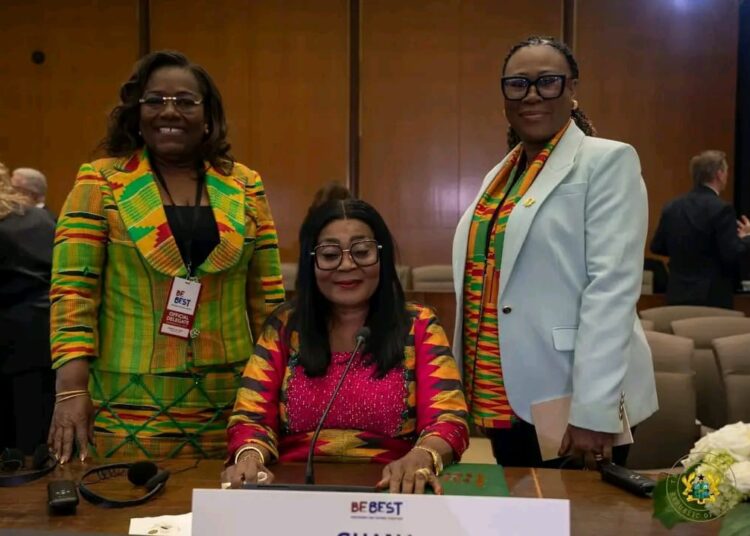
She delivered the message at the Fostering the Future Together Global Coalition Summit held in Washington, D.C., an international gathering hosted by Melania Trump.
The two-day event convened first spouses, policymakers, and technology stakeholders to advance strategies that ensure children benefit from digital innovation without being exposed to harm.
The summit reflects growing global concern over how rapidly expanding digital access is reshaping childhood experiences, learning environments, and social interactions.
Addressing participants, Mrs Mahama highlighted the positive impact of digital tools on young people’s lives, noting that technology has expanded opportunities for learning, communication, and creativity.
She illustrated this with a personal reflection from Ghana’s recent Independence Day celebrations, explaining how social media allowed her to connect with young citizens across the country.

“Many came from young people who could not attend our national celebrations. But technology gave them a voice,” she said, underscoring how digital platforms can bridge physical and social barriers.
Her remarks emphasized that technology, when properly harnessed, can democratize participation and empower children to engage in national and global conversations.
Growing Risks in Digital Spaces
Despite these opportunities, the First Lady cautioned that the digital environment presents significant risks if left unregulated or poorly managed. She pointed to the increasing prevalence of cyberbullying, exploitation, and exposure to harmful content as pressing concerns.
Citing research findings, she noted that one in five young victims of cyberbullying avoids school, demonstrating how online experiences can have serious real world consequences.
Her intervention aligns with broader international concerns about the psychological, social, and educational impact of unsafe online environments on children. Stakeholders at the summit acknowledged that without effective safeguards, the same platforms designed to empower young people can also expose them to harm.

Mrs Mahama outlined Ghana’s ongoing efforts to strengthen child protection in the digital space, highlighting improvements in legislation and enforcement mechanisms aimed at tackling online abuse.
She also drew attention to the “Safer Digital Ghana” campaign, which seeks to promote awareness, responsible digital behaviour, and online safety education among children and their caregivers.
These initiatives form part of a broader national approach that combines digital literacy with regulatory safeguards, ensuring that children are equipped not only with access to technology but also with the skills to use it responsibly.
Balancing Innovation with Responsibility
The First Lady reinforced her message by referencing remarks from John Dramani Mahama, who has highlighted the transformative power of digital tools in modern society.
“Our children belong to a generation armed with tools that earlier generations could hardly imagine. In their hands, a smartphone becomes a classroom, a business platform, a creative studio, and a gateway to the global economy”.
Ghana’s First Lady Lordina Mahama
She noted that while these advancements present immense potential, they must be supported by structured guidance, education systems, and policy frameworks that prioritize safety and responsible use.

Discussions at the summit focused on strengthening global collaboration to address shared challenges in digital child protection. Participants explored ways to align policies, exchange best practices, and develop technological tools that create safer online environments.
The dialogue builds on existing international frameworks, including reports and regulatory models aimed at improving digital safety standards. Leaders emphasized that no single country can address these challenges in isolation, making coordinated global action essential.
Expanding Digital Literacy and Partnerships
Ghana’s approach also includes expanding digital literacy programmes within schools, aimed at equipping children with the knowledge needed to navigate online platforms safely.
The country has partnered with major technology firms such as Meta and Google to improve content moderation and enhance online safety measures.
With internet penetration steadily increasing, Ghana is working to balance access with protection, addressing emerging threats such as disinformation, online exploitation, and digital fraud.
These partnerships reflect a recognition that effective child protection in the digital age requires collaboration between governments, private sector actors, and civil society.
Call for Shared Global Responsibility
In her concluding remarks, Mrs Mahama stressed that safeguarding children online is a collective responsibility that extends beyond national boundaries. “Protecting children’s digital futures is our moral duty, our generational responsibility, and our shared global mission,” she stated.

Her message reinforced the central theme of the summit, which is that ensuring safe digital environments for children requires coordinated action from governments, families, technology companies, and international institutions.
The outcomes of the summit are expected to shape future policies and partnerships aimed at creating safer and more inclusive digital ecosystems for children worldwide.
READ ALSO: China Sees Hope For Peace In Middle East