

The Ministry of Trade, Agribusiness and Industry (MoTAI) has spotlighted Ghana’s Vice President, Professor Jane Naana Opoku-Agyemang, calling on the Ghana Export-Import Bank (GEXIM) to move beyond traditional financing and aggressively drive a value addition agenda, during her speech at the “GEXIM at 10,” International Conference in Accra.
Addressing the conference, themed “A Decade of Enabling Export Trade and Industrial Transformation: Resetting GEXIM for the Next Frontier,” the Vice President emphasized that Ghana’s transition to a resilient, export-led economy depends on the bank’s ability to empower Micro, Small and Medium Enterprises (MSMEs) to compete on the global stage.
“The Vice President noted that while GEXIM has made significant strides in supporting agriculture, manufacturing and non-traditional exports, evolving global trade dynamics require stronger institutions, expanded export finance, and deliberate efforts to move Ghana up the value chain”
Ministry of Trade, Agribusiness and Industry
According to MoTAI, the Vice President argued that the era of exporting raw materials is over and that the next frontier for GEXIM, as it enters its second decade of operations, must be anchored in industrial production that redefines Ghanaian goods.
For the Vice President, the bank is the primary engine for “export competitiveness,” and its success will be measured by the volume of processed, high-value goods leaving Ghanaian shores.
The Deputy Minister for Trade, Agribusiness and Industry, Hon. Sampson Ahi, characterized the two-day summit not as a celebration, but as a rigorous “working session.” Hon. Ahi’s intervention focused on the practical hurdles that prevent local businesses from becoming export-ready.
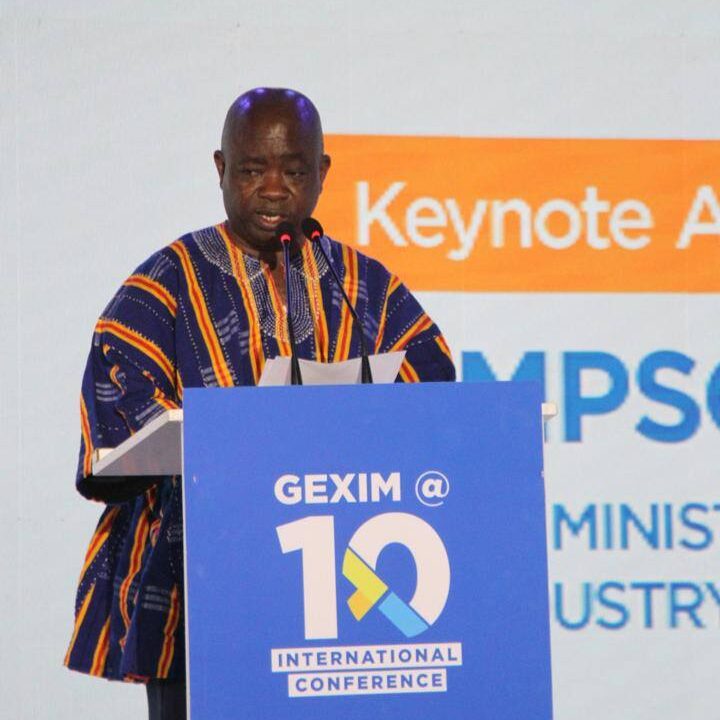
He cited high compliance costs, limited access to long-term capital, and the technical complexities of international trade standards as the primary bottlenecks. He urged GEXIM to provide time-bound solutions that address these challenges directly, ensuring that MSMEs have the financial cushion to innovate and scale.
The Ministry’s perspective is that GEXIM must act as more than a lender; it must be a “facilitator of readiness.” This includes providing the guarantees and risk mitigation tools that commercial banks are often hesitant to offer.
By lowering the risk profile of Ghanaian exporters, GEXIM can unlock a surge in private sector activity that aligns with the government’s broader industrialization goals. Hon. Ahi stressed that the “Reset” discussed at the conference must result in a streamlined process for MSMEs to access the export finance they need to fulfill international orders.
Monetary Policy and Export Competitiveness
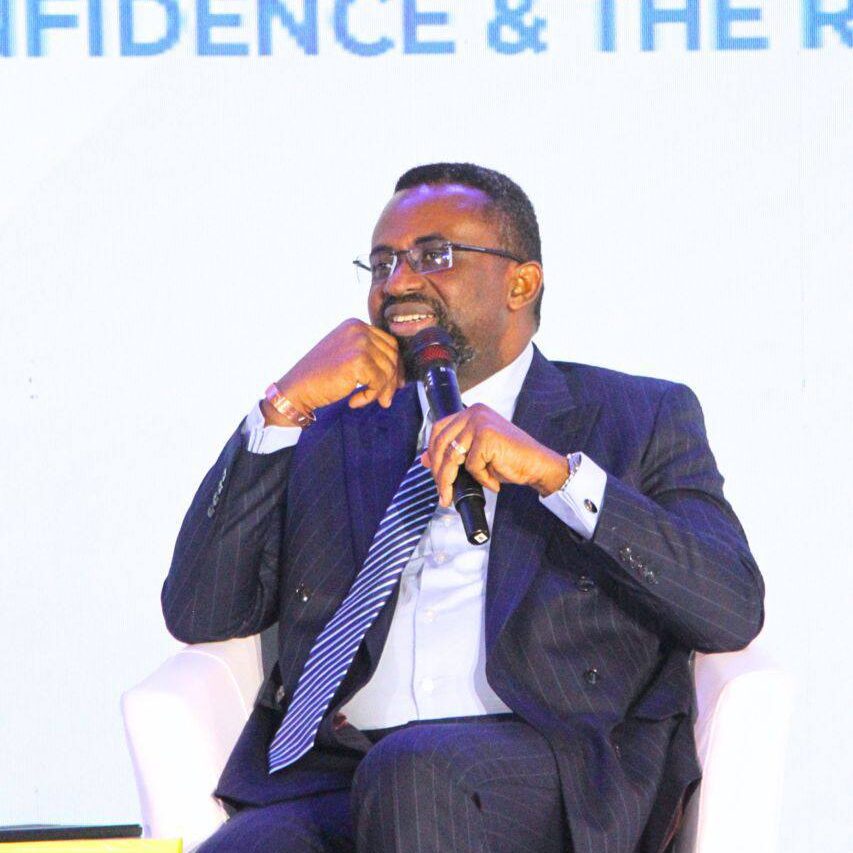
A critical highlight of the conference was a “fireside chat,” featuring the Governor of the Bank of Ghana, Mr. Johnson Asiamah, where discussions explored the delicate relationship between exchange rate stability and export growth.
For many exporters, currency volatility remains a significant risk factor that can wipe out profit margins overnight. Governor Asiamah highlighted the “policy trade-offs required to maintain market confidence,” while ensuring that the cedi remains at a level that supports, rather than hinders, export competitiveness.
The Governor’s presence at the “GEXIM at 10,” conference underscored the need for a synergistic approach between monetary policy and trade finance. He noted that while the central bank focuses on price stability, institutions like GEXIM must provide the hedging instruments that allow exporters to plan for the long term.
This alignment is essential for building a “resilient economy” that can withstand global shocks. The Governor also pointed toward the role of trade finance in boosting foreign exchange reserves, creating a virtuous cycle where successful exports contribute to the very currency stability that exporters require.
The Chief Executive Officer of GEXIM, Mr. Sylvester Adinam Mensah, provided a candid assessment of the bank’s first decade while outlining a focused, results-driven strategy for the future.
Mr. Mensah acknowledged that while the bank has achieved significant milestones, the next phase requires a sharper focus on sector prioritisation – by identifying the specific sectors that have the highest potential for value addition and deploying its capital more effectively.
For the CEO, the reset involves the introduction of “expanded trade finance instruments,” including innovative collateral systems that recognize intellectual property and move beyond the traditional reliance on landed property.
He emphasized that for an MSME to scale, it needs flexible financing that understands the seasonal and cyclical nature of trade. This new approach is designed to make GEXIM a more responsive partner for the creative and industrial sectors, ensuring that no viable export project is left unfunded due to a lack of traditional collateral.
Digital Technology and AI Revolution
A keynote session during the conference focused on the role of Digital Technology and Artificial Intelligence (AI) in modernizing export finance. As global supply chains become more data-driven, GEXIM is exploring ways to integrate AI into its credit scoring and risk assessment models.
This would allow for faster loan approvals and a more accurate understanding of the export potential of various businesses. Digital platforms are also being considered to help MSMEs track their shipments and manage their international payments more efficiently.
The integration of AI is not just about efficiency; it is about transparency and compliance, as using digital tools to verify trade documents and monitor the movement of goods, reduces the incidence of fraud and improves its standing with international partner banks.
This “digital leap,” is a key component of the bank’s strategy to remain relevant in an increasingly automated global market, with conference participants agreeing that the next stage of export trade is digital, and Ghana must lead the way in adopting these technologies within the sub-region.
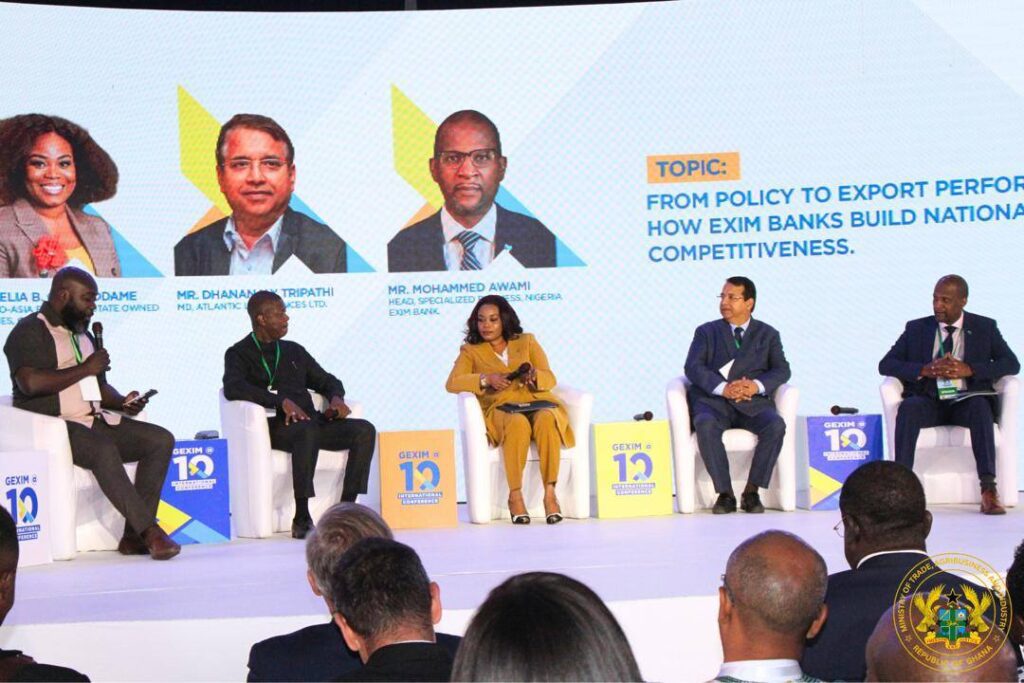
Further discussions examined the use of “Innovative Collateral Systems,” such as using warehouse receipts or future export contracts as security for loans. This inventory-based financing is particularly relevant for the agribusiness sector, where farmers and processors often have valuable stock but little liquid capital.
By recognizing these assets, GEXIM is lowering the threshold for entry into the export market. These actionable recommendations are expected to form the core of the bank’s operational manual for the next five years.
As the International Conference concluded, the mandate from the Vice President remained the guiding principle: Ghana must transition from a consumer of imports to a producer of high-value exports.
The first decade of GEXIM has laid the foundation, supporting the emergence of new industries and strengthening the “Non-Traditional Export,” sector. However, what comes next is about scale, quality, and global competitiveness.
READ ALSO: Profit Taking Batters Ghana Stock Market