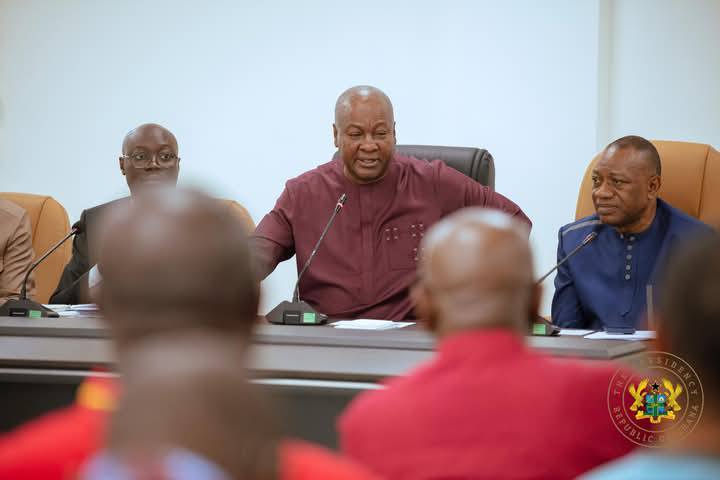
President John Dramani Mahama continues to enjoy strong public support, with his job approval rating holding steady at 67 percent, according to a new poll by Global InfoAnalytics.
The findings suggest that while the President’s popularity remains solid, there are emerging signs of caution among voters as disapproval levels begin to rise.
The poll indicates that 26 percent of voters disapprove of the President’s performance, marking a modest increase from 24 percent recorded in December 2025. Despite this uptick, the overall approval rating has remained unchanged, reflecting a stable but closely watched political landscape.
Support for the President cuts across all regions, including areas traditionally aligned with the opposition New Patriotic Party. In the Ashanti Region, widely regarded as a stronghold of the New Patriotic Party, 56 percent of voters expressed approval of his performance.
Similarly, 64 percent of respondents in the Eastern Region and 65 percent in the North East Region indicated support, pointing to a broader national acceptance of his leadership.
Party Lines and Political Divides
The data also reveals a familiar partisan divide. While the majority of respondents across different political affiliations approve of the President’s performance, support is notably weaker among supporters of the New Patriotic Party.

This pattern underscores the enduring influence of party loyalty in shaping political perceptions. However, the President’s ability to secure majority approval even in opposition strongholds signals a shift in political dynamics.
Analysts suggest that such cross-regional support could reflect voter appreciation of policy direction or leadership style, even among traditionally skeptical constituencies.
Mixed Signals on National Direction
Beyond personal approval ratings, the poll provides insight into how Ghanaians perceive the broader direction of the country. According to the findings, 65 percent of voters believe Ghana is heading in the right direction, a slight decline from 66 percent in the previous quarter.
At the same time, the proportion of respondents who believe the country is on the wrong path has increased to 28 percent, up from 24 percent. The share of undecided voters has decreased from 10 percent to 7 percent, suggesting that more citizens are forming clearer opinions about national developments.
These figures point to a nuanced public mood. While a majority remains optimistic about the country’s trajectory, the gradual rise in pessimism indicates growing sensitivity to economic and global pressures.
Living Standards Show Improvement but Concerns Linger
The poll also examined perceptions of living standards, offering a mixed but generally positive outlook. A majority of respondents, 58 percent, reported that their standard of living has improved compared to a year ago. In contrast, 16 percent indicated that their conditions have worsened.
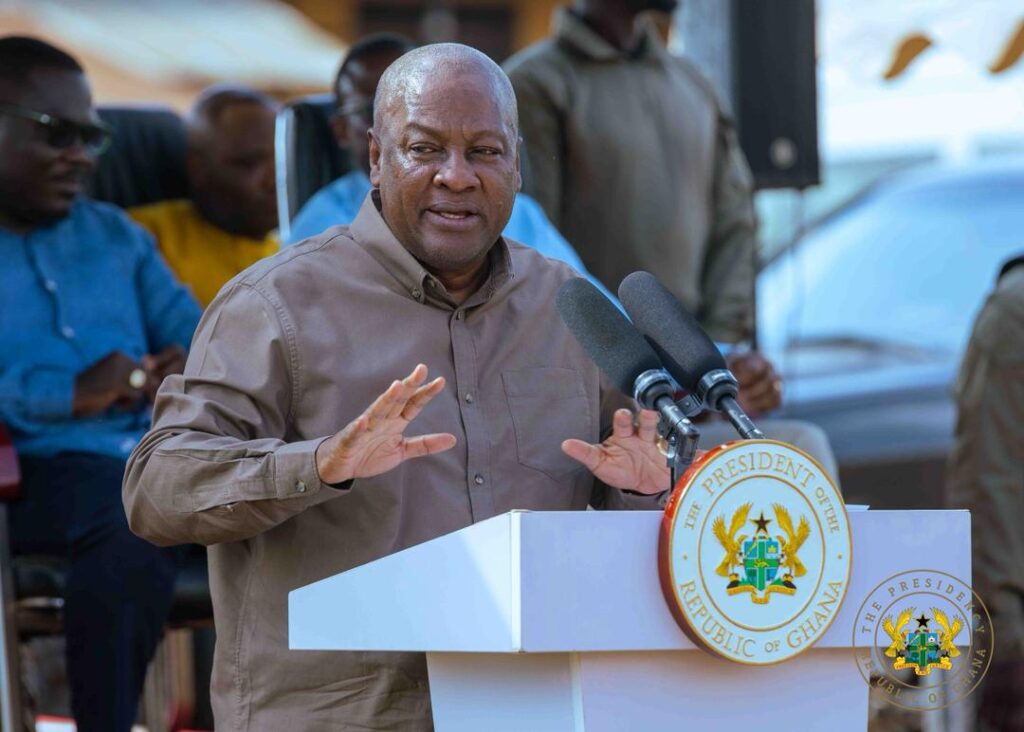
Looking ahead, 68 percent of voters expressed optimism that their standard of living will improve over the next twelve months. However, this represents a slight decline from 70 percent in the previous quarter, suggesting a degree of caution among the public.
Analysts attribute this emerging uncertainty to external factors, particularly global economic developments such as tensions in the Middle East, which have the potential to influence inflation and overall economic stability.
Public Concerns Over Electoral Practices
The survey also explored public perceptions of vote buying and its impact on Ghana’s democratic process. A significant majority of respondents, 69 percent, believe that vote buying promotes corruption, while 59 percent say it undermines electoral integrity.
Additionally, 41 percent of voters indicated that the practice disadvantages marginalized groups, and 35 percent believe it erodes trust in political institutions. A smaller proportion, 31 percent, said it contributes to economic hardship, while 15 percent linked it to voter apathy.
These findings highlight widespread concern about the integrity of the electoral system and suggest that issues of governance and accountability remain central to public discourse.
The poll’s conclusions are based on a robust methodology, combining face to face, telephone, and web based interviews. A total of 11,572 respondents participated, drawn from all 16 regions and 83 constituencies across the country.
The survey employed probability random sampling, with a confidence level of 99 percent and relatively low margins of error across all data collection methods. Interviews were conducted between March 17 and March 23, 2026, providing a timely snapshot of public opinion.
A Stable Yet Watchful Electorate
Overall, the findings of the poll paint a picture of a President who retains strong public backing while navigating a gradually shifting political and economic environment.
The steady approval rating suggests confidence in leadership, but the rise in disapproval and slight decline in optimism point to underlying concerns that could shape future public sentiment.

As Ghana continues its recovery and responds to global challenges, the balance between sustained approval and emerging caution will likely define the political landscape in the months ahead.
The data underscores a key reality that public support remains firm, but not without expectations for continued progress and responsiveness to evolving concerns.
READ ALSO: Ghana Insurance Stuck At 1% Penetration- Deloitte