Minority Caucus in Parliament has faced a major legislative setback following the rejection of a high-profile motion aimed at investigating the controversial Gold-for-Reserves Scheme and its alleged $214 million financial shortfall.
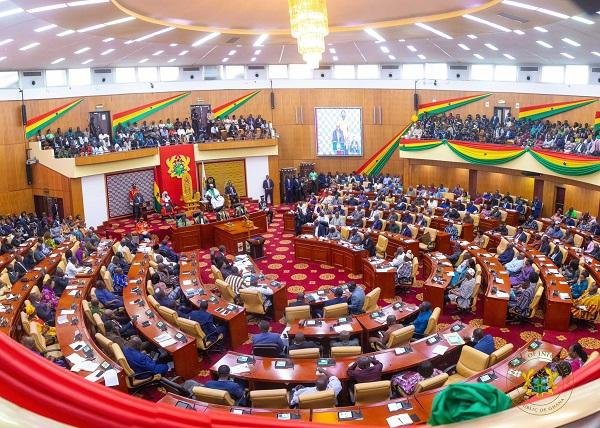
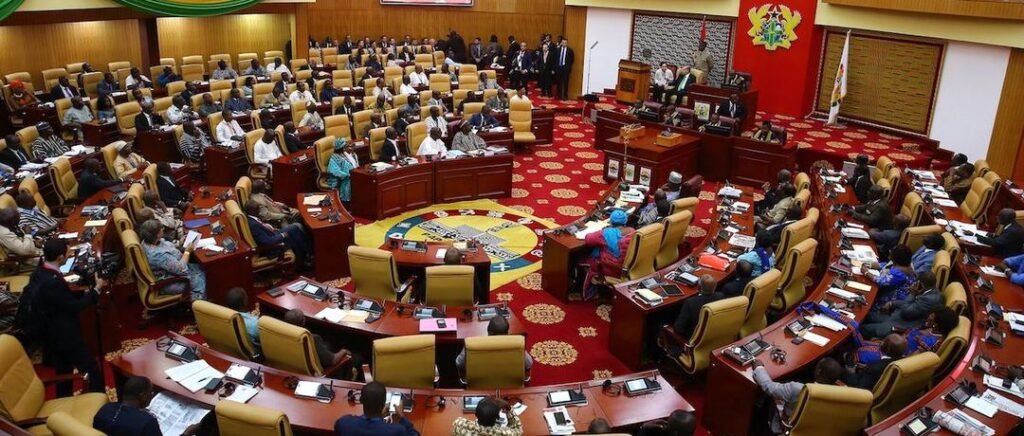
The decision came after a polarized debate on the floor of the House, where the government-aligned Majority bloc successfully voted down the proposal to establish an Ad Hoc Committee to probe the design, governance, and environmental implications of the central bank-led initiative.
“Parliament has rejected a motion to establish an Ad Hoc Committee to investigate the Gold-for-Reserves Scheme including its design, implementation, governance, financial performance, environmental and public health implications and any related matters.”
Parliament of Ghana
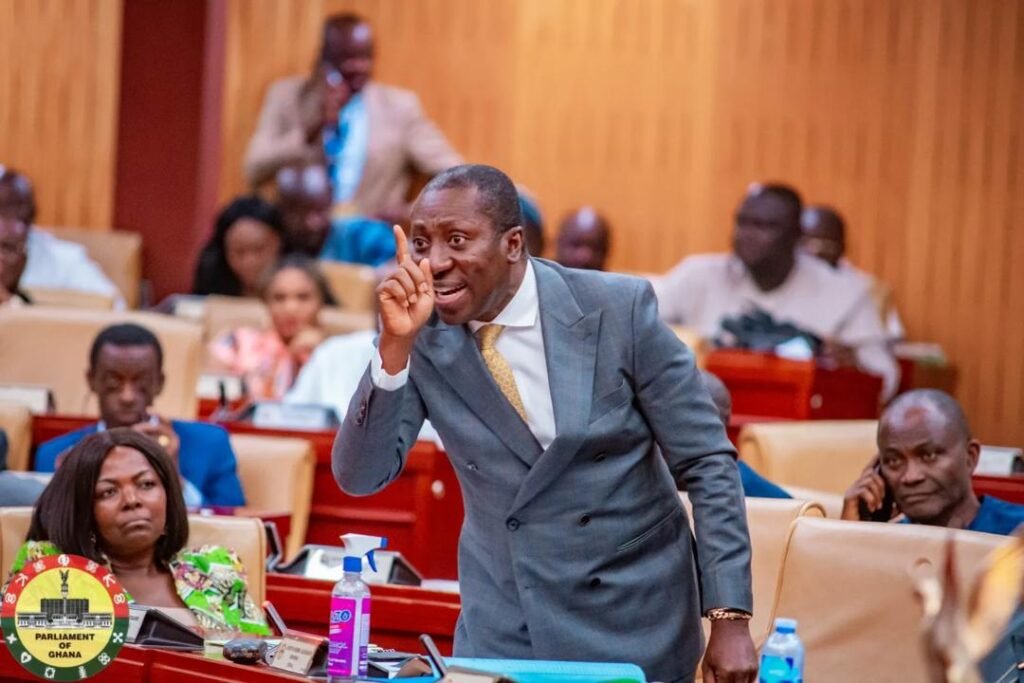
This legislative impasse centers on the Minority’s demand for a comprehensive forensic audit into the program, which they argue has been shrouded in a lack of transparency since its inception.
While the Minority Leader, Hon. Alexander Afenyo-Markin, moved the motion under the authority of Article 103 of the 1992 Constitution, the Majority side remained unyielding, asserting that the motion was politically motivated and redundant.
The rejection effectively halts at least within the halls of Parliament any immediate formal inquiry into the “financial performance” and “public health implications” of the gold-trading framework that has become a lightning rod for economic criticism.
Political Deadlock and the Battle for Accountability

The debate reached a fever pitch as Hon. Alexander Afenyo-Markin, supported by Hon. Abena Osei Asare, grounded his argument in the House’s Standing Orders specifically Orders 204, 212, 213, 262, and 263.
The Minority contended that as representatives of the people, they have a “sacrosanct duty to ensure that state resources are managed with the highest level of integrity.”
By invoking Article 103, they sought to utilize the investigative powers of Parliament to uncover why the Bank of Ghana’s initiative, originally intended to stabilize the Cedi, had reportedly resulted in such staggering losses.
However, the Majority Caucus viewed the situation through a vastly different lens. Leading the charge against the motion, the MP for Amenfi West, Hon. Eric Afful, mounted a vigorous defense of the program.
He argued that the initiative was a “Bank of Ghana necessity” established in 2022 to navigate a turbulent global economy.
In a sharp rebuttal to the Minority’s claims, Afful contended that the program’s perceived struggles were not the fault of the current designers but were due to “mismanagement by the previous government.”
He further dismissed the call for a probe by describing the current state of the scheme as “unsuccessful and lacking visibility,” ultimately suggesting that the motion should not only be rejected but “aborted” entirely.
Transparency Concerns in the Extractive Sector
From the perspective of a mining and extractive blogger, the rejection of this probe raises significant questions about the “transparency and accountability” of Ghana’s gold value chain.
A parliamentary investigation could have acted as a vital mechanism for “shining a light on the dark corners of the Gold-for-Reserves trade.”
Such a probe would have likely scrutinized the artisanal and small-scale mining (ASM) sectors, which are the primary sources of the gold used in the scheme, potentially revealing whether environmental standards were being bypassed in the rush to accumulate reserves.
In-depth research into the Minority’s call suggests that a formal inquiry would have provided a platform for civil society and industry experts to weigh in on the alleged financial loss of $214 million.
Without this oversight, there is a growing risk that public trust in the Bank of Ghana’s extractive policies will continue to erode.
The Minority argued that a probe would have set a precedent for “fiscal discipline” in the extractive industry, ensuring that future gold-backed policies are not implemented without a robust, publicly accessible governance framework.
The Legislative Path Forward

The fallout from this vote suggests a deepening rift between the two sides of the House regarding the management of national assets.
While the Majority insists the program is a sovereign strategy beyond the scope of a politically-charged Ad Hoc Committee, the Minority maintains that “the $214 million question remains unanswered.”
As the mining sector continues to be the backbone of Ghana’s economy, the lack of a formal investigation may leave the Gold-for-Reserves Scheme vulnerable to further allegations of mismanagement and “unsuccessful” implementation.
READ ALSO: Ghana Faces Fiscal Reckoning Amid Growth Illusion