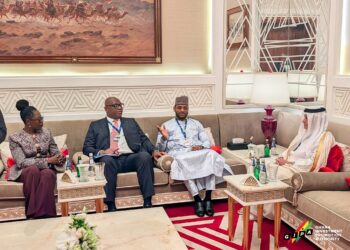

For the Ghanaian private sector, the rules of the game are about to change, as a coalition of legal experts and regulators signaled the end of the era of “fragmented oversight,” at a technical seminar held in Accra.
Organized by the Competition and Markets Centre, the forum served as a high-level briefing on the “Draft Competition Policy and Bill,” a legislative move designed to replace scattered sectoral rules with a single, economy-wide authority.
For C-suite executives and legal counsel, Ghana’s transition to a structured competition regime is no longer a theoretical debate – it is a looming operational reality that will redefine how mergers are cleared, how market dominance is measured, and how “anti-competitive,” behavior is penalized.
The current business environment in Ghana is characterized by what Mr. Benson Nutsukpui, Managing Partner of Kuenyehia & Nutsukpui, described as regulatory inefficiency. Currently, companies operating across different sectors – such as telecoms, insurance, and utilities – face a patchwork of mandates that often lack the technical depth to handle complex market dynamics.
“What we do not have is a coherent, economy-wide competition statute that addresses cartels, abuse of dominance, and merger control in a systematic way. The result is a framework that is woefully inadequate to the demands of a modern market economy”
Mr. Benson Nutsukpui, Managing Partner of Kuenyehia & Nutsukpui
According to Mr. Nutsukpui, this fragmentation creates a high-risk environment for investors, where disputes can languish in the general court system for years, and only by moving toward a coherent competition statute, can the state provide the “predictability” that markets demand.

From a business standpoint, the absence of a dedicated competition authority is a direct hit to the bottom line. The seminar highlighted the historic Internet Ghana Limited vs. Ghana Telecom case as a cautionary tale of resource drain.
Without a specialized body to arbitrate technical market disputes, companies are forced into prolonged litigation that stalls product launches and creates strategic paralysis. Whereas a unified competition regime promises a more streamlined dispute resolution mechanism, allowing firms to resolve grievances through a body equipped with the specific economic investigative tools necessary for rapid, technical rulings.
Furthermore, as Ghanaian firms look to expand under the AfCFTA, the lack of a robust domestic competition law becomes a strategic liability. Without a local framework that aligns with the AfCFTA protocol on competition policy, Ghanaian businesses risk being under-protected or unfairly penalized when competing in larger continental markets.
Establishing a “future-proof” domestic law is therefore a defensive move to ensure that local industries are not at a competitive disadvantage against larger, better-regulated continental conglomerates.
Technical Scrutiny
For the legal teams of major corporations, the devil is in the details of the draft Bill. Professor Peter Alexiadis of King’s College London raised critical concerns regarding how the current draft defines market power and handles Intellectual Property Rights (IPR).
If the law fails to align with “internationally accepted methodologies,” it risks creating a “regulatory chill,” where successful, innovative companies are unfairly targeted for their market size. For businesses, “dominance” is not a crime; it is the “abuse of dominance,” that the law must target.

Professor Alexiadis emphasized that the Bill must be “finely calibrated,” to ensure it doesn’t stifle the very innovation that drives market growth.
In the Digital Economy, this calibration is even more sensitive. David Bailey KC, Professor of Practice Law at King’s College London and Standing Counsel to the UK Competition and Markets Authority, pointed out that digital platforms operate on different economic logic than traditional brick-and-mortar stores.
Issues like “data portability” and “algorithmic pricing” require a law that is elastic enough to regulate the 21st-century marketplace without acting as a constraint on innovation. For the Ghanaian tech and fintech sectors, the final version of this Bill will determine the barrier to entry for new startups and the operational freedom of established incumbents.
A key takeaway for the business community is that the law is only as strong as the institutional capacity of the regulator. Dr. Juliet Twumasi-Anokye, who chairs the ECOWAS Regional Competition Authority’s decision-making Council, warned that effective enforcement requires more than just a new statute; it requires a body of skilled professionals with deep economic expertise.
For businesses, a weak or unskilled regulator is as dangerous as a predatory one, as it leads to arbitrary rulings and regulatory uncertainty. The call for the state to prioritize investment in investigative tools is a call for a regulator that understands market realities – one that can distinguish between aggressive competition and illegal cartels.
This institutional readiness is especially vital for sectoral regulators like the NCA, PURC, and NIC, who currently hold “overlapping mandates.” The proposed shift implies a new regulatory hierarchy where a central competition Authority handles market behavior, while sectoral leads focus on technical standards.
This clarity of roles would significantly reduce the compliance burden for diversified companies that currently have to report to multiple agencies for the same merger or acquisition activity.
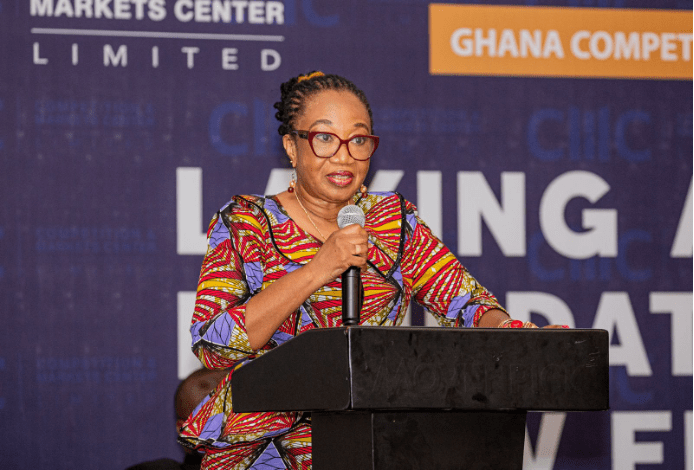
As the Bill moves toward Parliament, the Managing Director of the Competition & Markets Centre, Kofi Datsa, noted that this is the last opportunity for the private sector to influence the regulatory architecture, noting that once the Bill is enacted, the rules for merger control and cartel enforcement will be “fixed.”
The seminar was a call for the business community – lawyers, accountants, and directors – to engage with the drafts now to ensure the law is built on sound commercial principles.
READ ALSO: ZEN IPO Oversubscribed As Investors Pile In Ahead of Listing