Institute for Energy and Resource Policy Planning (IERPP) has lashed out at the government for what it describes as a deliberate attempt to shield the Ghana Gold Board (GoldBod) from necessary public and legislative scrutiny.
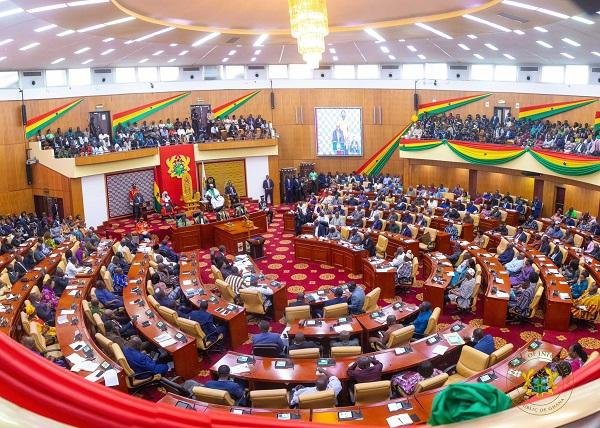
The policy think tank’s criticism follows the recent decision by Parliament to vote down a motion for an Ad Hoc Committee to investigate the Gold-for-Reserves (G4R) scheme, a move IERPP claims undermines the principles of transparency and fiscal discipline.
According to the Institute, the refusal to allow a formal probe into the $214 million in quasi-fiscal losses reported by the IMF suggests a protective cocoon has been woven around GoldBod to prevent a true accounting of the state’s mineral wealth.
“The continued refusal to subject the Gold-for-Reserves scheme to an independent forensic audit is a slap in the face of the ‘Resetting Ghana’ agenda. We cannot claim to be restoring hope while simultaneously burying $214 million in losses under the guise of strategic policy. Real accountability requires looking into the books, not just accepting curated data from the very institutions being questioned.”
IERPP
Expanding on this stance, the IERPP noted that the government’s reliance on the Bank of Ghana’s recent “exoneration” of GoldBod is insufficient to address the deep-seated structural concerns within the G4R framework.
While GoldBod CEO, Sammy Gyamfi has argued that the $214 million expenditure was a “strategic economic decision” that yielded over $10 billion in foreign exchange, the IERPP maintains that such claims must be validated by independent auditors rather than internal state reports.
The Institute further highlighted that despite the cedi’s 40% appreciation in 2025 and the achievement of reserve targets three years ahead of schedule, the lack of a clear separation between the central bank’s balance sheet and GoldBod’s operational costs creates a “gray zone” ripe for mismanagement.
The Call for a Forensic Review and the Perils of “Shielding”

The IERPP has intensified its demand for a comprehensive forensic review of all gold-backed transactions conducted since the inception of the G4R program in 2022.
This demand is rooted in the belief that the current “accounting smoke and mirrors” prevents the public from knowing the true cost of stabilizing the currency.
In a sharp critique, the Institute argued that by blocking a parliamentary probe, the government is essentially “sanctifying opacity” in a sector that has historically been the lifeblood of the Ghanaian economy.
Research shows that when state agencies like GoldBod are shielded from accountability, it often leads to a “leakage of mineral rents” that could otherwise fund critical infrastructure or debt servicing.
The IERPP warns that the negative impact of this shielding is already visible in the public’s eroding trust in the mining value chain.
Without a forensic review, the true margins earned by licensed aggregators and the specific terms of the gold swaps remain “shrouded in executive privilege,” which risks repeating the cycles of “corruption and resource-drain” that have plagued previous administrations.
Governance at a Crossroads: The Governance Advisory Council vs. GoldBod
The timing of this controversy is particularly poignant given the recent passage of the Governance Advisory Council Bill, 2025.
While President Mahama’s administration touts this as a “non-partisan body to enhance accountable governance,” the IERPP argues that the Council’s credibility will be dead on arrival if it cannot address the “GoldBod conundrum.”
There is a growing concern that the government is creating new oversight bodies while simultaneously disabling the oversight powers of Parliament.
The IERPP pointed out that the proposed transition of GoldBod to full independent operational control in 2026 makes a forensic audit of its “agency years” even more critical.
If GoldBod enters its next phase without a clean bill of health from an independent body, the “quasi-fiscal losses” of the past could become the systemic deficits of the future.
The Institute concluded that for the “Accra Reset” to be more than a slogan, it must start with a transparent breakdown of the $214 million loss, ensuring that “strategic interventions” do not become a permanent excuse for “unaccountable spending.”
READ ALSO: Corporate Strategy: Navigating Ghana’s New Competition Architecture