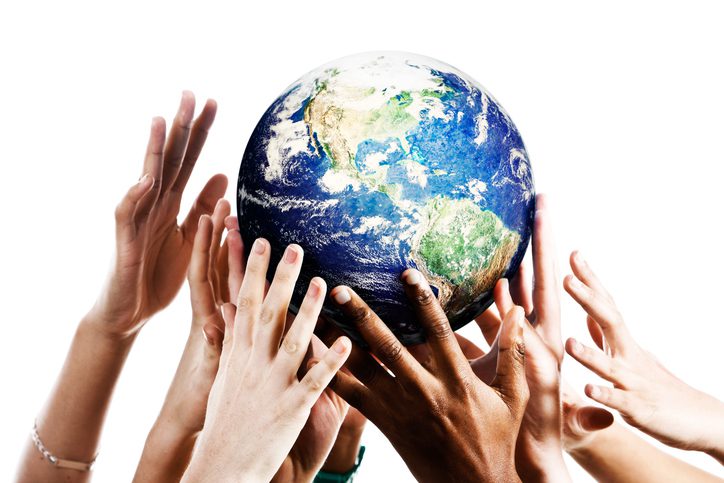
A new global study has warned that the global population has already surpassed the Earth’s ability to sustain it, raising urgent concerns about food security, environmental stability, and long-term human wellbeing.
The research indicates that current patterns of population growth and resource consumption are placing unprecedented strain on the planet’s natural systems, pushing them beyond their capacity to recover and support future generations.
The study published in Environmental Research Letters, presents a detailed examination of global population trends spanning more than 200 years and concludes that humanity is now operating far outside the Earth’s ecological boundaries, with the imbalance between human demand and natural supply continuing to widen.
While the findings paint a stark picture, researchers note that slowing population growth and increasing awareness of sustainability could still help mitigate the most severe consequences.
Lead author, Professor Corey Bradshaw of Flinders University described the situation as a clear biological warning that humanity is living beyond its means.
“Earth cannot keep up with the way in which we are using resources. It cannot support even today’s demand without major changes, with our findings showing that we are pushing the planet harder than it can possibly cope.”
Professor Corey Bradshaw
The research team, which included the late Professor Paul Ehrlich, applied ecological growth models to analyse how population size and growth rates have evolved over time.
One of the most significant findings is the identification of a turning point in the mid-twentieth century. Before the 1950s, global population growth accelerated alongside increasing human numbers, driven by innovation, expanding energy use, and technological progress. However, this pattern began to shift in the early 1960s, when growth rates started to decline even as the total population continued to rise.
Professor Bradshaw described this as the onset of a “negative demographic phase.”
“It means that adding more people no longer translates into faster growth. When we examined this phase, we found that the global population is likely to peak somewhere between 11.7 and 12.4 billion people by the late 2060s or 2070s, if current trends hold.”
Professor Corey Bradshaw
However, researchers caution that this level far exceeds what the Earth can sustainably support. They argue that present population levels have only been made possible through heavy reliance on fossil fuels and the accelerated depletion of natural resources factors that are contributing to climate change and environmental degradation.
According to the findings, a sustainable global population would be significantly lower, estimated at around 2.5 billion people if resources were used efficiently and equitably. This sharp contrast with the current global population of approximately 8.3 billion underscores the scale of overconsumption and ecological overshoot.
The study further suggests that this overshoot has been masked for decades by industrial growth and fossil fuel use, which have temporarily expanded the planet’s carrying capacity while undermining its long-term resilience.
Further analysis reveals a strong relationship between rising population levels and increasing environmental pressures, including higher global temperatures, greater carbon emissions, and expanding ecological footprints.
Despite the gravity of these findings, researchers emphasise that the situation is not one of immediate collapse but rather a gradual intensification of global challenges. The consequences of exceeding Earth’s ecological limits are already becoming evident in the form of climate disruptions, biodiversity loss, declining food and water security, and widening social inequalities.
Balancing Growth and Resources in a Finite World

The study highlights the urgent need to rethink how global societies manage both population growth and resource consumption to achieve long-term sustainability.
Researchers argue that environmental challenges cannot be addressed in isolation and require a coordinated approach that considers the combined impact of human numbers and consumption patterns.
Professor Bradshaw warns that the strain on the planet’s life-support systems is already significant and could worsen without meaningful intervention. “Smaller populations with lower consumption create better outcomes for both people and the planet,” he said, adding, “The window to act is narrowing, but meaningful change is still achievable if nations work together.”
He further indicated that the team hopes the findings will encourage governments, organisations, and communities to plan for the long term, recognise Earth’s environmental limits, and focus on strategies that reduce consumption, stabilise population, and protect natural systems. “The choices we make over the coming decades will determine the wellbeing of future generations and the resilience of the natural world that supports all life,” he noted.
READ ALSO : US Warned Against Ground Invasion In Iran