The Association of Ghana Industries (AGI) has issued a stark warning regarding the rapid deterioration of the Tema West Industrial Enclave, as a delegation confronted the Tema West Municipal Chief Executive (MCE), Ludwig Teye Totimeh, over a crisis that threatens to paralyze some of the nation’s largest manufacturing entities.
Led by the AGI’s Director of Policy and Research, Mr. John Defor, the Association argued that the current state of the road network is no longer a mere inconvenience; it is a direct tax on productivity and a systemic risk to the government’s broader economic transformation agenda.
With the onset of the rainy season, the already deplorable road conditions are expected to transition from difficult to “impassable,” effectively cutting off vital logistics corridors. For the AGI this amounts to the structural integrity of Ghana’s premier industrial hub being brought under siege.
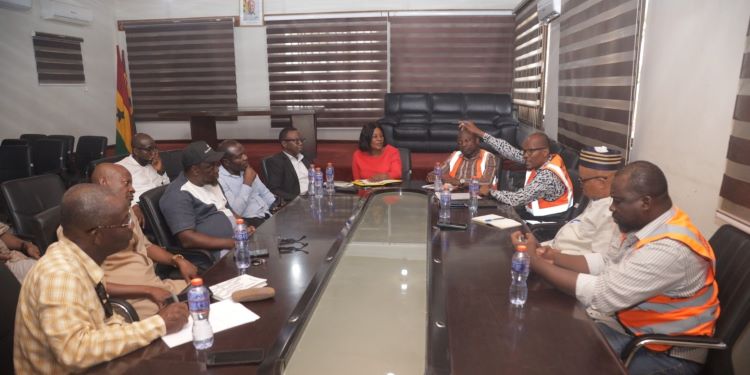
“The Association held a meeting with the Tema West Municipal Chief Executive to deliberate on urgent measures to address the deteriorating road conditions within the Tema West Industrial Enclave. During the engagement, Mr John Defor, indicated the critical impact of poor road infrastructure on industrial productivity”
Association of Ghana Industries
For an administration currently promoting a 24-Hour Economy and a GEXIM reset focused on export-led growth, the collapse of infrastructure in a core industrial zone represents a fundamental policy contradiction. The AGI made this clear, that Ghana cannot build a 24-hour industrial powerhouse on a foundation of 19th-century mud tracks.
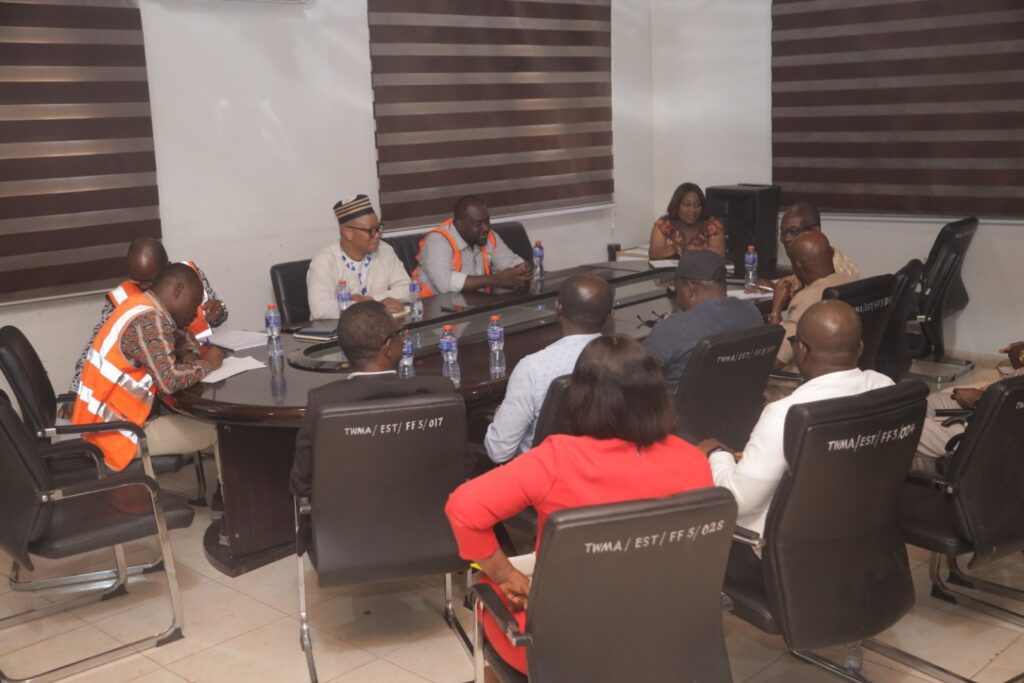
The meeting featured a rare, unified front from industrial giants including Kasapreko PLC, Polytank GH Ltd, and DPS Industries. These are not nascent startups; they are the anchors of Ghana’s manufacturing sector, and their testimony provided a grim quantification of infrastructure drag.
The companies reported significant spikes in logistics and maintenance costs, as heavy-duty vehicles suffer frequent breakdowns due to cratered roads. Furthermore, the inability to meet delivery timelines is damaging the Made in Ghana brand efforts, particularly for those looking to compete within the AfCFTA framework where speed-to-market is a competitive necessity.
Beyond the roads, a second, equally debilitating crisis that surfaced was persistent water shortages. For water-dependent industries like beverage manufacturing and chemical processing, the lack of a reliable municipal supply is an existential threat.
The irony was not lost on the stakeholders present: while the national narrative focuses on industrial readiness, the basic utilities required for 20th-century manufacturing – water and asphalt – remain elusive in Tema West.
Municipal Response
The MCE, Ludwig Teye Totimeh, acknowledged the severity of the grievances, offering the Municipal Assembly’s commitment to “addressing the road challenges” and engaging higher authorities on the water supply crisis.
The AGI noted that its focus is now on the accountability gap – the distance between the taxes and levies collected from these industrial giants and the actual reinvestment into the enclave’s maintenance, shifting its advocacy strategy from polite requests to rigorous technical demands.
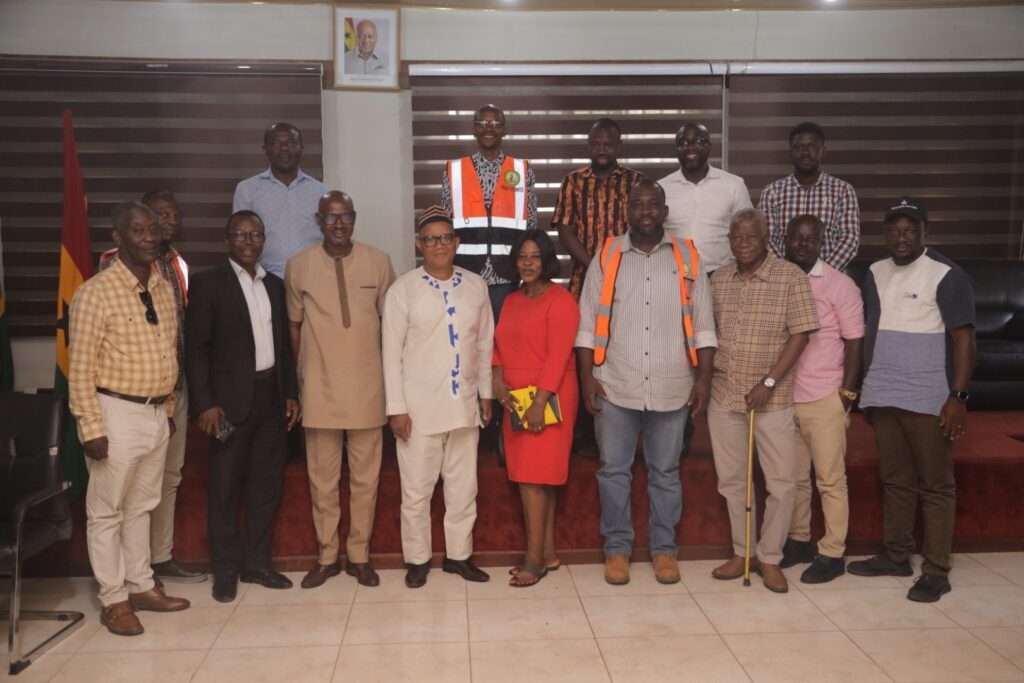
The Association called for a prioritized emergency repair schedule before the rains render the enclave a “no-go zone for heavy haulage.”
There was also a call for a more decentralized approach to infrastructure management, where a portion of the revenues generated within industrial enclaves is ring-fenced for the immediate upkeep of that specific zone. Without such a mechanism, the enclave remains a cash cow that is being milked to exhaustion without being fed.
The crisis in Tema West serves as a case study for the “hard ceiling” that physical infrastructure places on economic growth. If a pallet of goods from Polytank or Kasapreko cannot reach the port or the consumer because of a mud-trapped truck, the “macroeconomic recovery” celebrated in Accra becomes irrelevant to the factory floor.
Furthermore, this infrastructure deficit undermines the 24-Hour Economy initiative at its most vulnerable point: the night shift. Operating at night requires superior lighting, clear road markings, and safe surfaces to prevent accidents and ensure security. In its current state, the Tema West enclave is a high-risk environment for night-time logistics.
The AGI explained that to truly revamp the economy, the government must realize that industrialization is as much about civil engineering as it is about monetary policy, and ensure that authorities properly fulfill their maintenance duties.
“The AGI reaffirmed its commitment to continuous industrial advocacy for improved infrastructure, recognizing its vital role in enhancing industrial growth, competitiveness, and overall economic development”
Association of Ghana Industries

As the meeting concluded, the AGI made it clear that this was not a one-off engagement, as it declared its intent to monitor the Municipal Assembly’s progress with clinical precision, noting that the stakes are too high for further delay.