Minority caucus in parliament has raised serious concerns regarding the structural integrity of the Ghana Gold Board (GoldBod) Act, cautioning that the current legislative framework contains “loopholes and gaps” that threaten the nation’s fiscal health.
Speaking on the Minority’s position, the Member of Parliament for Ofoase-Ayirebi and Ranking Member on Parliament’s Economy and Development Committee, Hon. Kojo Oppong Nkrumah asserted that while the opposition had previously offered technical suggestions to refine the programme’s start-up phase, a “good chunk” of that advice was discarded by the government.
This rejection, he argued, has led to a flawed system where regulatory and commercial roles are dangerously intertwined, potentially leading to the misapplication of funds and inefficient oversight of the precious minerals sector.
“The minority offered a lot of suggestions that listen, this programme we started it, we know the loopholes, we know the gaps. For example, don’t mix the role of the regulator with the role of the trader. Because if you do, you may end up funding regulatory functions in ways that you shouldn’t.”
Hon. Kojo Oppong Nkrumah
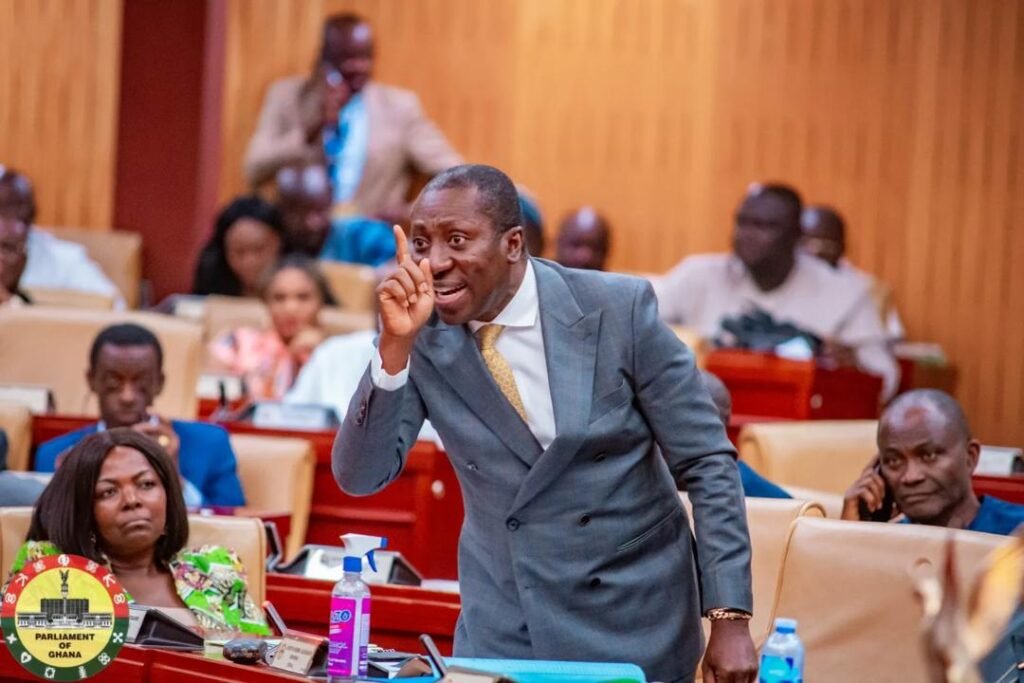
The lawmaker further elaborated that the current GoldBod structure suffers from a fundamental conflict of interest by mixing the role of the regulator with that of the trader.
According to Mr. Oppong Nkrumah, this lack of separation forces the government into a precarious position where it must pay “bonuses” to gold dealers simply to discourage smuggling a practice he describes as a net loss for the state.
He highlighted a worrying trend where approximately 15 percent of funds released by the Bank of Ghana for gold purchases fail to return to the state’s coffers, instead being consumed by an array of “handling charges, assaying charges, and bonus payments.”
This 15 percent leakage on every $10 million transaction represents a significant financial drain that the Minority intends to plug through legislative intervention.
Structural Flaws and the “Smuggling Bonus” Trap

The primary challenge identified in the current GoldBod Act is the blurred line between market participation and market policing. In traditional extractive governance, the regulator remains an independent arbiter to ensure fair play, while traders compete on a commercial basis.
However, by acting as both the “referee and a player,” GoldBod has created a system where regulatory functions are being funded through commercial margins that are already thin.
This “current structure” has forced the government to introduce artificial price incentives to keep gold within formal channels.
Under the current law, the definition of “hoarding” has also become a point of contention, specifically impacting local jewellers and private sector operators who require physical stock for their craft.
The Minority argued that the broadness of these definitions criminalizes legitimate business activities, further driving the trade underground.
By paying a “bonus to the gold dealers so that they don’t smuggle,” the government is essentially subsidizing compliance, which critics argue is a sign of a failing regulatory framework that cannot enforce its own rules without financial bribery.
Financial Leakages and the 15 Percent Shortfall
The financial data presented by the Ranking Member suggests a systemic inefficiency in how the Bank of Ghana (BoG) interfaces with the Gold Board.
For every $10 million tranche released to GoldBod for gold procurement, only $8.5 million in value effectively returns to the central bank’s reserves.
The remaining $1.5 million representing the 15 percent loss is lost to “all sorts of charges,” including assaying and the aforementioned bonuses.
This leakage undermines the very objective of the “Gold for Reserves” initiatives, which were designed to strengthen the Cedi and build external buffers.
If the cost of acquisition remains this high, the net benefit to the Ghanaian economy is severely diminished.
The Minority contends that an amendment is necessary to standardize these charges and remove the “bonus” requirement by creating a more robust, non-incentive-based enforcement regime that makes smuggling more difficult rather than making legal trade more expensive for the state.
The Path to Reform: Private Member’s Bill
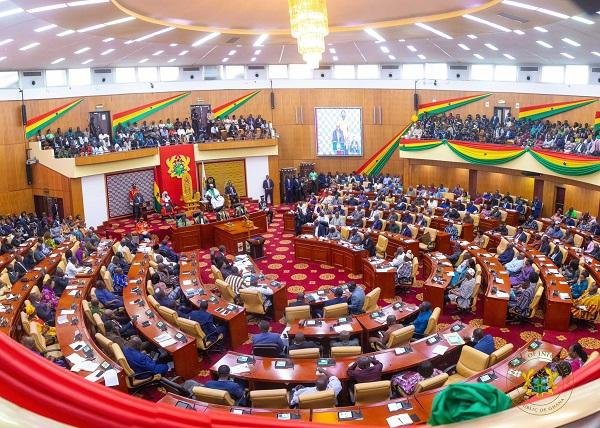
In a bid to rectify these “mistakes that have been made,” Hon. Kojo Oppong Nkrumah indicated that the Minority is exploring the introduction of a Private Member’s Bill to force amendments to the Act.
“We are happy to take your input even as at now and if it is possible for us to come by private member’s bill to get amendments, we’ll explore that. If we cannot do it by a private member’s bill and we have to wait for the next NPP administration to make those corrections then we’ll make those corrections.”
Hon. Kojo Oppong Nkrumah
This legislative move aims to provide “corrections that will serve the interest of particularly private sector operators” and ensure the gold trade is transparent and profitable for the state.
The proposed amendments seek to clearly demarcate the Gold Board’s powers, refine the legal definition of hoarding to protect jewellers, and eliminate the systemic leakages that currently plague the Bank of Ghana’s procurement cycles.
“What we can assure you is that this exercise… we learned a lot of lessons from it,” Oppong Nkrumah noted, signaling that if the current administration fails to adopt these changes, the Minority is prepared to make them a centerpiece of their future economic policy.
By shifting from a “trader-regulator” hybrid to a more streamlined and transparent entity, the opposition believes Ghana can finally stop “losing money” on its most precious commodity and ensure that 100 percent of the value intended for reserves actually reaches the central bank.
READ ALSO: Albanese Warns Of Potential Economic Pain In Coming Months