President John Dramani Mahama has reaffirmed the long standing relationship between Ghana and Zimbabwe, describing it as a partnership that has endured through time and continues to evolve with purpose.
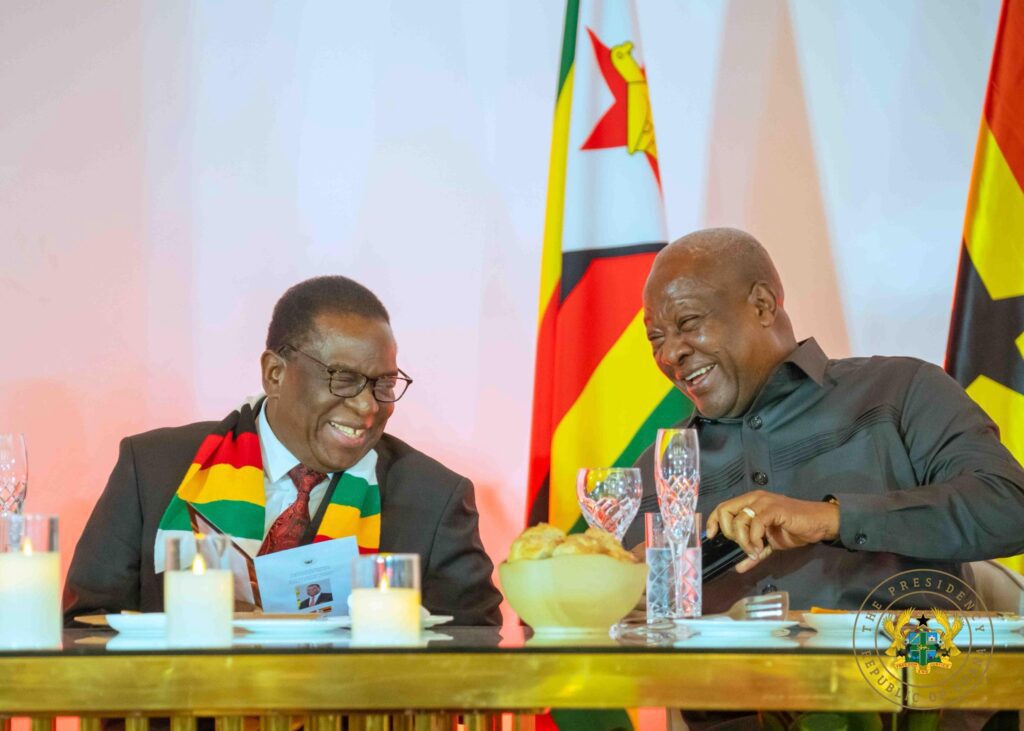
Speaking at a state banquet in honour of visiting Zimbabwean President Emmerson Mnangagwa, the President emphasized that the bond between the two nations extends beyond formal diplomacy into shared history and personal connections.
The occasion formed part of a three-day state visit aimed at strengthening bilateral relations between the two countries. In his remarks, President Mahama highlighted that the gathering was not merely ceremonial but a meaningful reflection of a relationship built on trust, solidarity, and mutual respect.
“Tonight is not merely ceremonial. It is a celebration of a relationship shaped by history and that is enriched by shared experiences and sustained by genuine human connections.”
President John Dramani Mahama
He noted that Ghana and Zimbabwe are tied by a narrative rooted in the broader African struggle for liberation, one that continues to shape their cooperation today. According to him, the enduring nature of the relationship reflects a shared commitment to unity and progress across the continent.
History and Personal Bonds Shape Relations
President Mahama traced the origins of the partnership to the era of African independence movements, where leaders such as Kwame Nkrumah and Robert Mugabe played pivotal roles in advancing the ideals of freedom and dignity.

He recalled that the connection between the two nations is not only political but also deeply personal. President Mugabe’s time in Ghana as a teacher and intellectual, as well as his marriage to Sally Mugabe, a Ghanaian, were cited as key moments that strengthened ties between the peoples of both countries.
In a lighter moment during his speech, President Mahama referred to this historical connection by joking about an outstanding “Lobola,” a traditional dowry, drawing laughter while underscoring the familial nature of the relationship.
He explained that such cultural references symbolize the enduring bonds that go beyond official agreements. “These ties are not merely symbolic,” he said, adding that they represent a continuous reminder of the strength of family and friendship between the two nations.
Beyond historical ties, both leaders used the occasion to signal their intention to deepen cooperation in areas such as trade, investment, and economic transformation. President Mahama indicated that upcoming bilateral meetings would focus on translating shared history into tangible benefits for citizens.
He revealed that discussions at Peduase Lodge would culminate in the signing of a memorandum of understanding aimed at strengthening collaboration between the two countries. The agreement is expected to open new opportunities for economic engagement and joint development initiatives.
The President stressed that the partnership must move beyond sentiment to deliver real outcomes, particularly in sectors that can drive growth and job creation. He emphasized that both nations recognize the opportunities available and are committed to working together to harness them effectively.
Africa’s Shared Future and Strategic Vision
Placing the Ghana-Zimbabwe relationship within a broader continental context, President Mahama highlighted the importance of African unity in addressing current global challenges. He pointed out that the continent is at a defining moment, with renewed determination to shape its own development path.
He noted that Zimbabwe’s experience under sanctions demonstrates the resilience required for African nations to navigate external pressures while pursuing sustainable growth. In this regard, he described partnerships like that between Ghana and Zimbabwe as essential in building collective strength.
The President also underscored the significance of the African Continental Free Trade Area, describing it as a historic opportunity to boost intra African trade and strengthen value chains across the continent.
He argued that closer collaboration between countries like Ghana and Zimbabwe would be critical in maximizing the benefits of such initiatives.
In addition, he called for a unified African voice on global issues, including reforms to international financial systems and efforts to address historical injustices. According to him, cooperation among African nations is necessary to ensure that their perspectives are adequately represented on the global stage.
Strengthening People to People Connections
President Mahama emphasized that the true strength of bilateral relations lies in the connections between people, rather than agreements alone. He pointed to examples such as the role of Vice President Jane Naana Opoku-Agyemang as Chancellor of the Women’s University in Africa as evidence of growing collaboration.
He described these engagements as meaningful links that reinforce mutual understanding and deepen cooperation over time. Such relationships, he said, provide the foundation for sustained partnership and shared progress.
The President expressed confidence that President Mnangagwa’s visit would further strengthen these ties, allowing him to experience Ghana’s culture and hospitality while reinforcing the sense of shared identity between the two nations.

As the state visit continues, both countries are expected to build on their historic relationship by pursuing practical avenues of cooperation. The planned agreements and discussions signal a commitment to transforming long standing ties into measurable outcomes.
President Mahama concluded by expressing optimism about the future of Ghana Zimbabwe relations, stating that the partnership remains anchored in mutual respect and a shared vision for development. He called for continued unity and collaboration, emphasizing that the strength of the relationship lies in its ability to adapt and grow.
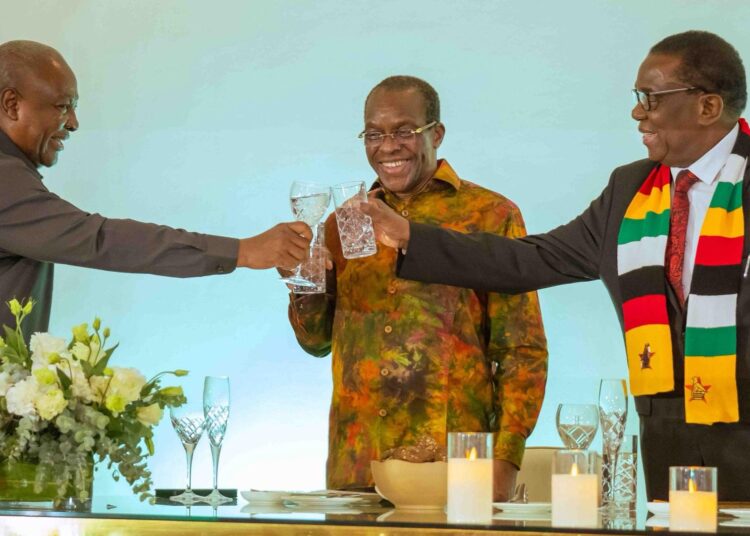
The banquet ended with a toast to the prosperity of Zimbabwe and the enduring friendship between the two nations, marking another chapter in a relationship shaped by history and guided by a common purpose.