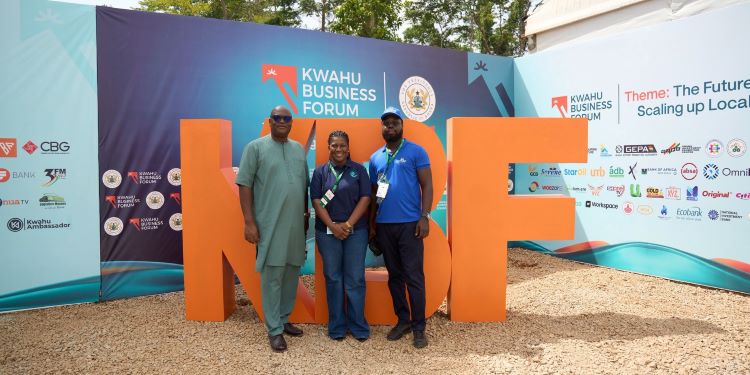
The Chief Executive Officer (CEO) of the Ghana Investment Promotion Centre (GIPC), Mr. Simon Madjie has provided a data-backed validation of the Eastern Region’s transition from a scenic retreat to a high-value industrial powerhouse at the Kwahu Business Forum 2026.
Speaking on the sidelines, Mr. Madjie presented a portfolio that effectively decouples the region’s economic identity from seasonal tourism, revealing a sophisticated investment landscape that has quietly amassed billions in capital commitments – making the Eastern Region one of the primary engines of Ghana’s economic development.
“From 1994 to December 2025, the region recorded 44 wholly Ghanaian-owned projects worth over US$1.9 billion across agriculture, manufacturing, services, tourism, construction and trade, alongside 164 foreign projects spanning agriculture, manufacturing, services, tourism, construction, export and general trading”
Ghana Investment Promotion Centre
For the GIPC, these statistics are staggering in their scope and consistency, especially as they are matched by so many foreign-led businesses, indicating that the region’s proximity to Accra, coupled with its vast natural resource base, remains a premier destination for global capital investment.
The heart of Mr. Madjie’s presentation was the infrastructure synergy currently unfolding across the regional landscape, with the GIPC betting heavily on the 198.7km Accra-Kumasi Expressway, a dual-carriageway redefining the logistics of the region.

By passing through strategic nodes like Adeiso, Asamankese, Akyem Oda, and Ofoase, the expressway will effectively turn the Eastern Region into a proper logistics hub. This will not merely be about travel time; it will be about reducing the cost of doing business for every manufacturer situated along the corridor.
Complementing this road network is the modernization of the Eastern Railway Line. The centre noted that in the 2026 industrial climate, rail is the ultimate supply chain resilience tool, and shifting heavy cargo- particularly bulk agricultural inputs and pharmaceutical raw materials – from road to rail, enables a level of operational efficiency that was previously impossible.
This multi-modal connectivity is the baseline for the 24-Hour Economy, ensuring that goods move seamlessly from the Eastern industrial clusters to the Tema Port and the AfCFTA markets beyond.
Poultry, Cassava, and Pharma
The GIPC is moving away from fragmented project approvals toward specialized industrial clusters, as Mr. Madjie highlighted three pipeline projects that are set to fundamentally alter Ghana’s import-export balance.
First is the National Poultry and Feed Corridor, a strategic initiative designed to break Ghana’s reliance on imported frozen chicken. It will cluster poultry production with large-scale maize and soy cultivation in the East, creating a vertically integrated protein chain.
Second is the Kwahu Cassava Agro-Industrial Park, which will target the high-value industrial starch and ethanol markets. Finally, the development of a pharmaceutical manufacturing cluster near Akabusi positions the Eastern Region as the healthcare laboratory of West Africa.
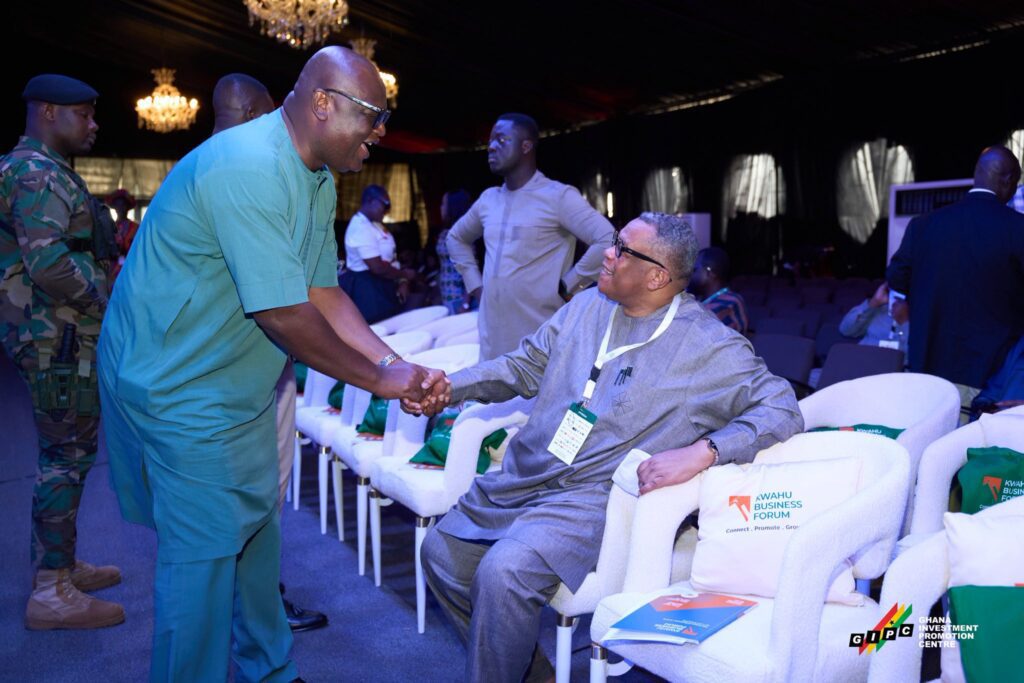
These clusters, according to the GIPC, will be crafted to benefit from “economies of agglomeration,” where shared infrastructure, specialized labor pools, and proximity to the Accra-Kumasi Expressway create a formidable competitive advantage for any firm operating within the Akabusi-Kwahu axis.
“He pointed to these major pipeline projects alongside ongoing initiatives such as Volta Lake aquaculture, Nobi Agriculture expansion, among others,” the Centre further noted.
While the multi-billion-dollar projects grab the headlines, the GIPC reiterated its focus remains acutely on SME Development. It emphasized how these large-scale industrial projects – backed by government policy and infrastructure – will strengthen the domestic supply chain.
A pharmaceutical plant in Akabusi, for instance, requires local packaging, logistics, and maintenance services. This is the multiplier effect in action, where anchor investments create a stable demand for thousands of Ghanaian-owned small businesses.
To facilitate this, the GIPC has committed to providing “end-to-end investor support,” in hopes that streamlining the registration process and offering proactive post-investment care, ensures that the big project expansions are not just isolated success stories, but part of a broader, regional economic surge.
The disclosure by Mr. Simon Madjie marks a significant point in the Mahama administration’s regional development strategy, with the Eastern Region graduating from being a resource basin to becoming a “sophisticated industrial corridor.”
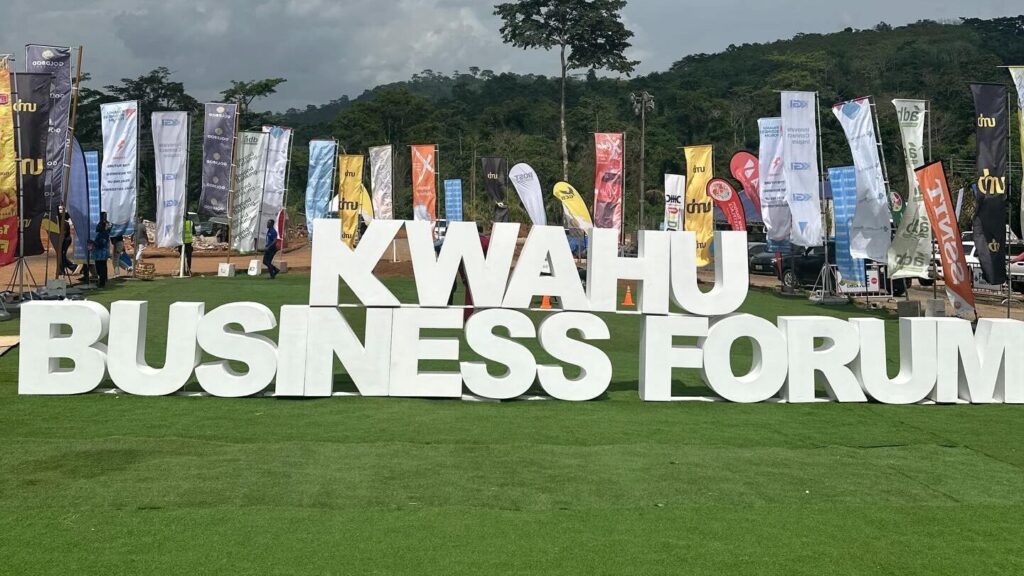
As Ghana looks toward the remainder of 2026, the success of the Eastern Region will be the litmus test for its economic progression. If the pharmaceutical clusters and agro-industrial parks can leverage the new infrastructure to scale production, Ghana will have successfully built a self-sustaining economic model that does not rely on raw material exports.
READ ALSO: African Banks Outperform Global Rivals Despite FX