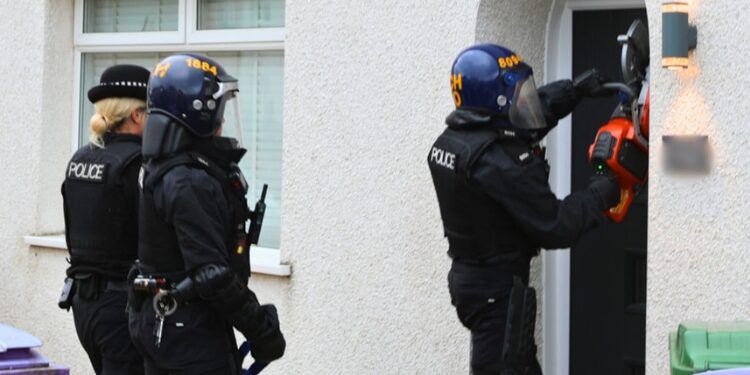
The UK government has intensified its crackdown on county lines drug networks, shutting down more criminal lines, arresting gang leaders and removing dangerous weapons from the streets at unprecedented levels.
This points to a marked escalation in enforcement efforts, as governments step up operations to dismantle organized crime groups responsible for drug trafficking, violence and the exploitation of vulnerable young people nationwide.
Newly released data indicates that 2,740 county lines were shut down in 2025, alongside 1,657 gang leaders being charged and 961 knives seized. Since the election, the cumulative impact of these operations has seen 3,785 lines closed, 2,175 gang leaders charged and 1,229 knives removed from circulation.
Basically, county lines refers to a model of drug distribution in which gangs transport narcotics from major urban centres into smaller towns, often exploiting children and leaving behind a pattern of violence and coercion.
To counter this, the government continues to fund policing efforts through the County Lines Programme, aimed at dismantling these criminal networks. The programme supports a range of activities including intelligence gathering, targeted raids, and drug seizures across transport systems. It also focuses on prosecuting gang leaders and disabling the communication lines used to coordinate illegal operations.
According to Crime and Policing Minister, Sarah Jones, the government is shutting down more criminal lines, busting more gang leaders and seizing more dangerous knives off our streets than ever before.

“I will not rest in the relentless pursuit of these horrific criminals that leave a trail of violence and exploitation in their wake. The Government will halve knife crime within a decade, saving lives and protecting communities.”
Sarah Jones
The programme has also delivered tangible public safety benefits, contributing to a 25% decline in hospital admissions for stabbing incidents in targeted areas and preventing more than 800 stabbings annually. These outcomes emphasize the broader impact of sustained and coordinated enforcement, particularly in communities most affected by organised crime and serious violence.
The latest figures come ahead of the government’s upcoming strategy to halve knife crime within the next decade. The plan, titled “Protecting Lives, Building Hope,” is designed to save lives, improve prospects for young people and strengthen community safety. It will combine early intervention measures, targeted support for at-risk individuals and enhanced policing to identify and prosecute offenders.
Intelligence-Led Policing Drives Record Results in County Lines Operation
Building on current progress, the government has committed more than £34 million this year to the County Lines Programme to sustain pressure on violent gangs involved in drug trafficking and child exploitation.
This funding package includes over £28 million allocated to policing through the Police Funding Settlement, equipping forces with the resources needed to disrupt criminal operations, shut down active lines and safeguard vulnerable individuals.
Moreover, operational efforts have also been bolstered through coordinated enforcement initiatives. The most successful County Lines Intensification Week, held from 2–8 March, saw police forces across England, Wales and Scotland carry out focused action against these networks.
Within that single week, officers shut down 355 lines, made 2,180 arrests and safeguarded 1,348 individuals highlighting the effectiveness of intelligence-led policing and cross-border collaboration.
Detective Superintendent Dan Mitchell, Head of the National County Lines Coordination Centre (NCLCC), said that “as the results from our latest intensification week demonstrate, tackling County Lines remains a top priority for policing.”

“Since the Home Office-funded County Lines Programme was established, we are now closing more lines, charging more violent offenders, and protecting more children and adults at risk of exploitation and other harms than ever before.
“As County Lines gangs’ methods evolve, our policing approach led by the NCLCC does too. We remain committed to pursuing high-harm county lines and those controlled by violent drug dealers, so that we can prevent harm, protect children and vulnerable adults, and disrupt criminal activity.”
Dan Mitchell
Legislative Action and Safeguarding Measures Strengthen Fight Against Exploitation
Alongside enforcement gains, the government is advancing legislative measures to strengthen its response to county lines activity and the exploitation that underpins it. A key element of this approach is the introduction of a new child criminal exploitation offence through the Crime and Policing Bill, which will allow authorities to prosecute adults who groom and coerce children into criminal activity.
The Bill will also introduce new court orders designed to prevent exploitation before it occurs or to stop it from happening again.
Kathy Betteridge, Director of Anti-Trafficking and Modern Slavery for the Salvation Army, expressed support for the government’s efforts to address county lines, stating that, “for future investment to succeed, it must continue to prioritise early intervention, trusted relationships and long-term support to protect people from harm and help them build safer futures.”
READ ALSO : President Mahama Attributes Power Fluctuations to Rapid Urban Growth