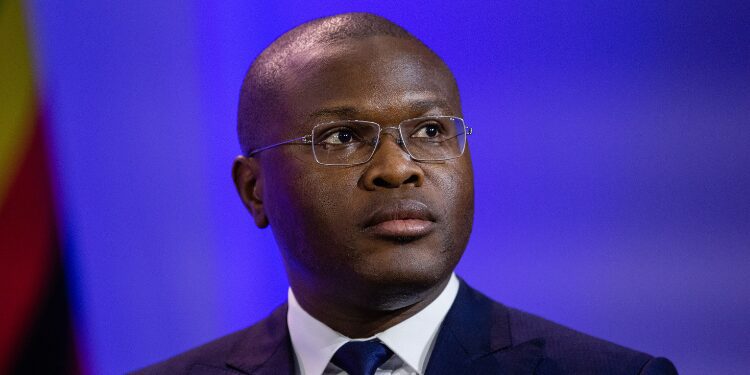
Benin’s Finance Minister, Romuald Wadagni, has emerged as the front-runner for the upcoming presidential election contest.
The country’s long-serving finance minister, positions himself as the leading contender in a pivotal presidential election shaped by security concerns, economic continuity, and a tightly managed political environment.
The 49-year-old, widely regarded as a technocrat rather than a traditional politician, is expected to secure victory as voters head to the polls on Sunday, marking a significant transition from his behind-the-scenes role to the highest office in the state.
His candidacy follows years of close collaboration with outgoing president Patrice Talon, whose administration has overseen substantial economic reforms and who is constitutionally barred from seeking another term.
Wadagni’s rise has been closely tied to the economic direction of the Talon administration, during which he has served as a key architect of fiscal policy. Prior to entering government, he built an international career at Deloitte and later developed further academic credentials through studies at institutions such as Harvard University and the Grenoble School of Management.
His professional expertise has been central to his public image as a competent manager of public finances, with campaign messaging highlighting achievements such as budget expansion and sustained economic growth. Supporters point to these indicators as evidence of effective stewardship and a foundation for continued development.
At the political level, the election reflects a environment in which opposition forces have been significantly weakened over recent years. With limited competition on the ballot, Wadagni faces only one rival candidate, Paul Hounkpe, representing the Cowry Forces for an Emerging Benin party.
The broader opposition, including major parties that have struggled to meet candidacy requirements, has been largely absent from the race. This dynamic has contributed to perceptions that the electoral outcome is largely predetermined, reinforcing concerns about the narrowing of political space within the country’s governance framework.
Romuald Wadagni indicated explicitly during his recent campaign that, if elected, he will restore the country’s priorities.
“I had the honor of managing one of your most precious assets: your money. If elected president, I will do the job with the same seriousness and dedication.”
Romuald Wadagni
Rising Extremism Loom Over Political Sovereignty
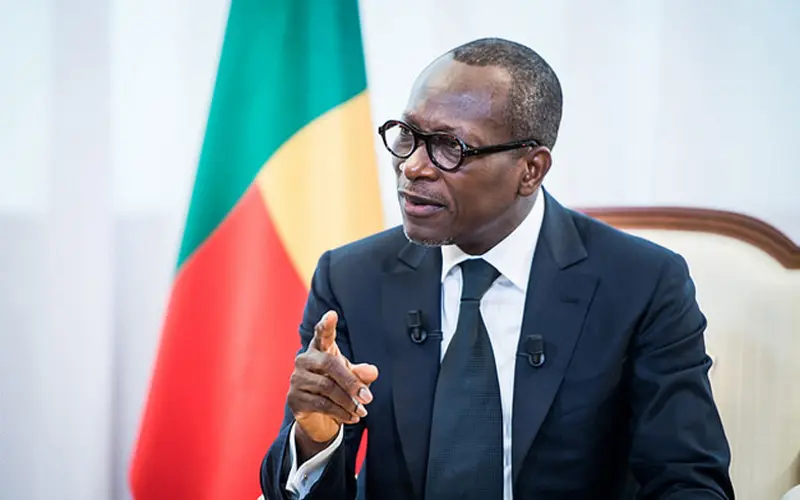
Benin has faced escalating threats in its northern regions, particularly along its borders with Niger and Nigeria, where armed groups linked to al Qaeda and Islamic State networks have increased their presence. These groups have exploited remote terrain and porous borders to carry out attacks, targeting both military personnel and civilian areas. The resulting instability has heightened public concern and placed security policy at the forefront of national priorities.
The situation was exacerbated by a failed coup attempt in December, when dissatisfied troops briefly took control of official media and sought to undermine government authority.
The incident prompted a swift regional response, including air support from neighboring Nigeria and coordination with the Economic Community of West African States, an ECOWAS bloc responsible for regional stability and democratic governance.
Following the intervention, the government detained approximately 100 individuals suspected of involvement, reinforcing the government’s emphasis on maintaining control amid internal and external pressures.
Wadagni’s campaign has sought to address these security challenges while demonstrating continuity in governance. He has conducted rallies in northern cities such as Parakou and Tanguieta, regions that have experienced heightened exposure to militant activity.
His proposals include strengthening local security through municipal policing structures and expanding state presence in vulnerable areas. These measures are presented alongside broader economic initiatives aimed at decentralizing development and creating regional hubs to distribute industrial and tourism investments more evenly across the country.
However, David Kofi Asante-Darko, a research analyst with the West Africa Democracy Solidarity Network (WADEMOS) and CDD Ghana, believes that if Wadagni becomes president, his first problem would be political rather than technocratic.
He further stated that the post-Talon period is unlikely to be stable. Instead, it may exacerbate tensions inside the ruling coalition as its constituent parties strive to express their independence and situate themselves in a new balance of power.
“It remains to be seen how he will navigate this moment. He may govern in the mould of his powerful patron, or, like other perceived protégés placed in similar situations such as President Tshisekedi in the Democratic Republic of Congo seek to carve out his own political identity and distance himself from his predecessor. Either path carries risks.”
David Kofi Asante-Darko
The likely outcome, per the analyst is a period of tension, resistance, and prolonged consequences for governance and the economy.
READ ALSO : NPA Boss Hints Tough Planned Regulations to Curb Fuel Tanker Accidents