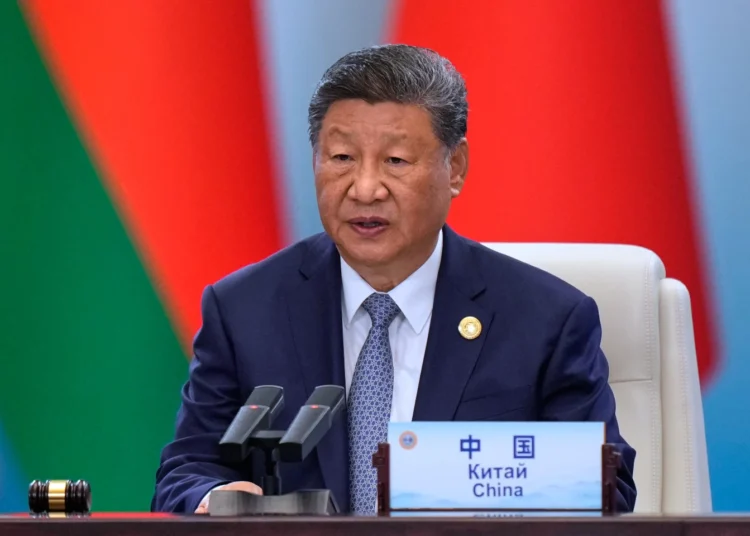
Chinese President Xi Jinping has touted the value of China-Russia relations, saying that the stability and certainty of the two nations’ ties are particularly “precious” in the face of an international landscape intertwined with change and chaos.
During a meeting with Russian Foreign Minister Sergey Lavrov in Beijing, Xi said that the strong vitality and exemplary significance of the friendship treaty between the two countries stand out even more amid chaos in the international scene.
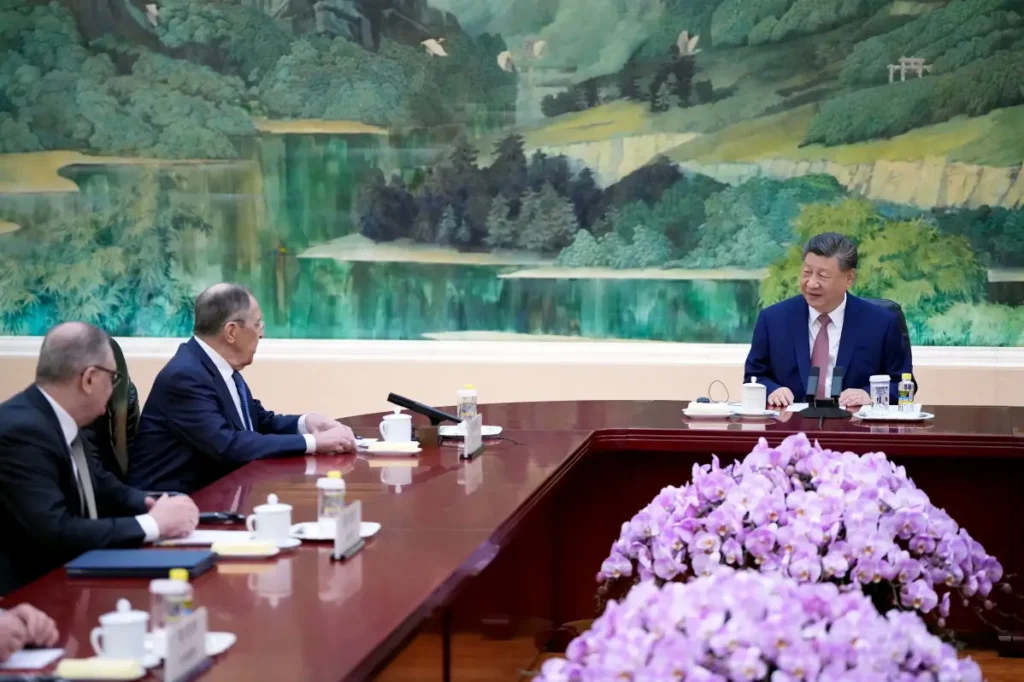
Lavrov arrived in China on Tuesday for a two-day trip at the invitation of his Chinese counterpart Wang Yi.
Xi did not specify what he referred to as chaos and changes in the international context, as uncertainty still lingers about how long the Iran war would last.
Relations between China and Russia have deepened in recent years, particularly following the Russian invasion of Ukraine in early 2022. Trump’s unorthodox approach to the war in Ukraine has added a twist to the relationship but doesn’t appear to have fundamentally changed it.
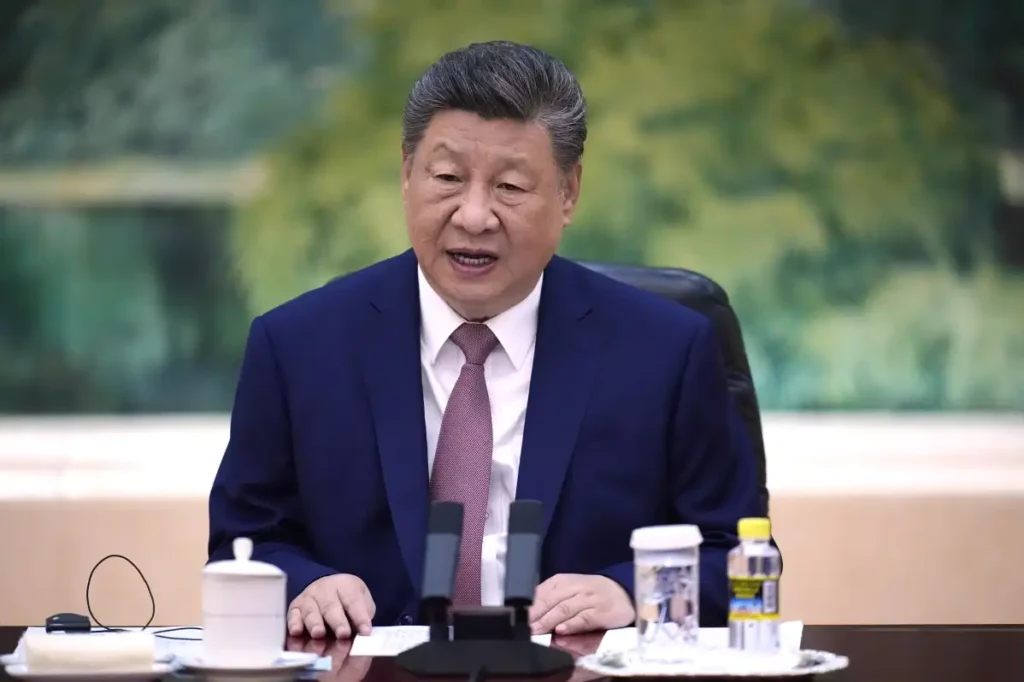
Also, the Chinese leader said that Foreign Ministries from both countries would need to fully implement the consensus reached between him and Russian President Vladimir Putin, calling for strengthening strategic communication and close diplomatic coordination. When Putin visited China in September, Xi welcomed his counterpart as an “old friend.” Putin also addressed Xi as “dear friend.”
Xi urged the Foreign Ministers to promote the comprehensive strategic partnership between Beijing and Moscow to “stand higher, walk more steadily and go further.”
Lavrov Calls China-Russia Ties A Stabilizer In Global Affairs
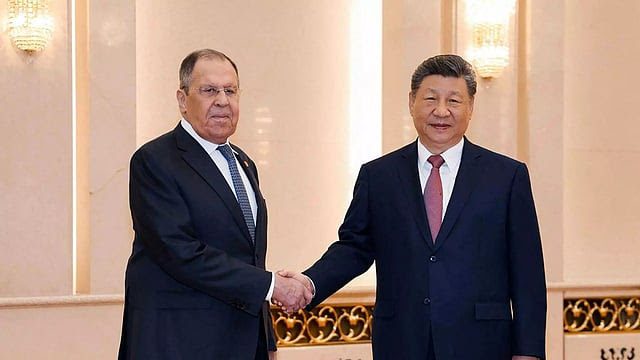
In his meeting with Xi, Lavrov said that relations between Russia and China serve as a stabilizer in global affairs and are growing in importance for the global majority. “Russia-China relations act as a stabilizer in world affairs and are increasingly significant for the global majority seeking calm conditions for sustainable development rather than turbulence,” Lavrov said.
Lavrov told journalists that President Vladimir Putin’s visit to China will take place in the first half of this year. Xi, for his part, said that Russia-China cooperation is especially valuable amid the changing international environment and stressed that he and Putin maintain dialogue “from a strategic height” and intend to continue it.
Lavrov had earlier held talks with Chinese Foreign Minister Wang Yi on Tuesday. Their talks lasted more than four hours and covered a wide range of issues, including bilateral relations and international developments. Lavrov disclosed that the negotiations covered a wide range of issues, largely bilateral relations.
“But first of all, for obvious reasons, international issues, especially since the international situation, which is now being aggravated by the actions of our Western colleagues, in Ukraine, in Latin America, in the Strait of Hormuz, and in other parts of our shared Eurasian continent with China, is having a direct impact on how bilateral relations between states are developing, including, of course, between Russia and China, and with other partners within the Shanghai Cooperation Organization and BRICS, among others.”
Sergey Lavrov
Lavrov said that he and Wang reviewed the agreements between both nations in a way that protects them from those who do not compete fairly.
“In this regard, we reviewed how the agreements reached by President Putin and President Xi Jinping are being implemented, particularly in building trade, economic and investment cooperation in a way that protects it from the harmful influence of those who do not rely on their ability to compete fairly, but instead resort to sanctions, illegal methods of coercion, blackmail and diktat.”
Sergey Lavrov
Additionally, the Russian Foreign Minister said that his country could make up for China’s energy shortages as shipping through the Strait of Hormuz is choked by the US-Israeli war with Iran.
Lavrov said at a news conference in Beijing, in response to a question about the Hormuz blockage, that Russia “can, without a doubt, compensate for the shortfall in resources that has arisen” for China and “other countries that are interested in working with us.”
READ ALSO: High Revenue Loss Feared if Government Grants 40% Petroleum Tax Reduction – Prof. Peprah Warns