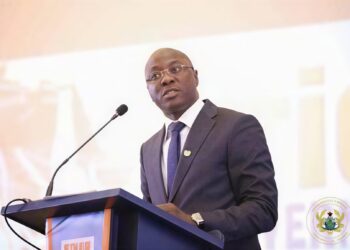
Ghana’s Minister of Education, Haruna Iddrisu, has inaugurated a high-level committee tasked with guiding the establishment of new public universities, as the government moves to widen access to tertiary education across the country.
This initiative marks a significant milestone in the government’s strategic vision to democratize access to tertiary education, ensuring that the aspirations of the nation’s youth are not stifled by institutional capacity constraints.
The announcement was made when Iddrisu addressed the media and outlined the government’s plans to tackle the growing challenge of limited university access for young Ghanaians. The Minister described higher education as both a public necessity and a critical national investment that the current administration intends to prioritise as part of its broader development agenda for Ghana.
According to the Minister, the committee was set up at the direction of the presidency, following a request from Vice President Naana Jane Opoku-Agyemang. The committee will report directly to the Vice President and is expected to deliver strategic recommendations to government on how best to expand the country’s public university system to meet the rising demand from young Ghanaians seeking tertiary education across the country.“At the request of the Vice President, the President requested that we put this committee together to advise the government on the establishment of new public universities in Ghana,” Iddrisu said



The Minister stressed that the move is driven by an urgent need to address the growing number of young Ghanaians who are unable to secure places in the country’s existing public universities. He noted that demand for higher education has far outpaced the capacity of current institutions, leaving many qualified students without access to quality university education year after year. “Higher education remains a critical public good and a critical public need because there are many young people in Ghana who are still having difficulty accessing quality higher education across the country,” he said.
The initiative is expected to play a key role in addressing the deep capacity challenges within Ghana’s tertiary education sector while opening significantly more doors for young people seeking university placements across all regions of the country. Stakeholders in the education sector have long called for urgent action to bridge the widening gap between university applicants and available spaces in public institutions, making this committee’s work particularly significant.
Former Education Minister Leads the Committee
Chairperson of the newly inaugurated committee is Christina Amoako-Nuama, a former Education Minister, who described the assignment as both timely and far-reaching. She noted that the committee’s work aligns directly with the country’s broader national development goals and the government’s firm commitment to building human capital for the future of Ghana.
Amoako-Nuama outlined three core areas the committee would focus on: the establishment of entirely new public universities, the completion of ongoing university infrastructure projects that have stalled across the country, and the strategic expansion of existing tertiary institutions to accommodate a greater number of students seeking higher education.”The mandate entrusted to this committee, which is to expand access to higher education through the establishment of new public universities, the completion of ongoing projects, and the strategic expansion of existing tertiary institutions, is both ambitious and timely,”she noted.
Her appointment signals the government’s intent to bring experienced and proven leadership to one of the most pressing challenges in Ghana’s education sector. With a strong background in education policy and governance, Amoako-Nuama is expected to steer the committee toward practical and implementable recommendations that government can act on without unnecessary delay.
The committee’s work is widely regarded as a central pillar of the Mahama administration’s broader education reform agenda, which seeks to ensure that no young Ghanaian is denied access to quality tertiary education simply because of limited institutional capacity. The committee’s recommendations are expected within a clearly defined timeframe, after which government will move decisively to implement the findings and begin the process of establishing new universities in areas where the need is greatest.
Read Also :Moliy Makes History with 2026 American Music Award Nomination