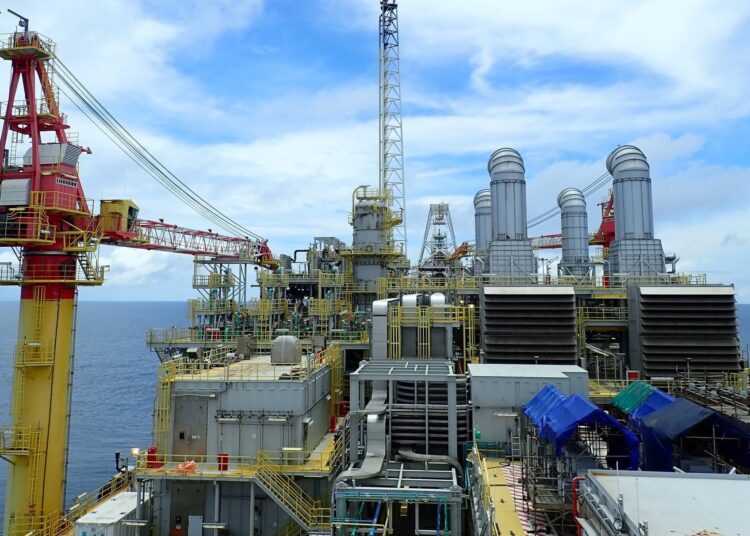
Ghana National Gas Company (GNGC) has initiated a partial restoration of its processing operations following critical technical breakdown that plunged sections of the country into darkness.
The energy giant moved to stabilize the national grid on the evening of April 15, 2026, after a catastrophic failure of the Burner Management System (BMS) controller within the Heat Medium System (HMS) forced an emergency shutdown.
This swift intervention involved a transition to manual operational protocols, a move designed to bridge the energy deficit while the company awaits the arrival and installation of specialized replacement hardware.
“The plant came back on and since it has been producing and as we speak, we are doing 115 mm to the power plant. The simple message I want to put across is there’s no cause for alarm. We are very competent technical team which put their technical brain together and they were able to start the plant using the manual system approach that is why we are producing.”
Head of Corporate Affairs for Ghana National Gas Company, Richard Ernest Kirk-Mensah

The disruption, which surfaced earlier this week, led to a significant curtailment of gas supply to various thermal plants across the “power enclave,” resulting in intermittent electricity supply challenges for domestic and industrial consumers.
Preliminary technical assessments conducted by GNGC engineers revealed that the BMS controller a vital component for automated safety and temperature regulation was “severely damaged” and beyond immediate repair.
To mitigate the impact on the national economy, a dedicated technical team was deployed to bypass the automated interface, allowing the plant to resume production at a capacity of 115 million standard cubic feet (mmscf) of gas for power generation.
Technical Resilience and Manual Intervention

The transition to a manual operating system underscores the “technical brain” and agility of the Ghanaian engineering team in the face of infrastructure volatility.
By successfully overriding the failed Burner Management System, the company has managed to avert a total prolonged blackout, maintaining a steady flow of gas to thermal units that are critical for the country’s base-load electricity.
While the current manual approach is a “temporary measure,” it provides a vital lifeline to the Ghana Grid Company (GRIDCo) to manage load distribution more effectively. Management has confirmed that the “replacement is on the way to the site for fixing,” ensuring that the facility will soon return to its high-efficiency automated state.
Impact on Energy Stability and the Green Transition

This partial restoration is a pivotal moment for the energy sector, as it prevents a potential “cascading failure” of the national grid. By restoring 115 mmscf of gas supply, Ghana Gas is effectively reducing the country’s reliance on more expensive and carbon-intensive liquid fuels, which are often used as emergency backups during gas supply disruptions.
In the context of a “green transition,” maintaining the flow of natural gas is essential for stabilizing the grid as the nation integrates more intermittent renewable sources.
The ability to maintain operations manually demonstrates a robust contingency framework that “alleviates the immediate pressure” on the energy ministry and power producers.
Future-Proofing Ghana’s Gas Infrastructure

As the new BMS controller arrives for installation, the focus shifts toward the long-term resilience of the Western Region’s gas infrastructure.
Energy analysts suggest that while manual operations are a testament to local expertise, the “full replacement” of the damaged system is mandatory to ensure the safety and precision required for modern gas processing.
Ghana Gas has assured the public that they are working “around the clock” to restore normalcy. This incident serves as a stark reminder of the importance of proactive maintenance and the strategic stockpiling of critical “replacement gadgets” to safeguard the nation’s energy security against unforeseen mechanical failures.
READ ALSO: Yeji Prison Outreach Sensitizes Students On Crime Prevention Strategies