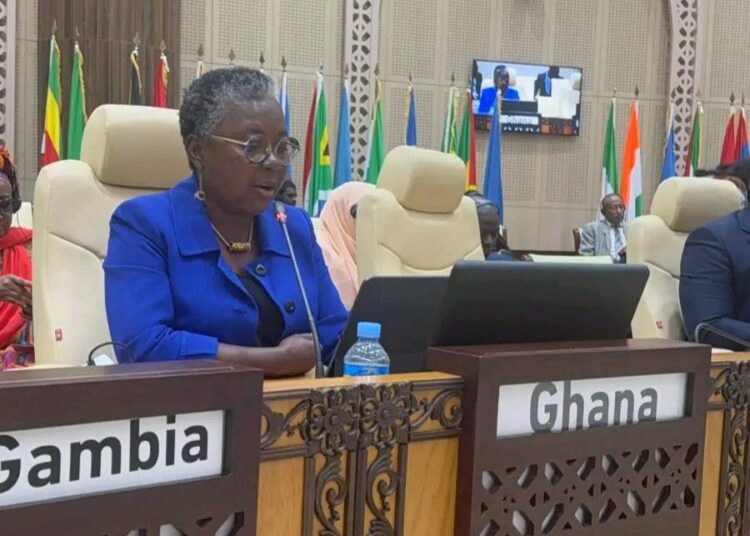
Ghana has taken center stage at a high-level international forum in Mauritania, showcasing its progress and lessons in blue food transformation. The country’s Minister for Fisheries and Aquaculture, Emelia Arthur, delivered a detailed presentation as a panelist, outlining Ghana’s strategy for building a sustainable and resilient fisheries and aquaculture sector.
Speaking on the theme “Ghana’s Lessons in Delivering Blue Transformation,” the Minister highlighted the country’s policy direction, governance reforms, and investment priorities shaping its approach. The event brought together global stakeholders to examine pathways for transforming aquatic food systems to meet growing food security demands.
Ghana’s participation reinforced its emerging leadership in blue food transformation, particularly within the African context, where fisheries remain a vital component of livelihoods and nutrition.
Fisheries at the Heart of Food Security
The Minister underscored the central role fisheries play in Ghana’s food systems and economy. She revealed that fish accounts for about 60 percent of animal protein consumption in the country, with per capita intake estimated between 22 and 25 kilograms annually.
“This underscores what is at stake,” she stated, stressing the urgency of protecting the sector against overexploitation and environmental pressures.
The blue food transformation agenda in Ghana is therefore closely tied to national food security, employment, and economic stability. Millions of Ghanaians depend on fisheries for their livelihoods, making sustainability efforts both an environmental and socio-economic priority.
A Coordinated National Vision
A key highlight of the presentation was Ghana’s integrated approach to managing its blue economy. The Minister explained that the country is implementing a national Blue Economy Strategy supported by a 10-year action plan. This strategy covers marine, inland, and wetland ecosystems and is built on pillars such as economic growth, environmental sustainability, equity, knowledge, and security. It aims to balance resource use with long-term conservation goals.
To strengthen implementation, Ghana is working toward establishing a Blue Economy Commission and developing a comprehensive legal and policy framework. These efforts are expected to enhance coordination across sectors and ensure that blue food transformation initiatives are effectively executed.
Strengthening Governance for Sustainability
Governance reforms featured prominently in the Minister’s address. She noted that Ghana’s artisanal fisheries sector contributes over 70 percent of marine fish production, making it a critical focus area for regulation and sustainability.
Measures introduced include licensing systems, canoe registration, closed fishing seasons, and improved monitoring, control, and surveillance mechanisms. These interventions are designed to manage fishing capacity and protect declining fish stocks.The Minister also referenced reforms under the Fisheries and Aquaculture Act, 2025, as well as the designation of Ghana’s first Marine Protected Area, as major milestones.
“Without managing access and capacity, sustainability is unattainable,” she stated, while acknowledging the need to balance conservation efforts with the livelihoods of over three million people who depend on the sector.
Driving Innovation Through Partnerships
The Minister emphasised the importance of collaboration in achieving meaningful progress. Ghana’s ecosystem approach brings together government institutions, academia, private sector players, and civil society to co-create solutions.
“Progress cannot happen in silos,” she noted, stressing that clearly defined partnerships are essential for scaling innovation and impact.Through these collaborations, Ghana is advancing technologies, improving data systems, and strengthening capacity across the fisheries value chain. This approach is central to sustaining the country’s blue food transformation agenda.
Unlocking Value Across the Chain
Beyond production, Ghana is focusing on improving efficiency and value addition across the fisheries sector. The Minister highlighted post-harvest losses, estimated at 20 to 30 percent in some segments, as a major challenge.
Efforts are underway to address this through improved processing infrastructure, better storage systems, enhanced food safety standards, and expanded market access.
“Blue transformation must extend from water to the market,” she stressed, noting that reducing losses and increasing value will significantly boost incomes and food availability.
Aquaculture was identified as a critical pillar of Ghana’s long-term strategy. Currently contributing over 15 percent of national fish production, the sector is being expanded to meet rising demand.The Minister outlined plans to scale community-based aquaculture systems, increase participation among youth and women, and attract private sector investment.
She also revealed that Ghana is progressing toward establishing its first mariculture systems.“Aquaculture is not just about production—it is about jobs, resilience, and food security,” she said, calling for greater investment in technology, biosecurity, and local feed development.
Addressing Investment and Institutional Gaps
Despite notable progress, the Minister acknowledged that challenges remain, particularly in financing and institutional capacity. She stressed the need for investment-ready projects, stronger institutions, and innovative financing models.
“Without structured investment, blue transformation will remain an under-exploited promise,” she cautioned, adding that inclusive and equitable growth must remain a priority.The blue food transformation agenda, she noted, requires sustained commitment from both public and private stakeholders to unlock its full potential.
In her closing remarks, the Minister called for greater collaboration among African countries to transform fisheries and aquaculture systems across the continent.“If we act together as a continent, Africa will not only transform its fisheries and aquaculture, we will define the future of sustainable aquatic food systems globally,” she concluded.
Ghana’s participation at the global forum highlights its growing influence in shaping discussions on sustainable food systems. As the country continues to implement its strategies, it is positioning itself as a leader in blue food transformation, with lessons that could guide policy and practice across Africa and beyond.
READ ALSO: Replacement Gadgets En Route as Ghana Gas Restores Partial Operations