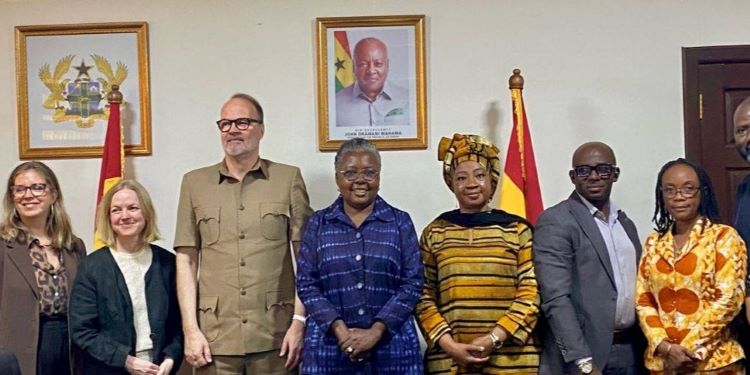
The bilateral landscape between Accra and Oslo has reached a sophisticated new milestone as the Ministry of Fisheries and Aquaculture Development (MoFAD) recently moved to formalize a sweeping technical alliance with the Royal Norwegian Embassy, centered on the proposed Ocean for Development Programme.
The Minister for Fisheries and Aquaculture Development, Hon. Emelia Arthur, convened at the Ministry to receive the Norwegian delegation led by Ambassador His Excellency Dr. John Mikal Kvistad, effectively anchoring Ghana’s Blue Economy Strategy within a framework of global maritime excellence.
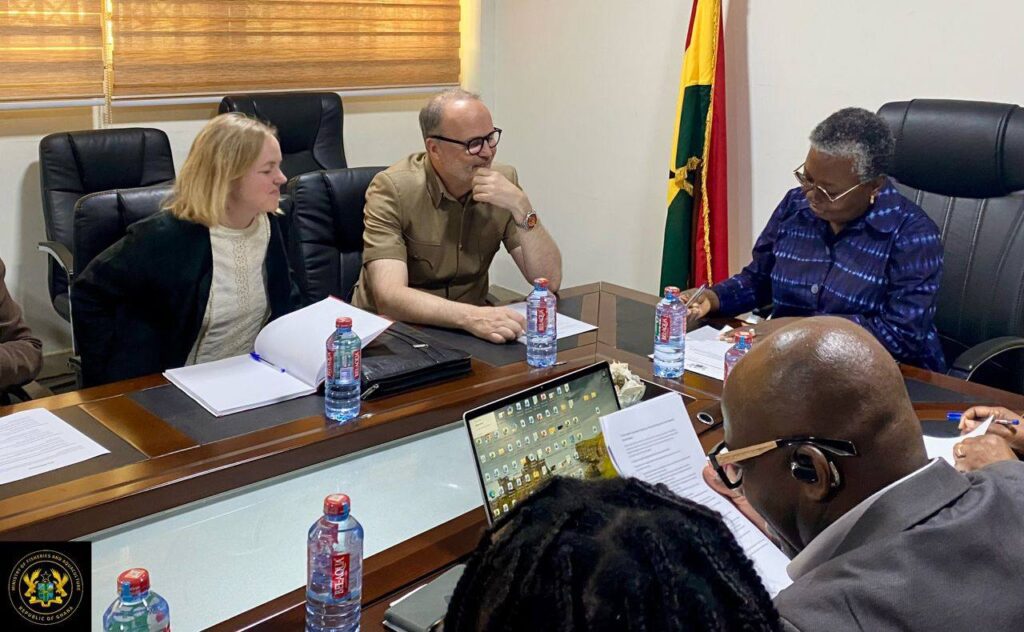
According to MoFAD, the meeting represented a significant escalation in the government’s efforts to industrialize its aquatic resources, describing it as a rigorous technical consultation designed to transition Norway’s formal pledge of support into a functional, multi-sectoral operation.
“The meeting follows Norway’s formal pledge to support Ghana’s Blue Economy Strategy, with both countries reaffirming their shared commitment to sustainable ocean governance under the High-Level Panel for a Sustainable Ocean Economy.
“Discussions focused on priority areas including sustainable fisheries and aquaculture, marine ecosystem protection, research and digital innovation, blue finance, inclusion, and maritime security, particularly the fight against Illegal, Unreported and Unregulated (IUU) fishing”
Ministry of Fisheries and Aquaculture Development
The partnership is a direct outgrowth of the shared commitments, as both nations have consistently advocated for a balance between the economic exploitation of the seas and the preservation of marine health. For Ghana, the involvement of Norway – a global leader in maritime technology and ocean governance – provides a “force multiplier” for the Ministry’s domestic goals.
The strategic pivot is Ghana moving beyond traditional donor-recipient dynamics toward a demand-driven, technical cooperation model that prioritizes institutional strength and long-term industrial impact.
The Technical Frontier
The Ministry noted that an important topic of the discussions in Accra focused on the urgent need to secure Ghana’s territorial waters through advanced digital innovation and research, since the fight against Illegal, Unreported and Unregulated (IUU) fishing remains a central challenge for the Fisheries Commission.
Through the Ocean for Development Programme, Ghana intends to leverage Norwegian expertise in maritime surveillance and data-driven enforcement to clean up its maritime domain to prevent it from “directly undermining the livelihoods of local artisanal fishers and draining the national economy of vital revenue.”
This “smart” approach to security is expected to involve the deployment of digital tools that can monitor vessel activity in real-time, providing the regulatory teeth necessary to deter offshore violations. Furthermore, MoFAD explained that the focus on marine ecosystem protection ensures that the industrialization of the ocean does not lead to ecological bankruptcy.
The Minister and the Norwegian delegation explored how digital innovation can be applied to track fish stocks and monitor the health of the Gulf of Guinea, integrating research directly into the policy framework.
MoFAD’s goal is to make sure that every industrial decision – whether it concerns offshore drilling or large-scale aquaculture – is backed by clinical data. It cited this level of technical oversight as a requirement for building an ocean economy that is as sustainable as it is profitable.
Blue Finance
The partnership also addresses the critical “capital gap” through a focused dialogue on blue finance.
While the potential of Ghana’s marine and inland water resources is vast, the infrastructure required to unlock that wealth is capital-intensive, and the discussions highlighted the need for structured financial vehicles that can attract high-impact investment into sustainable fisheries and aquaculture.

Ghana is positioning itself as a secure destination for international blue capital by working with Norwegian partners to develop these finance models. This is particularly relevant for the aquaculture sector, where the goal is to move beyond small-scale pond farming toward industrial-grade production systems that can meet both domestic demand and export standards.
The Norwegian partners were explicit in stating that the programme would be entirely demand-driven, ensuring that every intervention is calibrated to Ghana’s specific national priorities.
This was marked as a crucial distinction from traditional development aid, as it places the burden of strategy on the host nation while the partner provides the specialized knowledge and resources to execute it, fostering a sense of ownership within the Ministry and the Fisheries Commission.
To ensure the success of this bilateral effort, both sides agreed to a structured inception phase, dedicated to the meticulous planning and technical cooperation required before a formal bilateral agreement is signed.
The inception phase will allow for a clause-by-clause alignment of expectations, seeing to it that when the programme fully launches, the institutional coordination between Accra and Oslo is seamless, devoid of the implementation lag that often plagues international partnerships.
The strategic depth of this engagement was further reinforced by its focus on inclusion and maritime security. Hon. Emelia Arthur emphasized that for the well-researched Blue Economy to be truly successful, it must be “inclusive,” meaning that the benefits of ocean wealth must reach the coastal communities that have traditionally relied on these waters.
For the Minister, this is not just about increasing GDP; it is about building a resilient economic structure that protects the environment while providing clear pathways for local growth under a shared prosperity model.
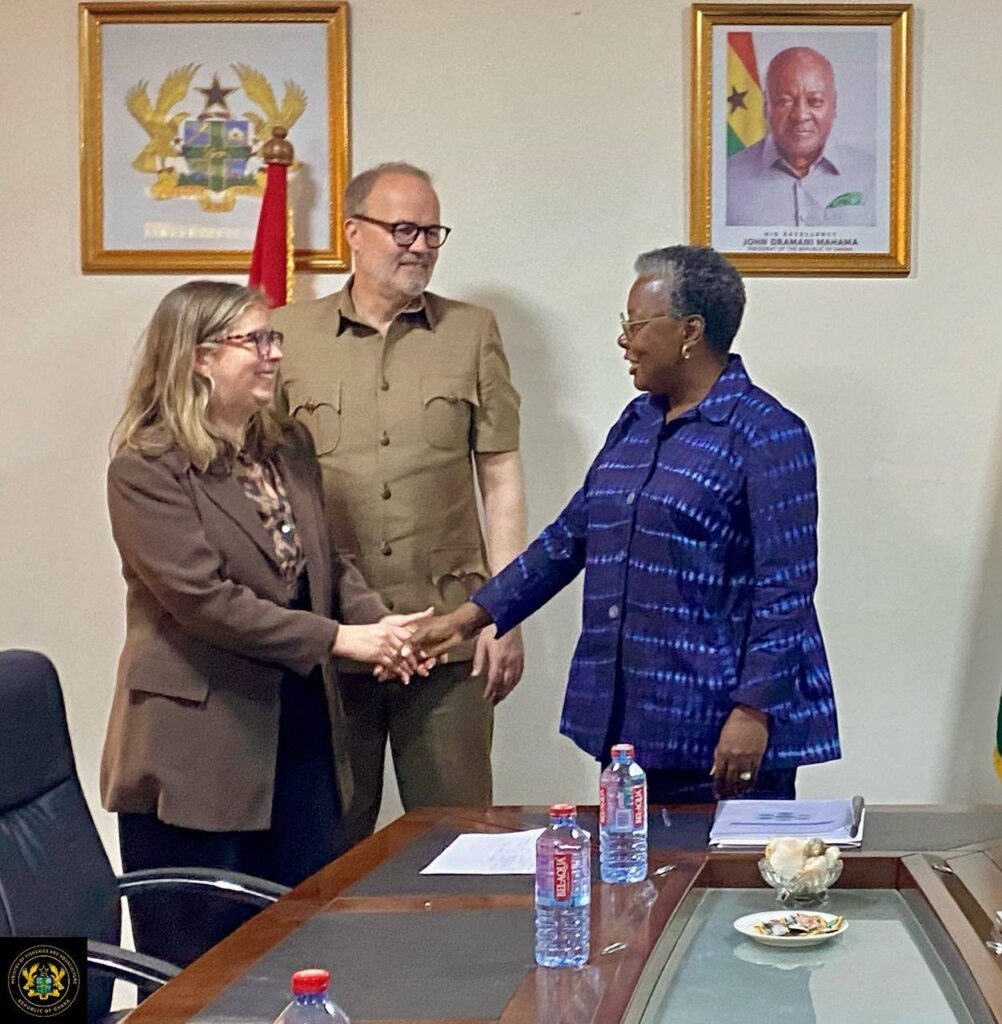
As Ghana and Norway move forward with these technical engagements, the “Ocean for Development” initiative is poised to become the key driver of the country’s maritime transformation, and the presence of Ambassador Kvistad and his team in Accra underscores the international confidence in Ghana’s current policy direction.
READ ALSO: Banks, Fintechs Race to Meet BoG Disability-Friendly Banking Deadline