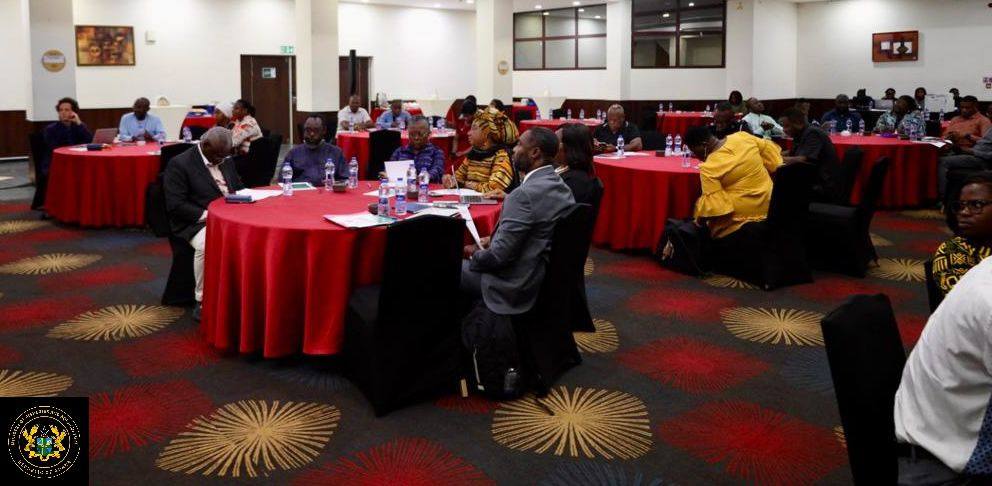
The Ministry of Fisheries and Aquaculture Development (MoFAD), has taken a decisive step toward securing the country’s industrial and ecological future by formally validating its draft Blue Economy Policy during a high-level Stakeholder Validation Workshop held at the Alisa Hotel in Accra.
According to the Ministry, the event, which convened a diverse assembly of technical experts, policymakers, and industry leaders, marked a critical transition from theoretical ambition to a structured, executable roadmap to transform Ghana’s marine and freshwater assets into a resilient driver of sustainable economic growth.
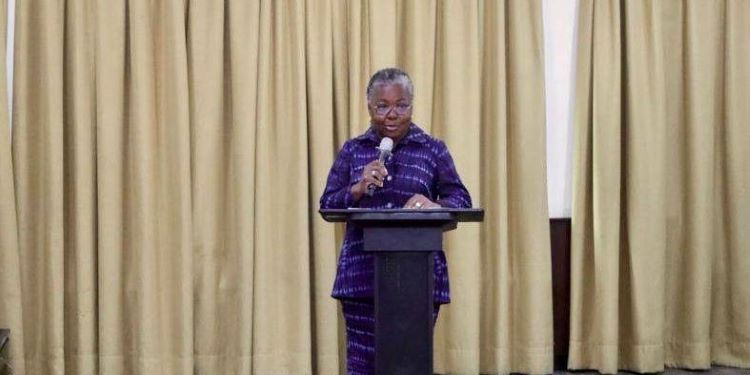
The validation of the zero draft to finalize the nation’s strategic framework for aquatic resources comes at a time when the global community is increasingly looking toward maritime and inland water governance as the next frontier for economic diversification. Delivering the opening remarks at the workshop, the Minister for Fisheries and Aquaculture, Hon. Emelia Arthur, framed the session as more than a mere administrative review.
“Step by step, we are laying the foundations to ensure that Ghana’s marine and inland water resources sustainably support our economy, strengthen food security, and safeguard our environment”
Hon. Emelia Arthur, Minister for Fisheries and Aquaculture
Hon. Arthur described the day as a defining moment in Ghana’s development journey, emphasizing that the shift toward a sophisticated Blue Economy is already in motion. She highlighted how the policy will move the country beyond traditional resource extraction toward an integrated and sophisticated management system that balances industrial output with environmental integrity.
The National Blue Economy Policy is built upon the premise that a fragmented approach to water resource management is no longer viable in a complex, climate-variable world, especially when, for years, the management of Ghana’s oceans and rivers has been siloed across various agencies, often leading to administrative overlaps or regulatory gaps.
The new framework introduces a coordinated, whole-of-government approach that treats the Blue Economy as a unified industrial sector.
This strategy is expected to streamline decision-making processes and ensure that all government interventions – from infrastructure development to environmental protection – are aligned with the overarching goal of national prosperity and food security.
Six-Pillar Architecture
At the core of this transition is a six-pillar architecture that provides a comprehensive look at the maritime and freshwater landscape. These pillars include the pursuit of Blue Wealth to maximize economic gain from aquatic resources and Blue Health to ensure the long-term vitality of aquatic ecosystems.
The framework also prioritizes Blue Knowledge through scientific research and data collection, alongside Blue Finance, to create the necessary capital vehicles for industrial expansion.
Furthermore, the pillars of Blue Equity and Blue Safety and Security ensure that the benefits of this growth are distributed fairly among all citizens and that the country’s maritime borders remain secure from illegal exploitation. The integration of these six dimensions into a single narrative is expected to make the Blue Economy as socially inclusive as it is economically ambitious.
Focusing on sustainable management, the Minister noted that the industrial implications of this policy are vast, particularly for the fisheries sector and the broader agribusiness value chain, as the government is looking to bolster domestic food security and reduce the heavy reliance on imported fish products.
The policy provides the legal and technical baseline needed to attract high-value investments into aquaculture and offshore industrial activities. It also addresses a key issue often seen in the maritime sector, where an abundance of natural resources does not always translate into local wealth due to a lack of processing and value-addition infrastructure.

Under the new framework, the development of local capacity to process and refine aquatic products will be treated as a primary economic objective. However, Hon. Arthur noted that the success of such an expansive policy relies heavily on the technical rigors of the validation process itself.
Throughout the workshop, the Blue Economy Committee facilitated detailed, clause-by-clause discussions with stakeholders to reach a unified national consensus. This granular level of review was intended to ensure that the policy is not just a high-level vision document but a practical tool that can be enforced by regulatory agencies.
Stakeholders were encouraged to scrutinize the framework’s alignment with international best practices while ensuring it remains rooted in the specific socio-economic realities of Ghana’s coastal and inland fishing communities.
Environmental Safeguard
Beyond the immediate economic gains, the National Blue Economy Policy was presented as a vital safeguard for the environment. As coastal erosion and climate change pose increasing threats to the Gulf of Guinea, “a standardized approach to Blue Health becomes a matter of national security.”
The policy introduces measures to protect biodiversity and mitigate the impact of industrial activity on the marine environment. This ensures that the pursuit of Blue Wealth does not degrade the very ecosystems that support the nation’s food supply.
This balance is a central theme of the sectoral perspective, where industrial expansion must be matched by a rigorous commitment to institutional and ecological sustainability.
The conclusion of the workshop signals that the government is ready to move the policy into the final stages of cabinet approval and legislative integration. For the Hon. Minister Emelia Arthur, the validation session demonstrated that there is a shared vision among the various stakeholders regarding the potential of Ghana’s aquatic resources.

The consensus reached at the Alisa Hotel provides the political and technical mandate needed to begin the rollout of major projects under the Blue Economy banner. As the country looks toward the remainder of 2026 and beyond, this framework will serve as the primary benchmark for assessing Ghana’s progress as a leading maritime nation in the West African sub-region.
Ultimately, the validation of the Blue Economy Policy is a testament to the Ministry’s proactive stance on long-term national planning, creating a unified framework for Wealth, Health, Knowledge, Finance, Equity, and Security for Ghana’s maritime economy.
READ ALSO: GNFS Joins Community to Boost Sanitation And Flood Prevention Efforts