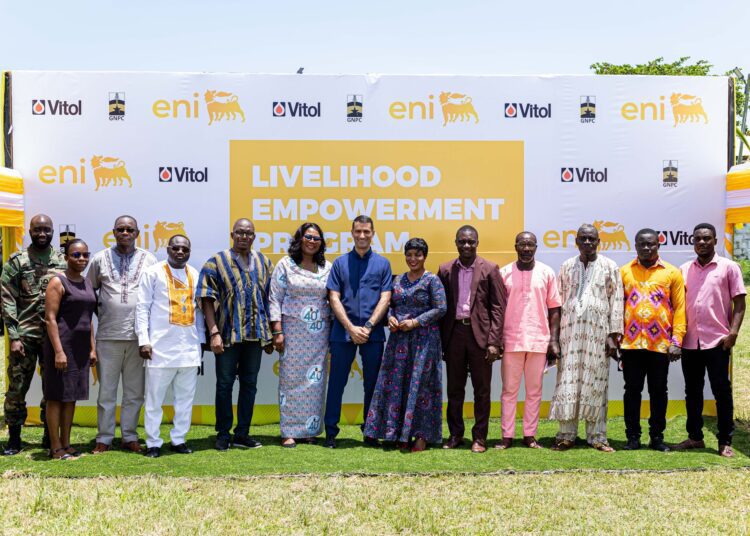
Ghana National Petroleum Corporation (GNPC), alongside its upstream partners led by Eni and Vitol Upstream Ghana Limited, has launched an artisanal livelihood empowerment programme aimed at supporting fishing communities situated in the Western and Central Regions of Ghana.
This strategic intervention seeks to provide essential fishing gear and comprehensive practical training to over 1,000 verified canoe owners and fishermen operating within the coastal belt, specifically across fourteen metropolitan, municipal, and district assemblies including Jomoro, Ellembelle, Ahanta West, Sekondi-Takoradi, Cape Coast, and Mfantseman.
“At its core, this is practical support, equipment, guidance, and a continued effort to keep fishing and offshore operations running side by side, safely and without unnecessary risk, for both operators and coastal communities.”
Ghana National Petroleum Corporation (GNPC)
This initiative serves as a vital bridge between the industrial offshore oil and gas sector and the traditional fishing industry, designed to foster a safe, sustainable coexistence.
By providing high-quality equipment such as modern nets, towing gear, and protective apparel the programme aims to enhance the operational capacity and safety of artisanal fishers who work in proximity to active offshore installations.
Beyond the distribution of tangible assets, the programme functions as a sustained engagement platform, reinforcing critical maritime safety guidelines to prevent disruptions to offshore work while simultaneously mitigating risks to the fishermen themselves.
Enhancing Operational Synergy and Safety
The symbiosis between oil and gas production and local livelihoods is a cornerstone of the industry’s social license to operate. By investing in the artisanal sector, upstream operators effectively reduce the potential for maritime conflict.
When local fishermen are equipped with better, more reliable gear and are trained in modern safety protocols, the likelihood of accidental incursions into restricted offshore safety zones decreases significantly.
As GNPC’s Social Performance Manager, Patience Lartey, noted during the launch in Takoradi, “The real value of the initiative will come from how well the equipment is used and maintained over time.”
This sentiment underscores that the support is not merely a handout but a capacity-building investment. Providing protective gear and training allows fishermen to navigate the seas more effectively, which in turn creates a more predictable environment for offshore operators.
This collaborative approach directly supports the “Local Content and Local Participation” regulations, ensuring that industrial development does not come at the expense of traditional economic activities.
Strengthening Economic Resilience in Coastal Districts

The programme addresses systemic challenges that have long plagued Ghana’s artisanal fishing sector, such as the use of aging, inefficient equipment that often forces fishermen into riskier, less productive practices.
By providing modern, compliant tools, the initiative enables these communities to increase their yields without needing to venture into hazardous areas near offshore drilling sites.
This, in effect, boosts the local economy while securing the operational integrity of the exploration areas. Industry analysts view such programmes as an essential de-risking mechanism.
When local fishers are economically secure and aware of safety protocols, the “social buffer” around offshore installations are strengthened.
This prevents unnecessary downtime caused by maritime incidents and allows for more focused exploration and production activities, ultimately supporting the national energy agenda while respecting the traditional heritage of Ghana’s coastal communities.
A Long-Term Vision for Sustainable Coexistence

The long-term success of this intervention relies on the continuous adherence to the established guidelines communicated by the project partners.
Operators have reiterated that the goal is to create a secure environment where industrial growth and traditional fishing thrive in tandem.
By focusing on safety and efficiency, the programme acts as a model for industrial community engagement, proving that large-scale energy projects can and should act as catalysts for local development.
The initiative also emphasizes marine biodiversity conservation as part of its training modules, encouraging sustainable practices that protect the very resources the fishermen rely on.
By aligning the needs of the artisanal sector with international safety and environmental standards, Ghana National Petroleum Corporation (GNPC) and its partners are fostering a climate of mutual respect and long-term cooperation.
This approach ensures that the vital offshore oil and gas infrastructure the backbone of Ghana’s energy transition remains safe and productive, while the coastal communities are empowered to prosper in the ever-evolving maritime landscape.
READ ALSO: GSA Hosts Global ISO Menstrual Product Standards Meeting