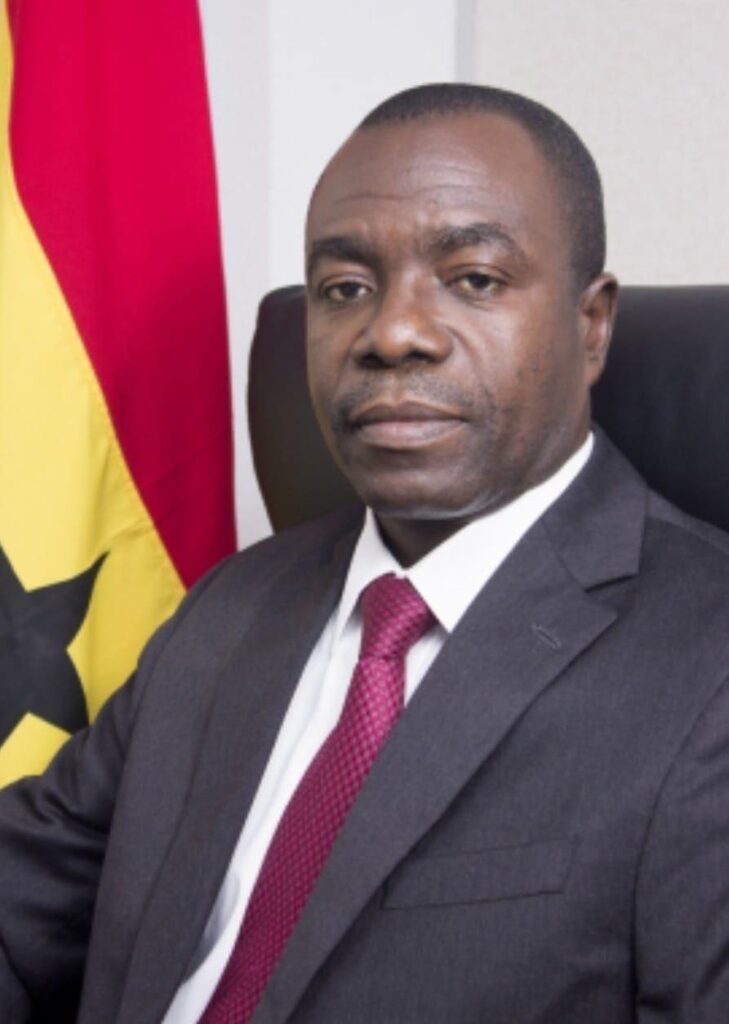
Acting Managing Director of the Electricity Company of Ghana (ECG), Ing. Kwame Kpekpena, has officially issued an unqualified apology to the Ghanaian public regarding the recent wave of intermittent power supply that has severely disrupted households and commercial activities across the country.
This formal acknowledgment comes as a direct response to growing public frustration over persistent power fluctuations, which have not only caused significant daily inconvenience but have also resulted in tangible financial losses through damaged electrical appliances and stalled industrial operations.
“To every Ghanaian customer who has endured inconvenient and prolonged power outages, we sincerely apologise. We want you to know that we have heard your voice, and that addressing the reliability challenges is our singular operational priority.”
Ing. Kwame Kpekpena, Acting Managing Director of the Electricity Company of Ghana (ECG)
This apology serves as a critical turning point for the utility provider, aiming to address the erosion of public trust caused by recent instability in the power distribution system.
By acknowledging the severity of the situation, Ing. Kpekpena is attempting to pivot the narrative from reactive crisis management to a structured, transparent, and accountability-driven approach.
The leadership’s decision to address the media suggests a move to appease agitated stakeholders and demonstrate that the company is finally recognizing the urgency of the situation, rather than viewing the disruptions as mere operational routine.
Tackling Structural Deficits and Historical Neglect
The current power volatility is largely symptomatic of long-standing structural weaknesses within the national grid. Experts often point to the phenomenon of “overstretched infrastructure” where aging transformers and transmission lines many of which were installed decades ago struggle to cope with the modern, rapidly increasing energy demand of a growing population.
When these components are pushed beyond their design capacity, the system naturally becomes prone to voltage drops and cascading failures.
As Ing. Kpekpena noted, the issues are “real and complex, and in some cases stem from years of underinvestment.”
This historical lack of capital injection has resulted in “pockets of outages and low voltage” that plague specific communities.
To resolve this, the proposed reforms which include the replacement of obsolete transformers and the expansion of substation capacities are not merely optional upgrades but absolute necessities.
Without these interventions, the grid remains a bottleneck, preventing Ghana from maximizing its generation potential and creating a feedback loop of technical losses and frequent outages.
Enhancing Operational Response and Communication
A core pillar of the pledged reform is a radical overhaul of ECG’s internal communication and rapid response mechanisms.
The Managing Director admitted that the company’s previous efforts to inform the public regarding maintenance or unexpected faults have “fallen short of expectations,” describing the lack of clarity as “not acceptable.“
By committing to better, more timely updates, the ECG hopes to manage public expectations more effectively, reducing the panic that often surrounds unannounced blackouts.
Beyond communication, the company is pivoting toward a more proactive maintenance strategy.
This shift involves moving away from the “firefighting” approach where repairs are only conducted after a total system failure toward predictive maintenance protocols. This includes the deployment of modern, digital monitoring tools that can identify hotspots and weak points in the network before they manifest as full-blown power cuts.
Accountability and the Path to Resilience

Transparency has been positioned as the bedrock of these new reforms. Ing. Kpekpena has explicitly welcomed the “media’s role in holding the company accountable,” a move that signals a departure from the historical opacity that has characterized the power sector.
By committing to keep the public updated on specific progress schedules, the ECG is essentially providing the public with a yardstick to measure its performance.
Ultimately, if the ECG can successfully align its resource allocation with these stated operational priorities, the impact on the national economy could be transformative.
Reliable power is the bedrock of development, and the successful execution of these reforms will be essential in averting the potential loss of billions in economic value.
As the company works to execute its plan, the public and media remain poised to observe whether this apology translates into the reliable, steady power supply that the nation desperately requires.
READ ALSO: Ghanaians Must Insist on Independent Public Prosecutor – Coalition of CSOs